




Bronze Horse Statue Marble Base
These bronze horse statue marble base sculptures combine metalwork and stone plinths to capture equine power for any collection.
Bronze Horse Statue Marble Base
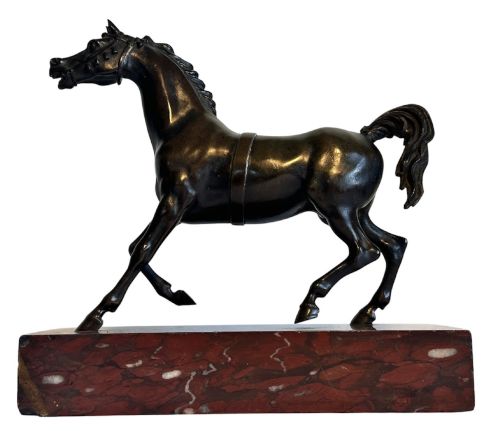
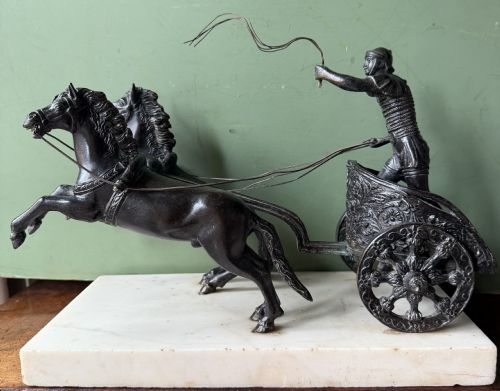
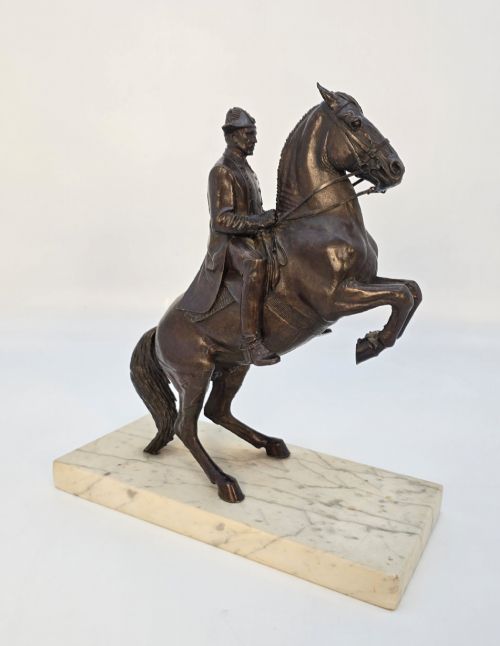
A bronze horse statue marble base brings together cast metal figures and stone plinths, ranging from single stallions to complex historical groups. You meet subjects such as Napoleon on horseback, Roman charioteers, quarrymen with carts, and riders from the Spanish School Vienna.
Most examples originate from the nineteenth century, including Victorian pieces, French Empire works, and Grand Tour souvenirs. The stones supporting these sculptures vary from plain white plinths to green marble bases.
How they were made
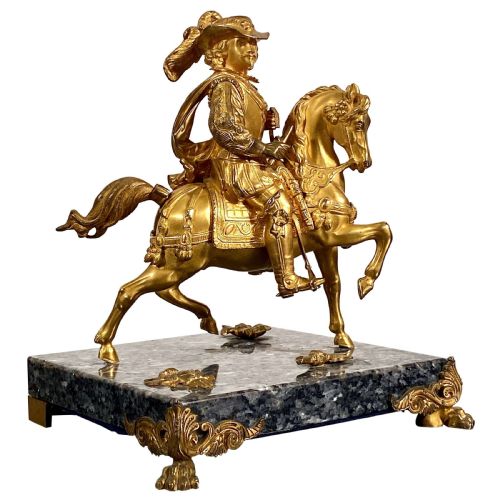
The sculptural figures utilise cast bronze, sometimes enhanced with gilt bronze or ormolu highlights to emphasise details like harnesses and military regalia. Foundries shape the metal to represent equine anatomy and human riders before mounting the figures firmly onto stone plinths.
Bases are constructed from solid marble, including green marble and white marble varieties, providing a heavy and stable foundation for the metal sculptures. Artisans secure the bronze studies to these stone mounts using traditional fixings.
Object styles on this page span French Empire, Animalier, Academic Realism, and Grand Tour Neoclassical designs.
What varies in quality
The choice and preparation of the marble base also differentiate the pieces, with select works featuring substantial, well-finished stone plinths that complement the scale of the bronze sculpture above.
E Drouot·Franz Bergman·Xavier Raphanel·P J Mene
The Bronze Horse Statue Marble Base Glossary
- Animalier
- A nineteenth-century artistic movement focused on the realistic portrayal of animals, particularly horses and wild beasts. Sculptors in this tradition studied anatomy closely.
- Ormolu
- Gilded bronze applied to decorative objects and furniture mountings. The technique involves treating metal with a mercury and gold amalgam.
- Grand Tour
- A cultural journey of Europe undertaken by wealthy young men in the eighteenth and nineteenth centuries. Souvenirs included small bronze statues mounted on marble.
- Equestrian
- Pertaining to horseback riding, used to describe sculptures showing a rider mounted on a horse. These pieces often commemorate historical figures.
- Patina
- The surface sheen and coloration developed on bronze over time through oxidation and handling. A stable patina indicates age and proper care.
Bronze Horse Statue Marble Base: Frequently Asked Questions
What periods do these sculptures cover?
The available selection spans the nineteenth century, with specific pieces originating from around eighteen fifty, eighteen sixty, eighteen eighty, and nineteen hundred. Later twentieth-century works also appear.
These dates reflect the manufacturing eras of the Grand Tour tradition, French Empire styling, and Victorian foundry production.
How do I identify a Grand Tour bronze?
Grand Tour pieces often replicate famous public monuments or classical antiquities that travellers encountered in Italy. They are typically mounted on white or green marble plinths as desktop souvenirs.
Look for historical subjects like charioteers or Renaissance condottieri that wealthy visitors collected during their European travels.
What materials make up the base?
The structural supports consist primarily of marble, including green marble and white marble varieties. These stone plinths provide necessary weight to balance the heavy metal sculptures.
Foundries matched the stone type to the aesthetic of the period, ranging from simple rectangular blocks to stepped architectural bases.
How should I clean the marble base?
Dust the stone regularly with a soft, dry cloth to prevent the accumulation of grit in natural fissures. Avoid harsh chemical cleaners that can etch or discolour the polished marble surface.
For stubborn marks, use a damp cloth with mild soap, then dry the stone completely immediately afterward.