
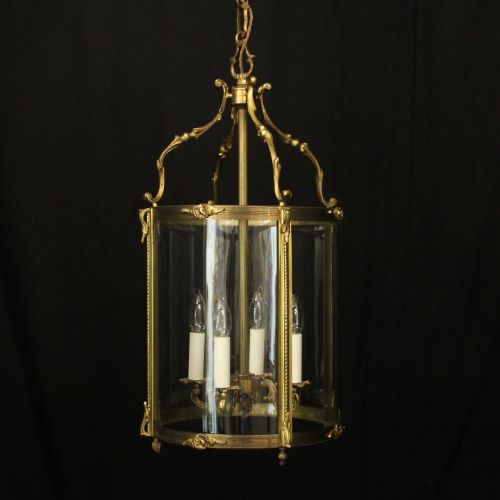
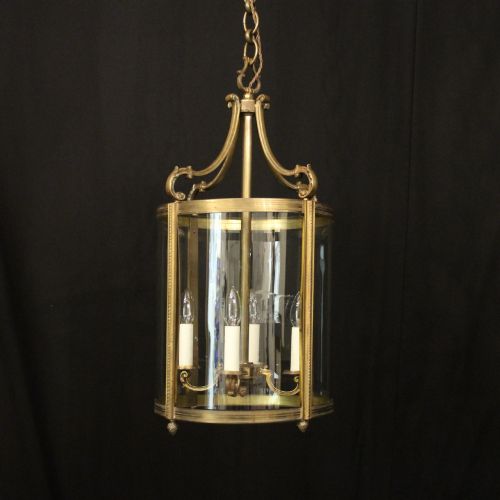
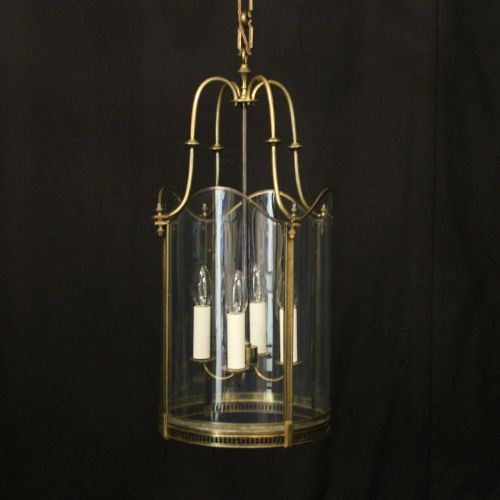
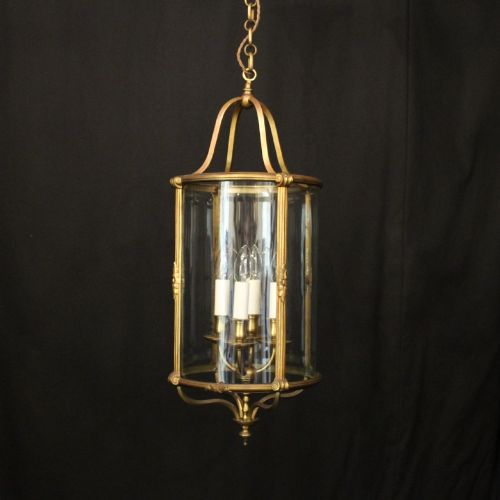
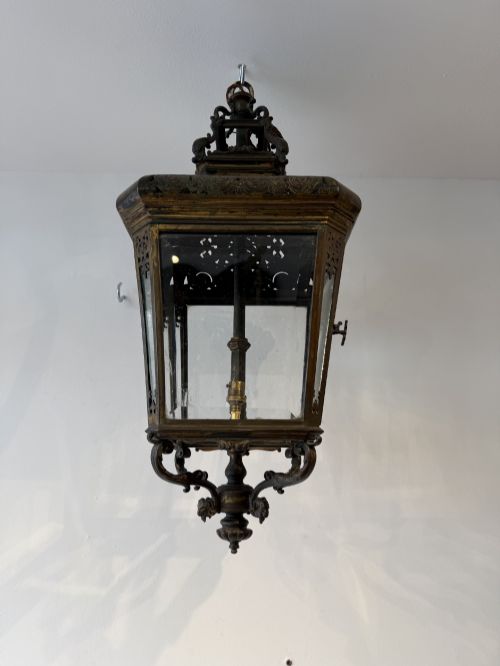


Bronze Foyer Lantern
A bronze foyer lantern brings immediate character and presence to an entrance hall, combining metalwork and glass to cast a welcoming light from above.
Bronze Foyer Lantern
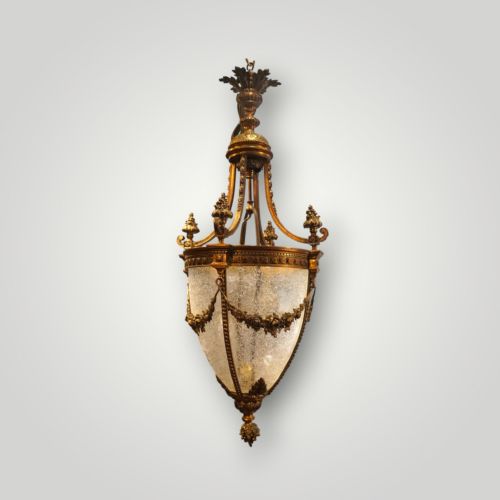
A bronze foyer lantern is a hanging ceiling light designed principally for hallways, vestibules and entrance spaces. These pieces combine structural metal frames with glass panels to illuminate interior thresholds.
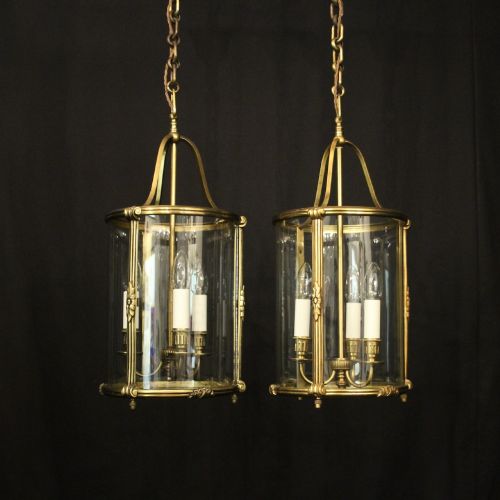
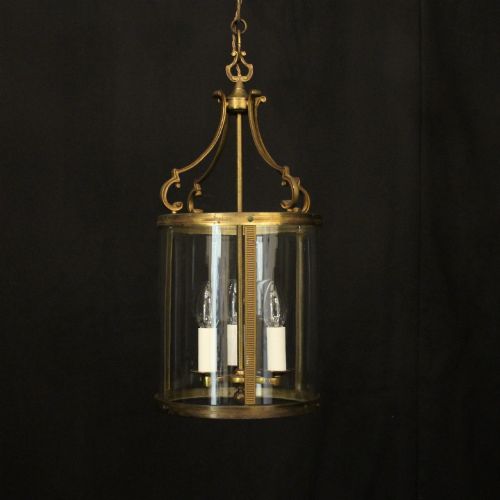
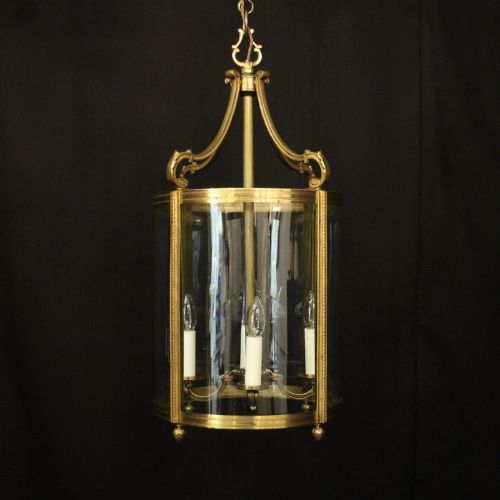
Most examples found in this selection originate from French and English workshops, spanning the late nineteenth century through the early twentieth century. Common forms include single and multi-light pendant configurations, often featuring convex or bevelled glass panes.
Stylistically, pieces draw heavily upon French decorative traditions, including Louis XVI and Rococo Revival aesthetics, alongside simpler Victorian designs. The predominant metalwork relies upon bronze, brass and gilt finishes to create an impression of substance.
How they were made
The primary structure relies on cast and patinated metals, predominantly bronze and brass, frequently treated with gilding or silvering to enhance the surface appearance. Metal sections are shaped into frames designed to secure glass panels firmly in place.
Glazing techniques include flat, bevelled and convex glass panes held securely within the metal framework. These glass panels are cut to fit individual lantern geometries, diffusing the interior light effectively across the surrounding hallway.
Several examples incorporate convex glass panes designed to make the interior candle or bulb appear delightfully magnified to passers-by.
What varies in quality
Quality in a bronze foyer lantern is determined by the crispness of the metal casting and the depth of the original gilding or patination. Heavier gauge metalwork and finely chased details separate standard utility light fittings from more ambitious decorative examples.
The choice and treatment of the glazing also distinguish finer pieces, particularly where bevelled or convex glass panels are fitted with precision into the metal frame. The overall integrity of the hanging mechanism and suspension loops contributes significantly to the piece's structural success.
The Bronze Foyer Lantern Glossary
- Convex glass
- Curved glass panes that project outward from the lantern frame. This treatment softens the internal light source and adds visual volume to the fixture.
- Bevelled glass
- Glass panes featuring an angled edge ground along the perimeter. This cut catches and refracts light as it passes through the panel.
- Gilt bronze
- Bronze metal treated with a thin layer of gold or gold-coloured finish. The technique produces a bright, reflective surface that endures over time.
- Louis XVI style
- A classical revival design movement characterised by symmetry, straight lines and restrained neoclassical ornamentation. It heavily influences many French foyer lanterns from this period.
- Hall lantern
- A ceiling-hung lighting fixture specifically scaled for narrow corridors and entrance spaces. These fixtures provide focused vertical illumination.
Bronze Foyer Lantern: Frequently Asked Questions
Where should I hang a bronze foyer lantern?
These lanterns suit entrance halls, vestibules and high-ceilinged stairwells where vertical hanging space allows the fixture to be viewed properly. Ensure adequate clearance beneath the lowest point for pedestrian traffic.
They work effectively as a primary focal point upon entering a property, establishing a distinct decorative tone before visitors move further into the interior.
How do I determine the period of my lantern?
Dating relies upon examining the casting techniques, the specific composition of the metal frame, and stylistic markers such as Louis XVI or Rococo Revival motifs. Fasteners, wiring channels and hinge construction also provide clues to the manufacturing era.
Comparing the decorative vocabulary against documented pieces from the nineteenth and early twentieth centuries helps narrow down the probable decade of origin.
Can these lanterns be rewired for modern wiring?
Most antique lanterns require professional rewiring to meet contemporary electrical safety standards and accommodate standard modern bulb fittings. Qualified electricians can usually adapt the internal lampholders without altering the external antique appearance.
It is advisable to check the weight capacity of your ceiling junction box before installation, as solid bronze and glass fixtures can be surprisingly heavy.
How do I clean and maintain the metal and glass?
Dust glass panels regularly with a soft, dry cloth to maintain clarity and allow maximum light transmission through the bevels or curves. Avoid harsh chemical cleaners that might strip delicate gilt surfaces or historic patination on the bronze.
Metal parts benefit from gentle dusting with a microfibre cloth, taking care around delicate joints and decorative mounts.