



Bronze Fireplace Guard
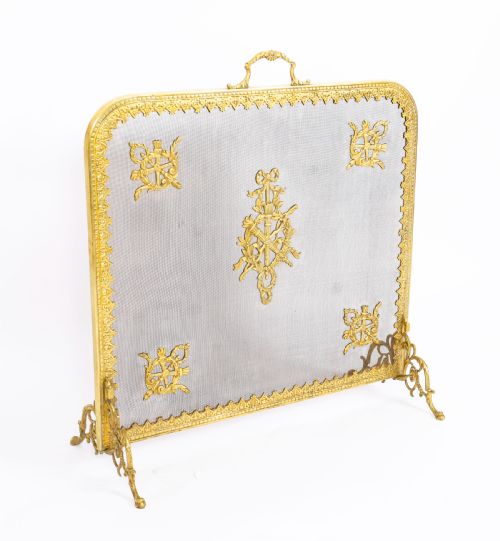
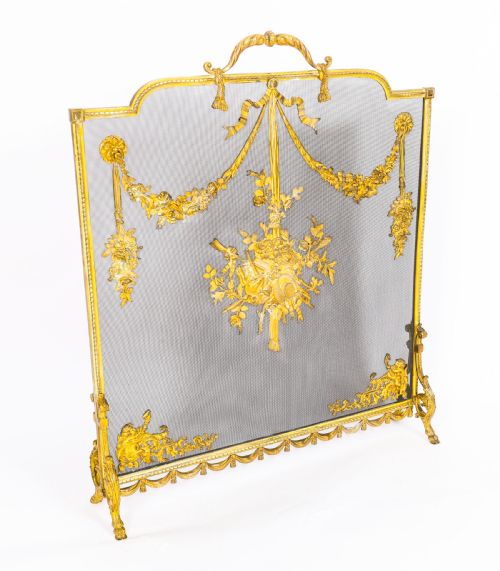
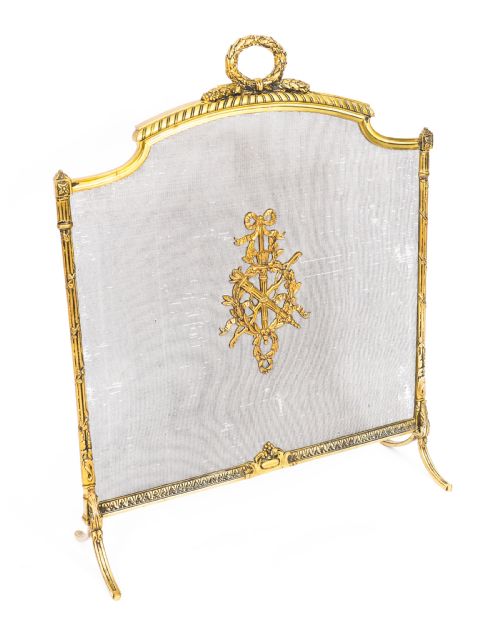
A bronze fireplace guard provides a decorative barrier against stray embers while anchoring the hearth with period weight.
Bronze Fireplace Guard
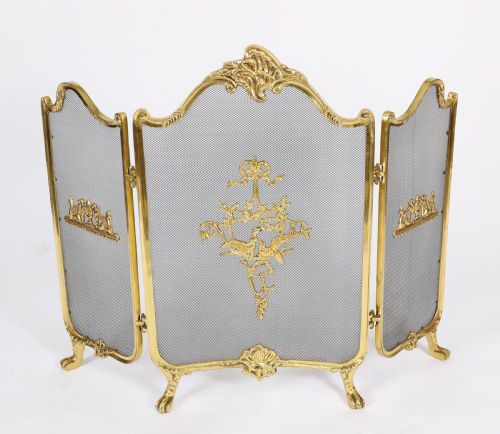
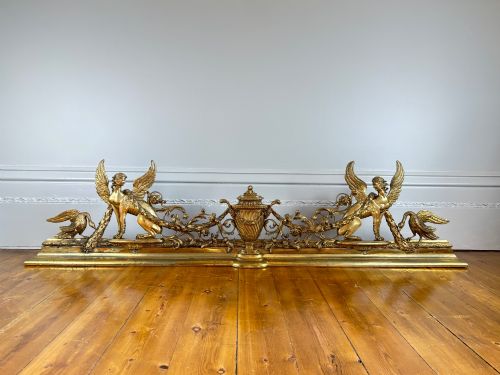
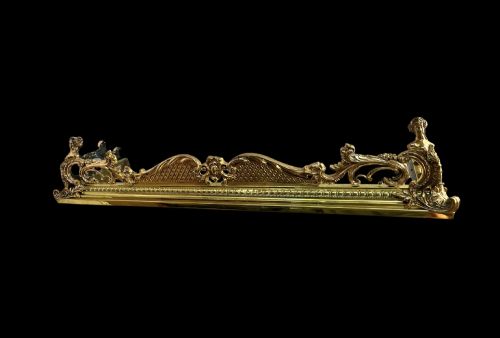
A bronze fireplace guard encompasses freestanding fire screens and adjustable hearth fenders dating from the nineteenth century into the early twentieth century. These pieces emerge in styles ranging from robust Victorian brass and iron forms to ornate French Rococo and Empire Revival designs.
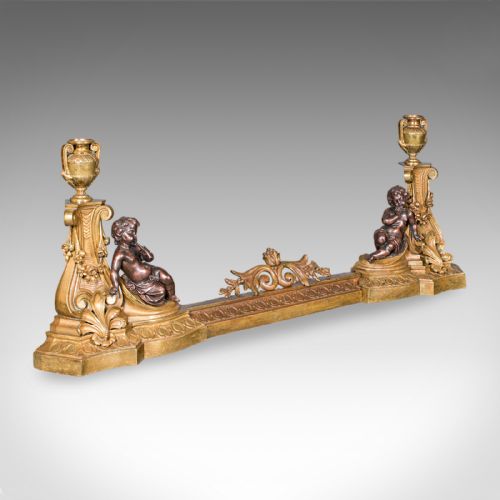
The most common iterations on this page are French fire screens executed in gilt bronze, alongside adjustable metal fenders designed to enclose the hearth opening. Pieces often incorporate mesh panels, classical trophies, or flaming torch motifs that reflect the prevailing taste of their period of origin.
Materials and construction
The construction relies heavily on cast bronze, brass, and ormolu, often paired with iron, steel mesh, or wire mesh to form the protective barrier. Artisans utilised techniques such as fire gilding or mercury plating to achieve the rich surface finishes characteristic of gilt bronze and ormolu.
Many fenders and screens feature mechanical adjustment systems, allowing the width or components to adapt to different hearth dimensions. Structural integrity is maintained through heavy metal casting and secure mounting of decorative mounts and chenets.
Materials documented across the inventory include gilt bronze, ormolu, polished steel, wire mesh, and solid walnut.
Markers of quality
Quality rests in the crispness of the casting and the depth of the chased detail across floral motifs, musical trophies, and classical ornamentation. Finer examples display meticulous hand-finishing on secondary surfaces and robust mechanical joints on adjustable elements.
The choice of primary metal and the preservation of the original fire gilding or ormolu plating distinguish higher grade pieces from standard commercial hearth accessories. Substantial weight and the integration of secondary materials like etched glass or walnut indicate superior manufacture.
E F Caldwell New York
The Bronze Fireplace Guard Glossary
- Ormolu
- Gilt bronze produced by applying a mercury and gold amalgam to a bronze base and heating it. This technique creates a durable, golden surface finish found on many French hearth accessories.
- Chenet
- An alternative term for firedogs or fire irons used to support logs in an open hearth. They frequently appear in matching pairs alongside hearth fenders.
- Fire screen
- A decorative barrier placed in front of a fireplace opening when not in use. They utilise metal mesh, glass, or solid panels to contain stray sparks.
- Fender
- A low metal guard placed on the floor around the hearth perimeter. Adjustable versions can be altered in length to fit various fireplace openings.
- Gilt bronze
- Bronze that has been coated with a thin layer of gold leaf or gold paint. It provides the bright metallic lustre seen on nineteenth-century French pieces.
Bronze Fireplace Guard: Frequently Asked Questions
How do I measure for a fender?
Measure the width of the fireplace opening and the hearth stone where the guard will rest. Account for whether the piece is fixed or adjustable.
Adjustable fenders offer flexibility, but solid bronze fenders require precise floor dimensions to ensure a stable fit against the surround.
Can I use these screens with an active fire?
Most antique screens with wire or steel mesh function effectively to catch sparks and embers. Solid glass or fabric panels require careful distance from intense heat.
Check the integrity of the mesh and frame before placing any guard in front of an open, burning fire.
How do I clean gilt bronze?
Dust the surface gently with a soft, dry cloth to remove surface particles. Avoid harsh chemical cleaners that can strip historic gilding.
Moisture should be kept away from ormolu and gilt surfaces to prevent tarnishing or lifting of the delicate metallic finish.
What is the difference between a screen and a fender?
A screen stands upright to block the hearth opening, whereas a fender rests flat on the floor around the hearth perimeter.
Screens protect the room from sparks, while fenders primarily contain rolling logs and define the hearth boundary.