


Bronze Figural Torchere Lamps
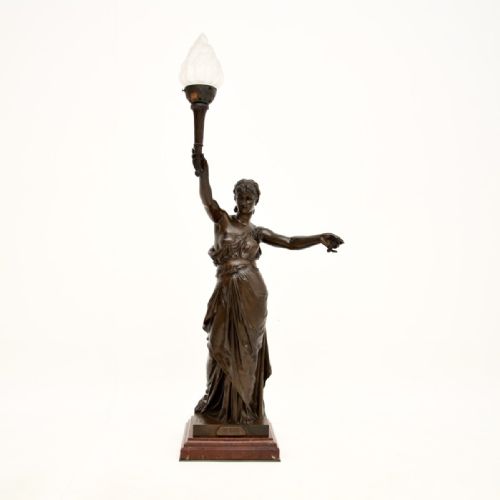
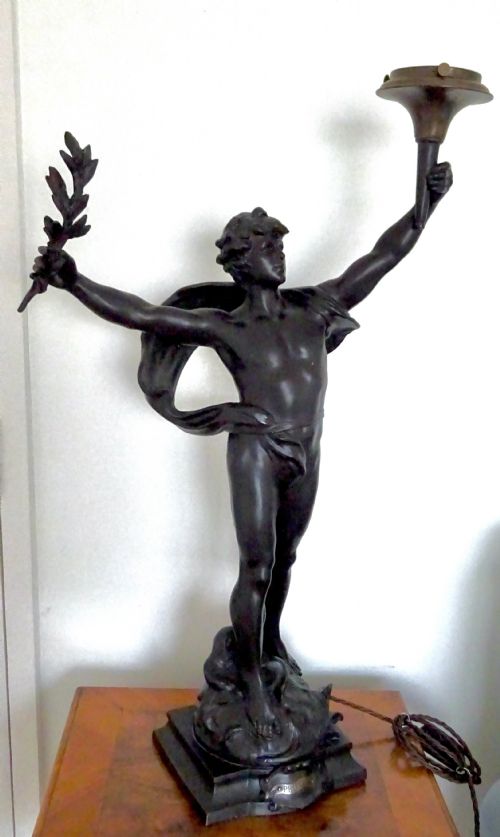
These bronze figural torchere lamps combine sculptural human forms with elevated light sources, offering a striking centrepiece for a traditional interior.
Bronze Figural Torchere Lamps
When you search for bronze figural torchere lamps, you encounter large decorative lighting pieces that integrate cast human figures holding or supporting light standards. These objects frequently emerge from nineteenth-century French workshops, spanning Regency, Victorian, and Edwardian periods.
The selections on this page predominantly feature table lamps and floor lamps constructed as figural torcheres. Figures such as cherubs, classical allegories, and mythological subjects stand upon marble, china, or column bases.
Originating largely from French Neoclassical, Rococo Revival, and Second Empire traditions, these items serve both functional illumination and monumental sculptural display. The forms range from modest table heights to towering seven-foot pairs.
How they were made
The primary construction relies on metal casting, utilising bronze, gilt bronze, brass, and alternative metals such as spelter. Artisans combined these metal bodies with carved wood elements and integrated glass or frosted glass shades.
Many of the finer examples bear the signatures of notable sculptors, indicating a process that began with a detailed clay or wax model before metal casting and patination. Surface treatments include combinations of gilt and patinated finishes to highlight the sculptural contours.
Bronze Figural Torchere Lamps Retail Price Guide 2026
Typical asking prices for bronze figural torchere lamps among the pieces listed under this phrase on Sellingantiques today, from the lower quarter to the upper quarter. They describe what is for sale here now, not the wider market.
Listings feature table lamps, floor lamps, and torcheres across the nineteenth century, Regency, and Edwardian eras.
What varies in quality
Quality reveals itself primarily in the crispness of the metal chasing and the fidelity of the figural sculpture. Pieces bearing the signatures of known artists demonstrate superior modelling compared to anonymous commercial castings.
The choice of base materials, such as solid marble or fine ceramic china, alongside the depth of the bronze patination, separates standard decorative pieces from monumental works of art.
F. De Luca·Emile Picault·Humphrey Hopper·Jean-Jules Cambos·François-Christophe-Armand Toussaint·Coutan·Moreau
The Bronze Figural Torchere Lamps Glossary
- Torchere
- A tall ornamental stand or floor lamp designed to hold a light source. In these pieces, the figure itself often supports the torch or lamp.
- Spelter
- A zinc-based alloy utilised as a cost-effective alternative to bronze. It appears frequently in later nineteenth and early twentieth-century figural lamps.
- Patination
- The surface treatment or ageing applied to bronze and other metals. A rich patina enhances the visual depth of the sculptural clothing and skin.
- Gilt Bronze
- Bronze metal coated with a thin layer of gold. This finish provides a bright, reflective surface characteristic of French Neoclassical and Rococo Revival styles.
Bronze Figural Torchere Lamps: Frequently Asked Questions
How are bronze figural torchere lamps powered?
These lamps have generally been adapted for modern electrical wiring to function safely in contemporary homes. The original oil or gas fittings are replaced while preserving the exterior metal structure.
You should consult a qualified electrician to check the internal wiring and ensure compatibility with modern domestic sockets before regular use.
Where should I place a torchere lamp?
Due to their substantial height and sculptural presence, floor-standing torcheres suit spacious reception rooms, entrance halls, or grand corners. Table versions function effectively on sturdy sideboards or pedestals.
Ensure the supporting surface or floor can bear the considerable weight of bronze and marble constructions before positioning the lamp.
How do I distinguish bronze from spelter?
Bronze offers a heavier weight and a resonant sound when struck lightly, whereas spelter feels lighter and softer to the touch. Spelter is also more brittle and typically shows a greyish metal underneath worn surface finishes.
Examining the underside or unpolished areas often reveals the distinct metal composition used by the maker.
What periods do these lamps represent?
The pieces span the nineteenth and early twentieth centuries, drawing heavily on Regency, Victorian, and Edwardian design aesthetics. French styles dominate the selection, particularly Neoclassical and Second Empire movements.
Identifying the stylistic markers helps determine whether a piece belongs to the early nineteenth-century neoclassical revival or later Edwardian manufacturing periods.