



Bronze Enamel Dish
A bronze enamel dish brings colour and metalwork together into a single decorative surface that sits comfortably on a table or cabinet.
Bronze Enamel Dish
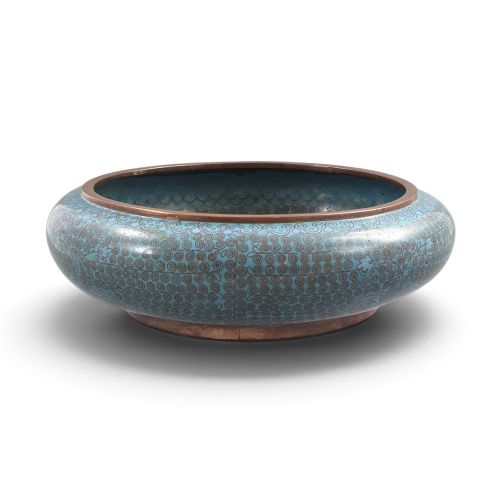
A bronze enamel dish covers a variety of open vessels, including chargers, plates, bowls, pin trays, and centrepieces produced during the nineteenth century. These objects combine metal foundations with vitreous glass pastes to create decorative surfaces for domestic display.
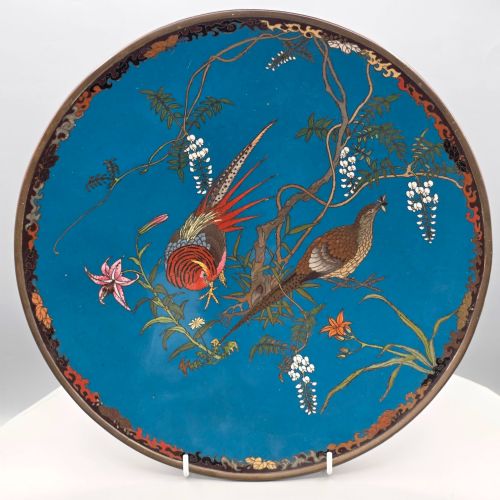
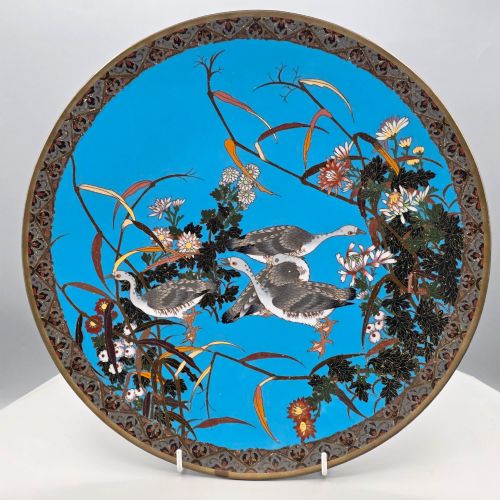
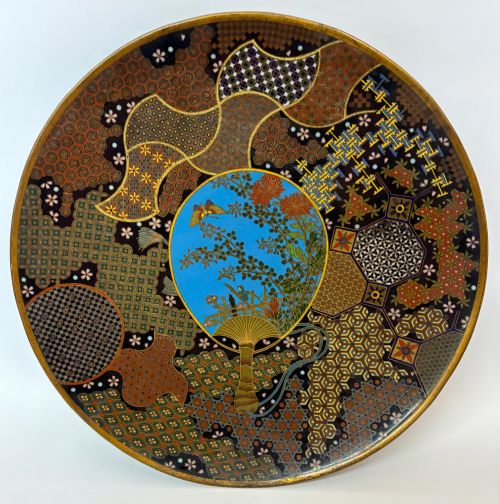
The selections span distinct geographical traditions, uniting Japanese Meiji and Edo period work, Chinese pieces from the Qing dynasty and Beijing workshops, and European examples from French makers. Japanese items frequently feature cloisonné techniques depicting birds, dragons, and chrysanthemums.
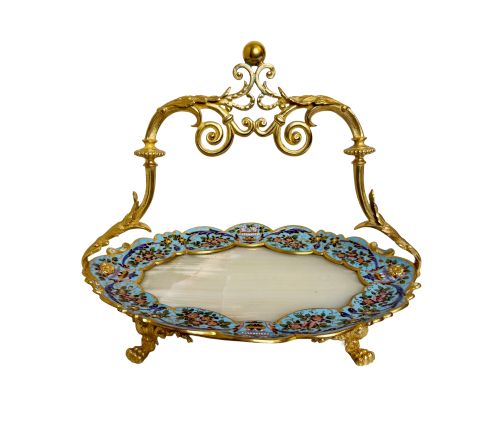
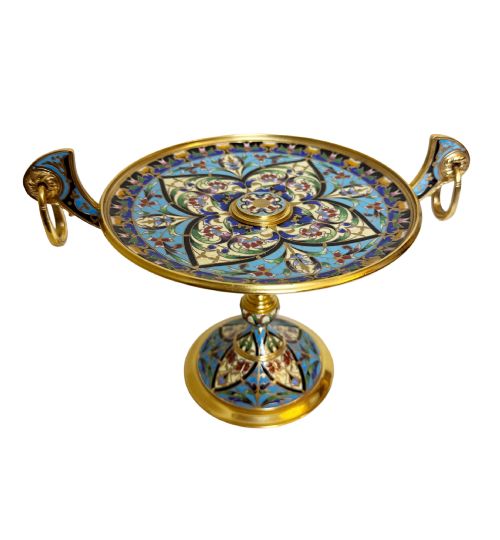
European variants draw upon French Rococo Revival and Belle Epoque styles, incorporating ormolu, gilt bronze, and porcelain elements alongside champlevé and Limoges enamel. Tazza forms and footed trays appear regularly among these Western decorative objects.
Materials and construction
Makers formed the primary structures from bronze, gilt bronze, ormolu, brass, and copper, occasionally combining them with porcelain, onyx, and tree bark foundations. These metals provided rigid support for the heavy glass pastes applied across the interior and exterior surfaces.
Cloisonné and champlevé techniques defined the surface patterns, using metal wires or carved troughs to separate individual cells of coloured enamel before firing and polishing. French items frequently mounted Limoges or Sevres plaques within cast gilt bronze frameworks.
Bronze Enamel Dish Retail Price Guide 2026
Typical asking prices for bronze enamel dish among the pieces listed under this phrase on Sellingantiques today, from the lower quarter to the upper quarter. They describe what is for sale here now, not the wider market.
Several Japanese chargers record lively scenes featuring leaping koi, frogs, and single dragons sharing space with delicate chrysanthemums and geese.
Judging quality and execution
Quality rests on the precision of the metalwork and the control demonstrated during the enamel firing process. Masterpieces exhibit crisp wirework, minimal pitting within the glass fields, and harmonious colour palettes across complex pictorial subjects.
The integration of mounts and secondary materials also distinguishes standard production from finer work. Pieces carrying signatures from established makers or displaying complex figural subjects demonstrate greater ambition in design and execution.
The Bronze Enamel Dish Glossary
- Cloisonné enamel
- A metalworking technique where flat wires are soldered to a metal base to create compartments filled with glass paste and fired. The resulting surface is ground smooth to reveal the intricate pattern.
- Champlevé enamel
- A method where troughs or cells are hollowed out directly into the metal plate and filled with enamel before firing. This technique produces bold colour areas defined by thick metallic borders.
- Ormolu
- Gilded bronze used extensively in French decorative arts to mount porcelain, glass, and enamel plaques. The finish provides a bright golden surface that contrasts with the rich colours of the enamel.
- Tazza
- A shallow ornamental bowl or cup mounted on a stem and foot. These pedestal vessels served as centrepieces or display dishes on nineteenth-century tables.
- Totai Shippo
- A Japanese technique where enamel is applied over a porcelain or ceramic body rather than a metal base. This method creates translucent vessels that mimic traditional cloisonné effects.
Bronze Enamel Dish: Frequently Asked Questions
How are bronze enamel dishes cleaned?
Dust these surfaces gently with a soft, dry cloth to protect the delicate enamel and metal patination. Avoid commercial metal polishes or liquid cleaners, which can seep into microscopic fissures and damage the glass or gilding.
Keep pieces away from direct sunlight and high humidity to prevent the metal from tarnishing or the enamel from destabilising over time.
What is the difference between champlevé and cloisonné?
Cloisonné involves soldering thin metal wires onto a solid metal base to form small boundaries for the enamel paste. Champlevé relies on carving or casting troughs directly into the thick metal plate to hold the coloured glass.
Both methods produce patterned surfaces, but cloisonné allows for finer, more detailed pictorial designs, while champlevé offers bolder, more structural outlines.
Where were these pieces made?
The inventory divides primarily between East Asian workshops and European manufacturing centres. Japanese Meiji and Edo period items originate from regions known for exceptional metal and enamel work.
European examples stem largely from French workshops in Paris, incorporating local ormolu mounts and porcelain elements characteristic of the Belle Epoque and Rococo Revival periods.
How do I date a bronze enamel dish?
Dating relies on stylistic markers, manufacturing techniques, and occasional artist signatures found on the base or rim. Nineteenth-century pieces often reflect specific historical revivals or distinct Japanese imperial periods.
Examining the metal alloy underneath and the composition of the glass enamel provides further clues regarding the era of production.