

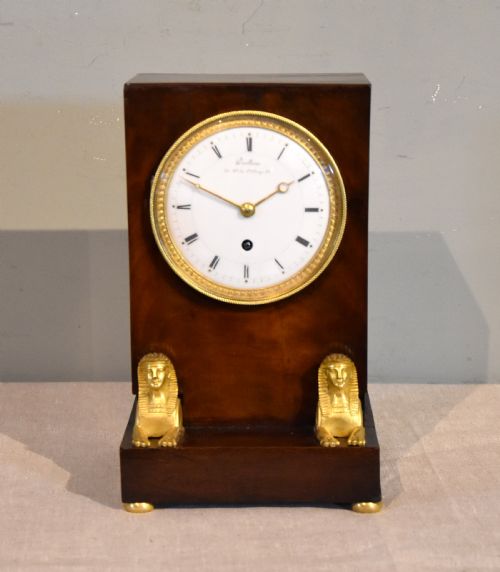
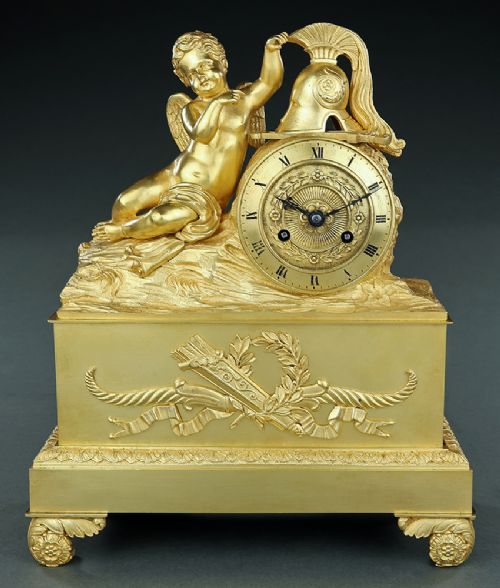
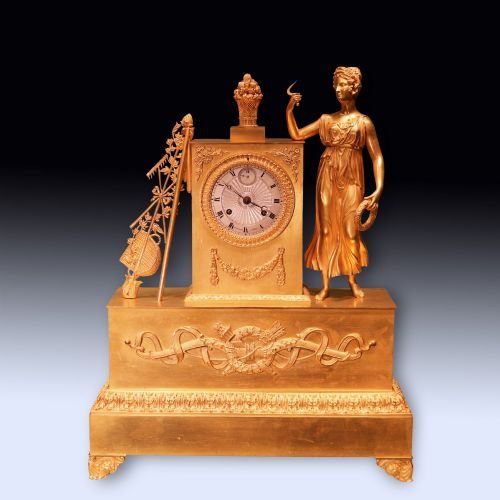
Bronze Empire Table Clock
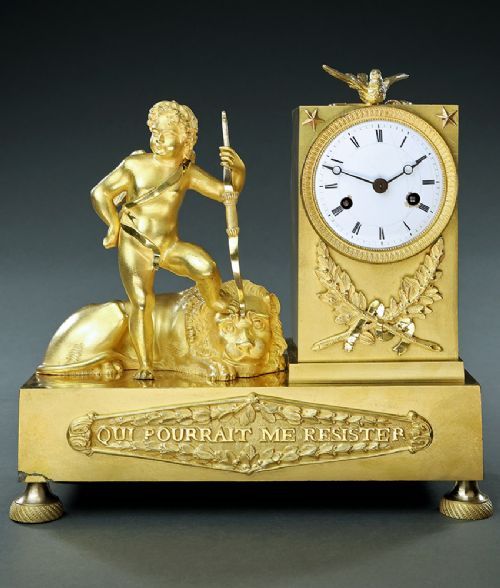
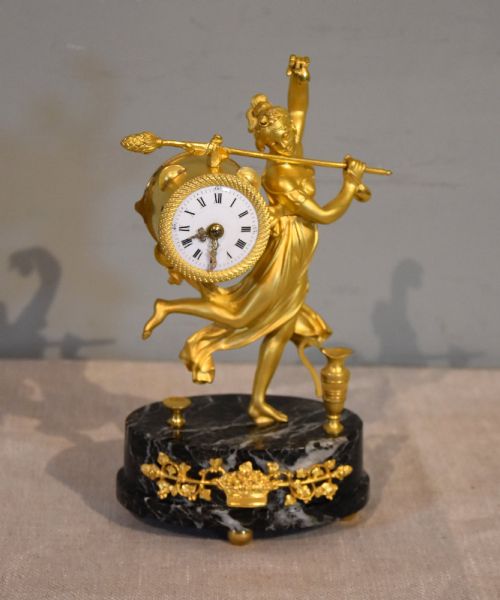
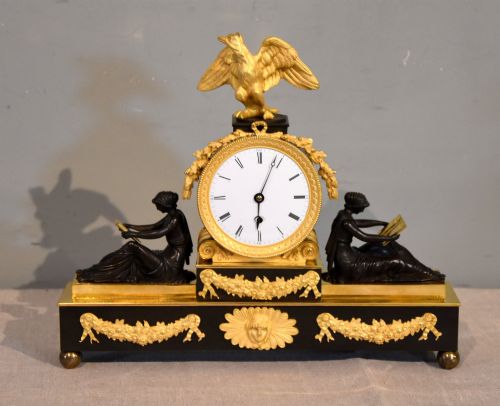
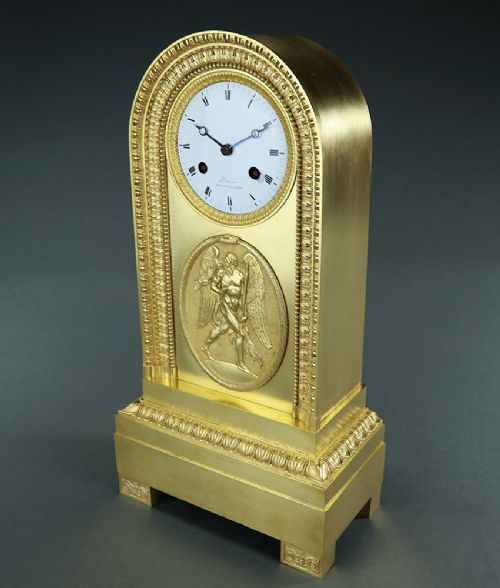
These bronze empire table clock examples combine heavy metalwork with classical allegories, offering a centrepiece that anchors a mantel with nineteenth-century French precision.
Bronze Empire Table Clock
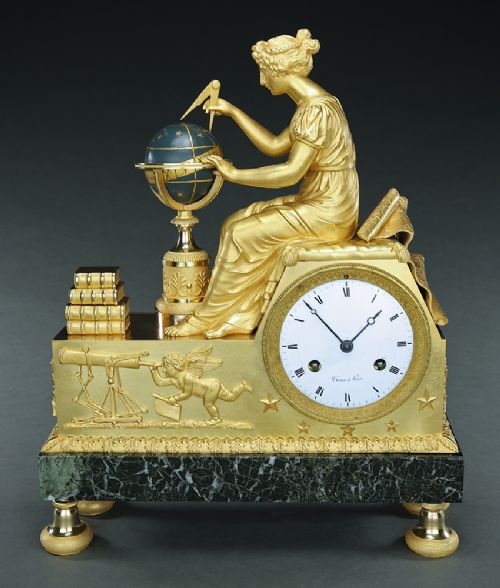
A bronze empire table clock gathers classical motifs, allegorical figures like Napoleon or Cronos, and architectural forms originating mainly from nineteenth-century French workshops. Buyers encounter mantel clocks, portico clocks, and clock garnitures executed in styles ranging from strict French Empire to Louis XVI Revival and Victorian interpretations.
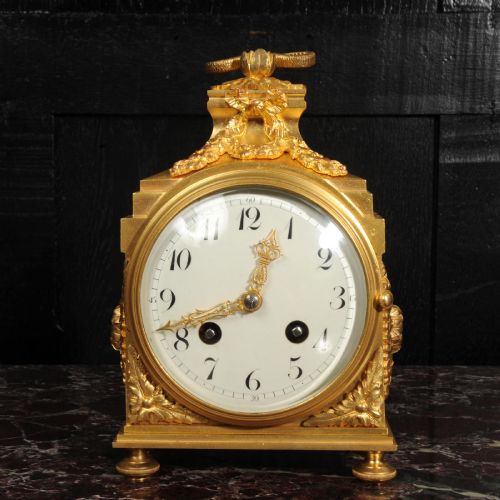
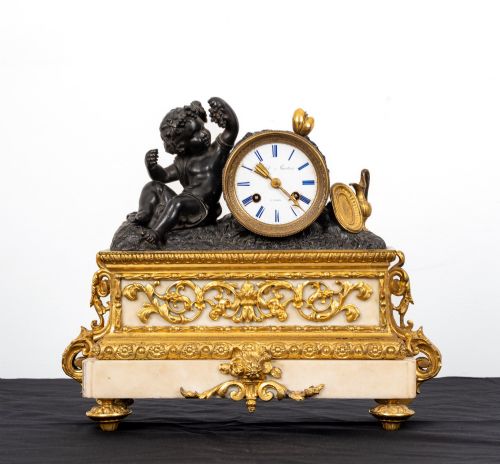
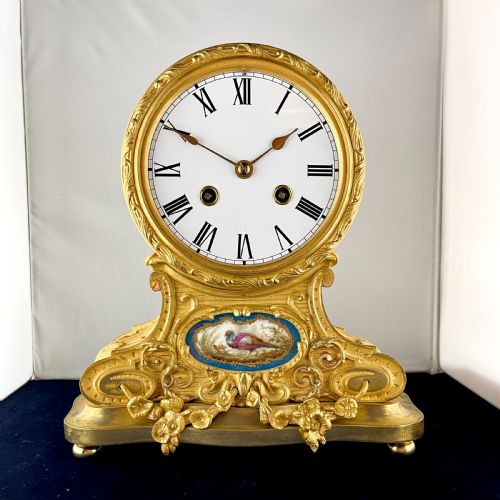
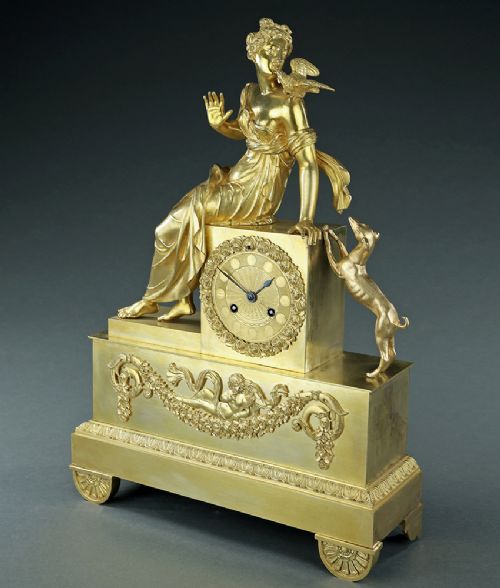
Most pieces date from the nineteenth century, encompassing Regency brass timepieces alongside later marble and gilt bronze designs. Forms vary from drumhead cases and borne clocks to elaborate figural compositions depicting mythological scenes such as the triumph of love.
Makers and retailers recorded on these dials include Japy Freres, Samuel Marti, and Baetens London, showing both French foundry work and English Regency trade. The dominant format remains the mantel clock, housing an eight-day movement beneath ormolu mounts and carved marble bases.
Materials and construction
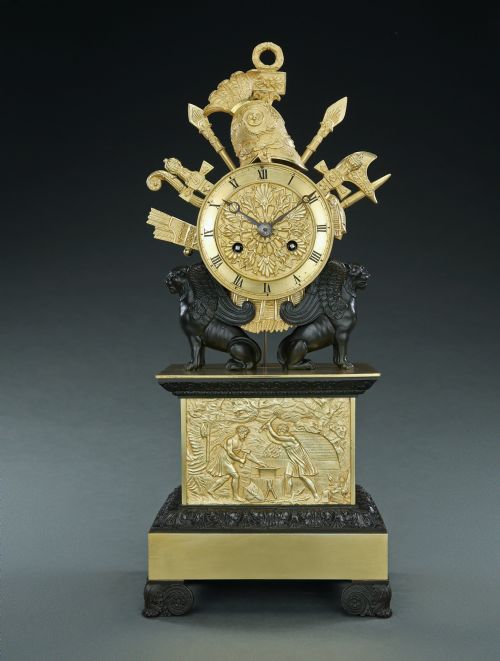
Foundries cast these clocks using bronze, which was then mercurial gilt to create ormolu or treated to achieve a dark patinated finish. Mounts and figures were chased by hand to sharpen details on drapery, foliage, and classical armour before assembly.
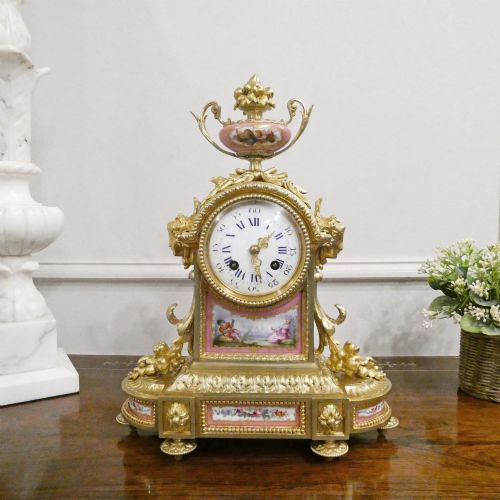
Marble in green, rouge, and white varieties forms the architectural plinths and column bodies, often paired with cut crystal or porcelain panels. Movements rely on brass gear trains, frequently featuring anchor escapements and bell or gong strikes.
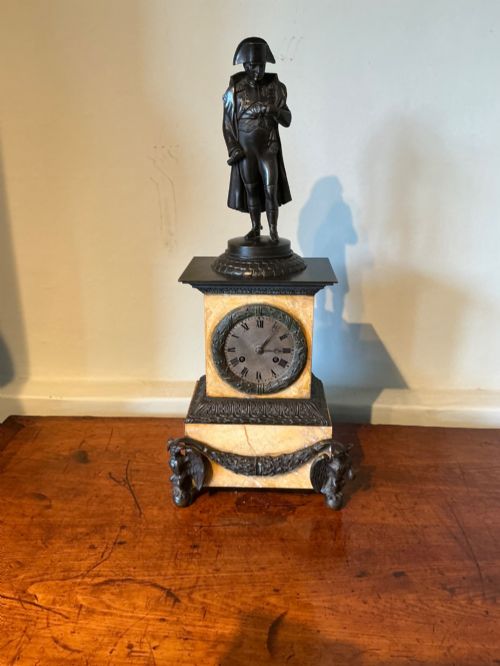
Several clocks depict Napoleon marching across alpine passes or surveying war trophies, letting time be told under the watchful gaze of a tiny emperor.
Assessing quality in bronze empire table clocks
The crispness of the bronze chasing separates standard production from superior work, as deep chisel marks and clean undercutting reveal the hand of a skilled artisan. Heavy, solid ormolu retains its rich golden lustre far better than thin, worn plating over base brass.
Integrated design elevates a piece, where dial enamelling, bezel casting, and figural sculpture share a unified aesthetic rather than appearing as disparate components assembled later. Original matched garnitures and signed movements by known makers provide further distinction.
Japy Freres·Siffel and Cartier·Baetens London·Canaillor of Paris·Rodier·Berger Paris·Samuel Marti·Reiche
The Bronze Empire Table Clock Glossary
- Ormolu
- Gilt bronze created by applying a mercury and gold amalgam to a bronze base and heating it to drive off the mercury. This technique produced a durable golden surface seen on nineteenth-century mounts.
- Portico clock
- A mantel clock structured like a miniature classical temple with four supporting columns. These frames frequently house suspended pendulums within the central opening.
- Garniture
- A set comprising a central clock flanked by matching ornamental pieces such as candelabra or urns. They were designed to coordinate symmetry across a mantelpiece.
- Pendule d'Officier
- A portable military or travel clock fitted with a carrying handle on top. They typically feature robust movements housed in architectural bronze cases.
- Fusee
- A conical pulley used in clock movements to equalize the declining pull of a mainspring as it unwinds. This mechanism helps maintain steady timekeeping accuracy.
Bronze Empire Table Clock: Frequently Asked Questions
How do I wind a bronze empire table clock?
Most of these clocks utilise a key inserted into winding holes on the enamel dial to tension the mainspring barrels.
Care must be taken not to overwind the movement, stopping as soon as resistance is felt.
Where were these clocks originally placed?
They stood on mantelpieces above fireplaces, on console tables in formal reception rooms, or upon desks in studies.
Their substantial marble and bronze weight provided stability on prominent furniture surfaces.
How do I distinguish French Empire from later revivals?
Original Empire pieces dating from the early nineteenth century favour strict military, astronomical, and classical Roman themes.
Later Victorian and Louis XVI revival examples often blend softer rococo curves or incorporate porcelain plaques.
Are these clocks suitable for daily timekeeping?
Many retain working mechanical movements that keep accurate time when properly set on a level surface.
Professional servicing is recommended to clean old oil and adjust the pendulum beat for reliable operation.