


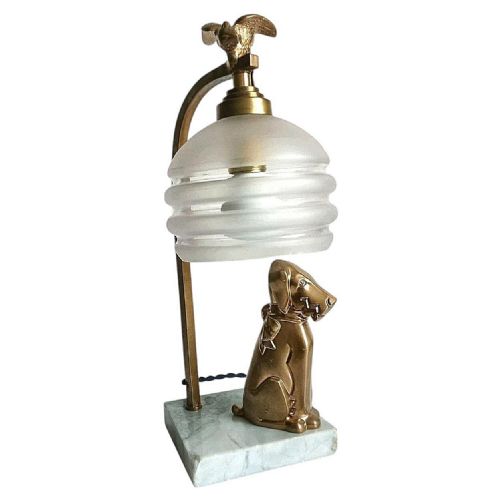


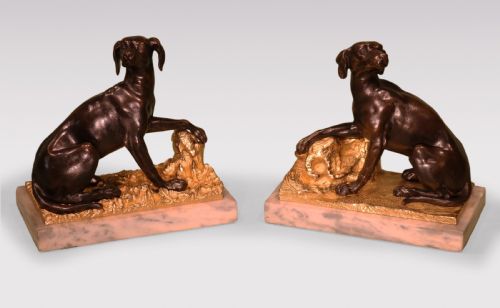


Bronze Dog on Marble
A bronze dog on marble brings together solid metal casting and heavy stone bases, offering collectors enduring animalier studies and stylish Art Deco figures.
Bronze Dog on Marble
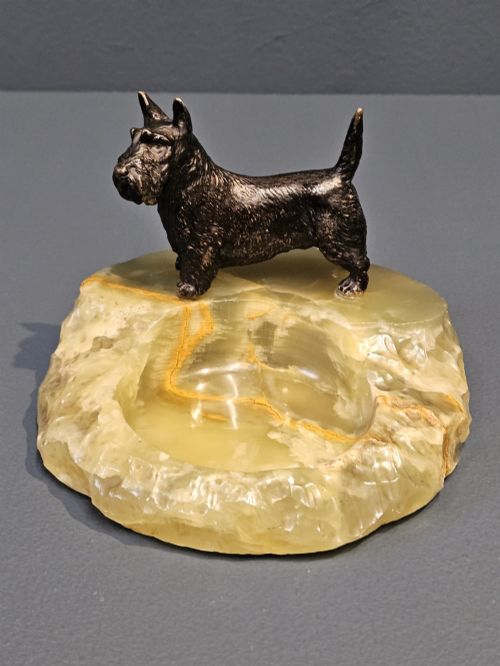
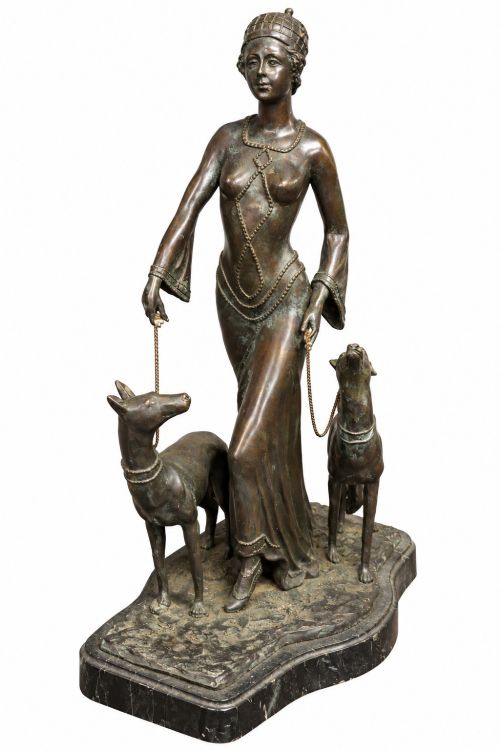
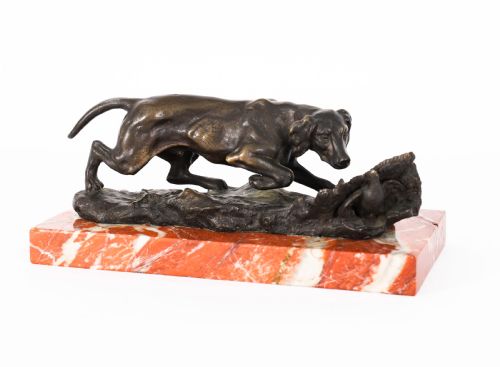
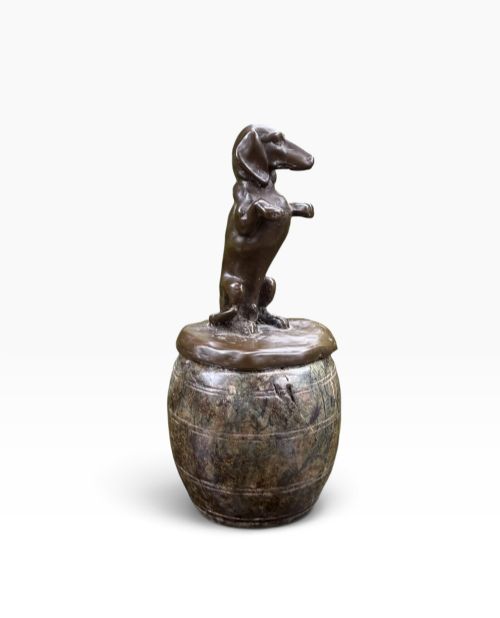
A bronze dog on marble combines metal animal sculpture with a heavy stone plinth, appearing across nineteenth-century animalier pieces and twentieth-century Art Deco designs. When you examine a bronze dog on marble, you find subjects ranging from hunting hounds and sporting gundogs to domestic pets and figural groups with children.
The most common examples on this page date from the nineteenth century through the 1920s and 1930s. These pieces function variously as standalone sculptures, bookends, mantel clocks, table lamps, and night lights.
How they were made
Maker's workshops cast the metal figures in bronze, spelter, or brass, applying patination to create tone and depth on the surface of the animal. These metal figures were then mounted onto bases constructed from marble or onyx.
Some decorative items incorporate additional materials such as glass, frosted glass, or ormolu details. Lamp and night light variants integrate electrical fittings or lighting elements alongside the stone and metal components.
Bronze Dog on Marble Retail Price Guide 2026
Typical asking prices for bronze dog on marble among the pieces listed under this phrase on Sellingantiques today, from the lower quarter to the upper quarter. They describe what is for sale here now, not the wider market.
Listings feature 19th Century, Edwardian, and Art Deco periods, spanning the 1880s through the 1930s.
What varies in quality
Quality rests in the crispness of the metal casting and the fidelity of the animal's musculature and expression. Finer nineteenth-century animalier bronzes display careful hand-chasing after casting, whereas later Art Deco pieces rely on stylised lines and geometric form.
The selection of the marble base also distinguishes better examples, where dense, well-cut stone complements the weight and scale of the metal sculpture rather than overpowering it.
Georges Gori·Carl Kauba·Pierre Jules Mene·Prosper Lecourtier·Delabrierre·C Masson·Alexandre Kelety·Dumond·J Moigniez·Geo Maxim·H Bal·Christophe Fratin·L Bureau
The Bronze Dog on Marble Glossary
- Animalier
- A nineteenth-century artistic movement focusing on the realistic portrayal of animals. Sculptors in this tradition studied anatomy closely to capture creatures in motion or repose.
- Spelter
- A zinc alloy commonly utilised as an economical alternative to bronze. It often received a bronze-coloured patination to mimic heavier metal work.
- Patination
- The surface treatment applied to metal to alter its colour and texture. This finish protects the metal and accentuates fine sculptural details.
- Ormolu
- Gilded bronze used for decorative mounts and accents. It provides a bright contrast against darker patinated metals and polished stone.
Bronze Dog on Marble: Frequently Asked Questions
What is a bronze dog on marble?
A bronze dog on marble is a decorative sculpture featuring a metal animal figure mounted onto a stone base. These pieces range from realistic nineteenth-century animalier studies to stylised twentieth-century creations.
They appear in various functional forms, including bookends, clocks, and night lights, serving as both art objects and practical items.
How do I identify Art Deco pieces?
Art Deco pieces typically date from the 1920s and 1930s, featuring streamlined geometry and stylised animal forms. You will often see sleek greyhounds, borzois, or alsatians paired with polished marble plinths.
These designs frequently incorporate lighting elements, glass panels, or novelty clock sets into the composition.
Are all these dog figures solid bronze?
Not all figures are cast in bronze, as makers also utilised spelter, brass, and patinated metal. Spelter provides a lighter, more affordable alternative that was treated to resemble bronze.
Inspecting the material helps distinguish heavy nineteenth-century animalier casts from later decorative alloy pieces.
How should I display them at home?
Because of the heavy stone bases, these sculptures require sturdy surfaces like mantelpieces, sideboards, or large desks. Their weight anchors them securely when used as bookends or clock supports.
Keep them away from direct heat sources to protect both the stone and the metal patination over time.