
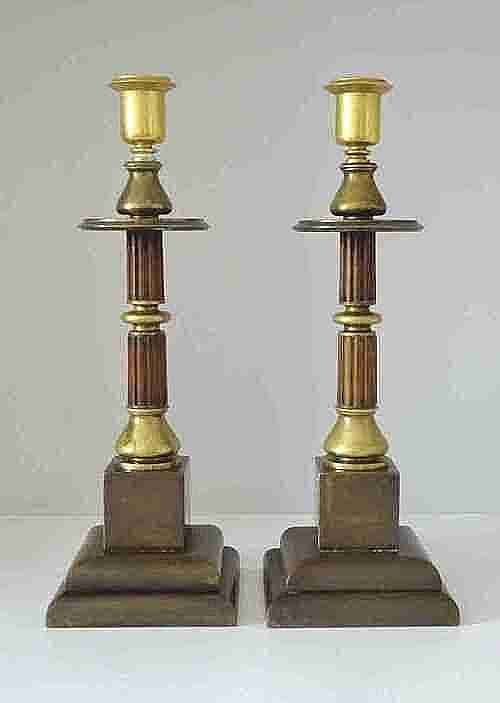


Bronze Column Lighting
Bronze column lighting brings stately classical proportion and substantial weight to an interior, channelling centuries of decorative arts into a functional centrepiece.
Bronze Column Lighting
Bronze column lighting comprises table lamps, floor standards, torcheres, and candelabras built around a central architectural shaft. These fixtures derive from 19th Century, Regency, and Empire designs, often originating from French workshops that favoured classical orders.
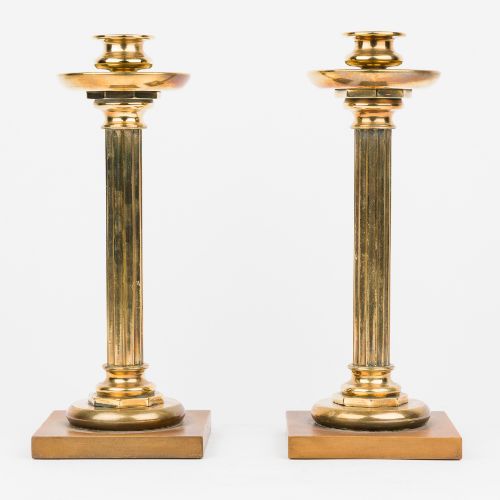
The buyer meets variations ranging from compact brass and bronze candlesticks converted for electrical use to large scale floor lamps. Many examples incorporate materials such as marble, crystal, or blue glass alongside the metal shaft to alter the silhouette.
French Empire and Neoclassical styles dominate the selections, alongside later Art Deco and Edwardian iterations. Pieces frequently appear as matched pairs, though single desk lamps and standard lamps also populate the inventory.
How they were made
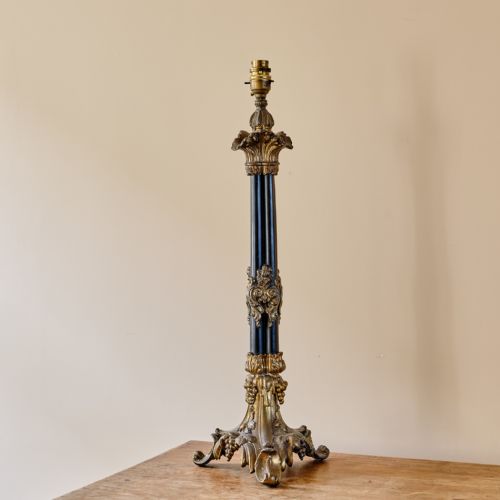
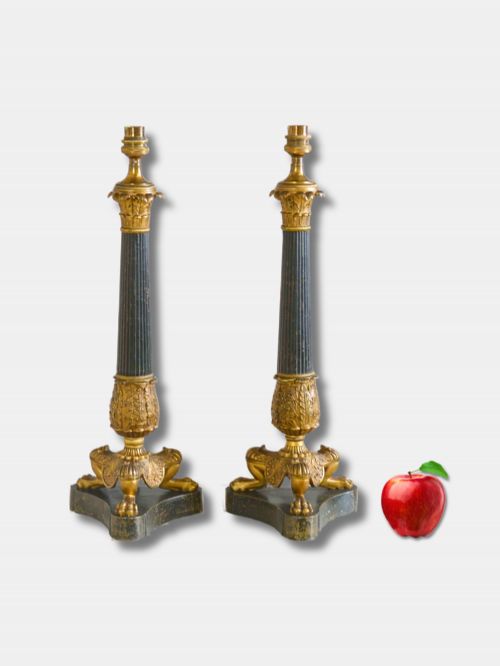
Maker workshops combined cast bronze, brass, and ormolu, applying gilt finishes to highlight intricate surface detail. Ormolu, an alloy simulating gold, provides the bright contrasting elements against darker patinated bronze columns.
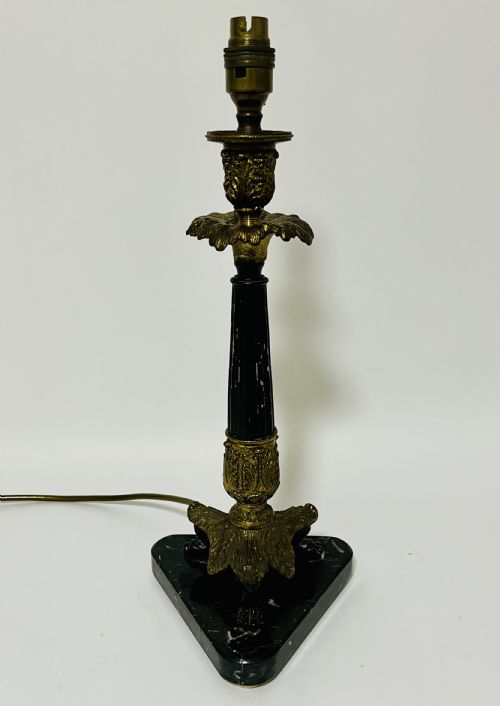
Structural integrity often relied on heavy bases of marble or stone to balance the tall central pillar, sometimes incorporating lion paw feet or mythical motifs. Additional decorative impact came through integrated glass elements, rock crystal columns, or faux lapis lazuli sections.
Materials recur across bronze, brass, ormolu, marble, crystal, and fabric elements.
What varies in quality
Quality depends heavily on the crispness of the casting and the depth of the hand-chased detail on the bronze and ormolu mounts. Finer examples retain sharp acanthus leaves, crisp fluting along the column, and heavy, stable stone or metal bases.
The integration of secondary materials dictates the distinction between standard production and exceptional studio pieces. Superior specimens employ genuine rock crystal, fine marble, or fire gilt rather than simple painted finishes, ensuring the patina ages gracefully.
Humphrey Hopper·Joseph Hinks·Ferdinand Barbedienne
The Bronze Column Lighting Glossary
- Ormolu
- A gilded bronze technique utilising mercury amalgamation, popular in French furniture and lighting manufacture. It provides a durable, bright gold-coloured surface finish.
- Torchere
- A tall decorative stand or floor lamp designed originally to carry a torch or candle. In modern contexts, it functions as a tall standard lamp directing light upward.
- Patinated bronze
- Bronze treated with chemicals or heat to produce a specific surface colour, most commonly dark brown or green. This layer protects the underlying metal and defines the visual tone.
- Neoclassical
- A style originating in the mid-18th century drawing inspiration from the classical art and culture of ancient Greece and Rome. It emphasises symmetry, straight architectural columns, and restrained ornamentation.
- Fluting
- Shallow, concave grooves running vertically along the shaft of a column. This classical architectural detail is frequently replicated in metal on lamp stems.
Bronze Column Lighting: Frequently Asked Questions
How do I wire antique bronze lamps?
Wiring requires running modern flexible cable up through the central hollow column of the bronze shaft. Professional electricians typically replace old lamp holders with modern brass fittings to meet safety standards while preserving the exterior structure.
Original switches are rarely retained, so inline cord switches or authenticated period key sockets provide a safe alternative for daily operation.
Are these lamps heavy to place?
The inclusion of solid bronze, brass, and marble bases gives these fixtures substantial weight. This heaviness ensures stability, particularly for tall floor lamps and large table models with wide shades.
Placement requires a sturdy surface or direct floor contact to support the dense metal construction safely.
How do I clean patinated bronze columns?
Dusting with a soft, dry microfibre cloth removes surface particles without disturbing the underlying metallic finish. Avoid abrasive cleaning agents or metal polishes that strip away historical patination and fire gilding.
Specialist conservation wax can be applied sparingly to protect exposed ormolu and bronze surfaces from moisture and handling marks.