



Twisted Stem Lamp
A twisted stem lamp brings vertical movement and texture to a room, catching the light across glass, brass, chrome, and wood.
Twisted Stem Lamp
A twisted stem lamp sits among table lamps and wall lights, defined by the spiral form running through its support. When people search for a twisted stem lamp, they generally find lighting fixtures spanning the Victorian, Edwardian, and Art Deco periods, alongside earlier oil lamps converted for modern use.
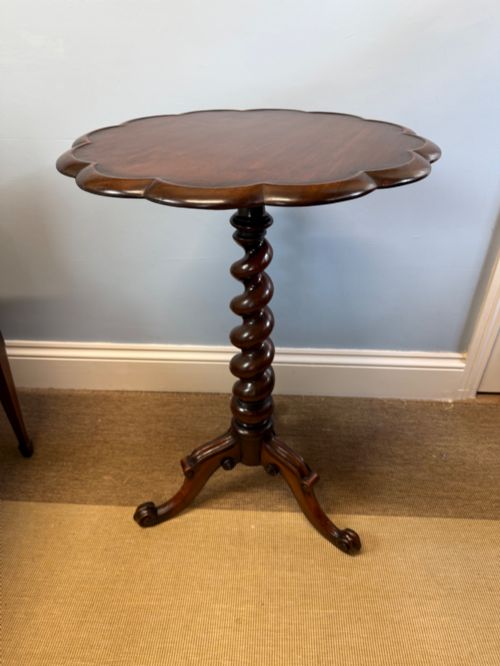
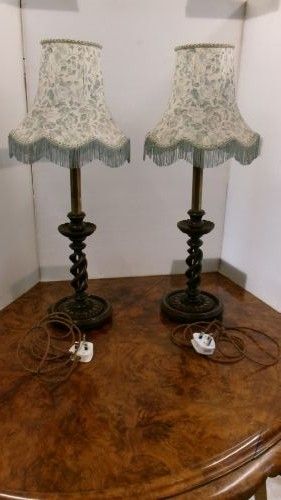
The selection on this page demonstrates various material approaches to the spiral motif. Brass and chrome versions utilise metal casting and turning techniques, while wooden examples display carved or twisted profiles in mahogany, walnut, and rosewood.
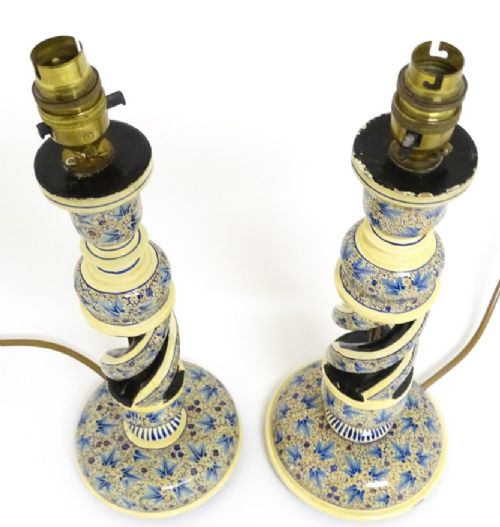
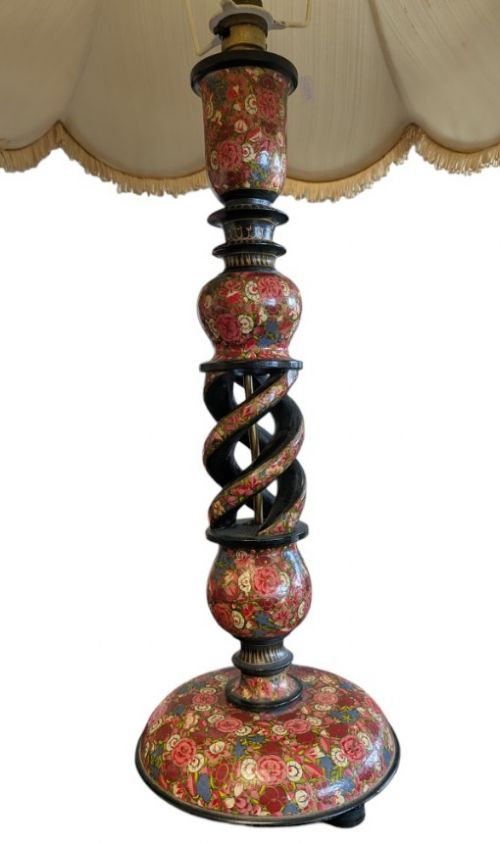
Origins and styles range from classic English designs to Anglo-Indian Kashmiri hand-painted work. Forms include double helix brass structures, tall wooden columns, and small oil lamps with incised twists.
How they were made
Makers shaped the twisted stems using traditional turning for hardwoods like mahogany and walnut, creating fluid spirals along the vertical axis. Metal variants in brass and chrome relied on casting, rolling, and precision assembly to achieve clean helical lines.
Surface finishes include hand-painted lacquer on papier-mache and wood, alongside polished metal surfaces. Combination pieces integrate bronze and brass or incorporate opaline glass elements within the structural framework.
Twisted Stem Lamp Retail Price Guide 2026
Typical asking prices for twisted stem lamp among the pieces listed under this phrase on Sellingantiques today, from the lower quarter to the upper quarter. They describe what is for sale here now, not the wider market.
Periods represented span the eighteenth century, Victorian era, Edwardian period, and 1930s Art Deco.
What varies in quality
Quality rests in the crispness of the twist and the integrity of the materials. Fine examples show clean, unbroken spiral lines whether carved in timber or formed in metal, with balanced proportions that hold the eye from base to shade.
The weight of the base and the precision of the joinery or metal fittings separate standard production from superior pieces. Original surfaces and retained period details, such as specific shade pairings or hand-painted decoration, elevate the character of the object.
The Twisted Stem Lamp Glossary
- Barley twist
- A carved or turned spiral column resembling a stalk of barley. This decorative motif appears frequently in wooden furniture and lamp stems from the Victorian period.
- Double helix
- Two congruent helices curves twisting about a common axis. Edwardian brass table lamps utilise this configuration to create an open, airy structural stem.
- Opaline glass
- A milky, semi-translucent glass developed in the nineteenth century. It diffuses light softly and pairs with metal mounts on period lighting.
- Marquetry
- The art of applying pieces of veneer to a structure to form decorative patterns. Walnut wine tables often employ this technique on circular tops.
- Incised twist
- A decorative spiral carved into the surface rather than formed by the profile of the object itself. Georgian oil lamps display this linear detail.
Twisted Stem Lamp: Frequently Asked Questions
What periods do these lamps come from?
The listings span several centuries, reaching from the eighteenth century through the Victorian and Edwardian eras into the Art Deco period of the 1920s and 1930s.
Materials and construction methods shift across these decades, moving from heavy carved hardwoods and brass oil lamps to sleek chrome finishes and painted Kashmiri surfaces.
How do I identify an Edwardian twisted stem lamp?
Edwardian examples often feature polished brass or bronze construction, utilising structural innovations like double helix stems and pairing with opaline glass.
These pieces reflect the lighter, more refined domestic interiors of the early twentieth century compared to earlier Victorian designs.
Are these lamps converted from old oil lamps?
Some pieces originate as older oil lamps, such as Georgian designs featuring incised twists, which have been adapted for electrical wiring.
Other lamps were manufactured specifically for domestic lighting during the early twentieth century using wood or metal.
How do Art Deco twisted lamps differ?
Art Deco pieces from the 1920s and 1930s favour bright chrome finishes and streamlined geometric twists rather than traditional carved wood or heavy brass.
They reflect the modern industrial aesthetics of the interwar period while maintaining the characteristic spiral silhouette.