
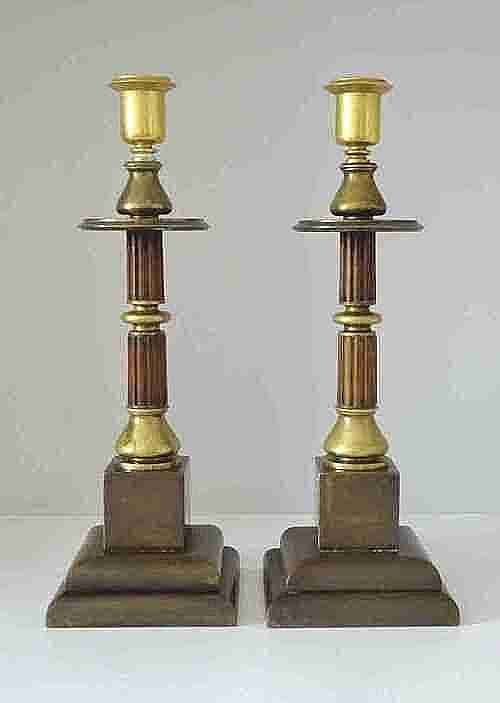


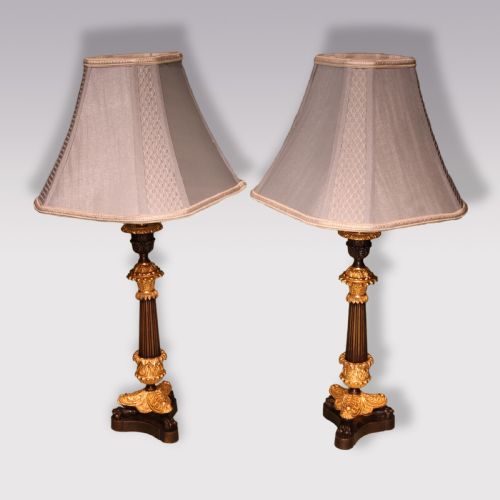


Bronze Column Candlesticks
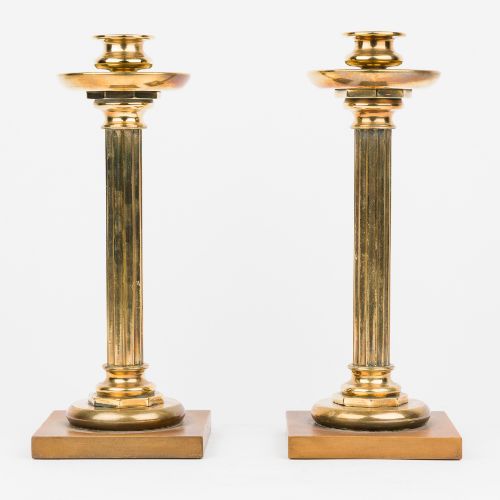
These bronze column candlesticks bring architectural dignity to a room, offering classical proportion and heavy metal weight.
Bronze Column Candlesticks
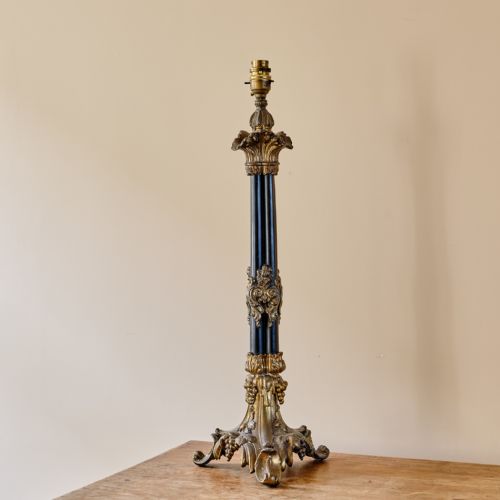
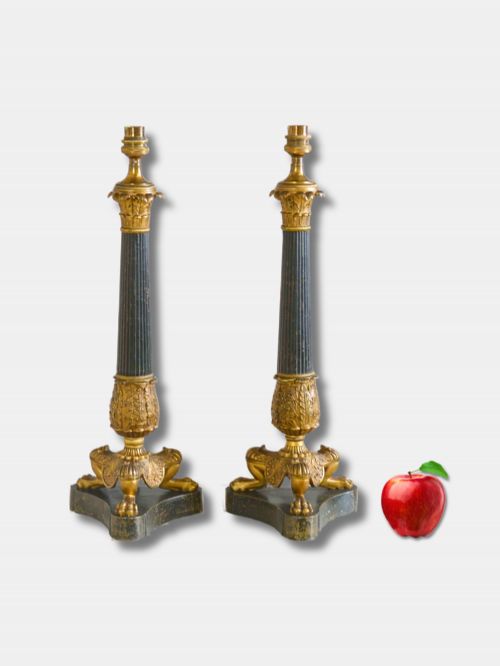
Bronze column candlesticks combine architectural shafts with solid metal bases, drawing heavily on classical design traditions. The pieces appearing here span the nineteenth century into the early decades of the twentieth century, with French Empire, Neoclassical, and Regency forms predominating.
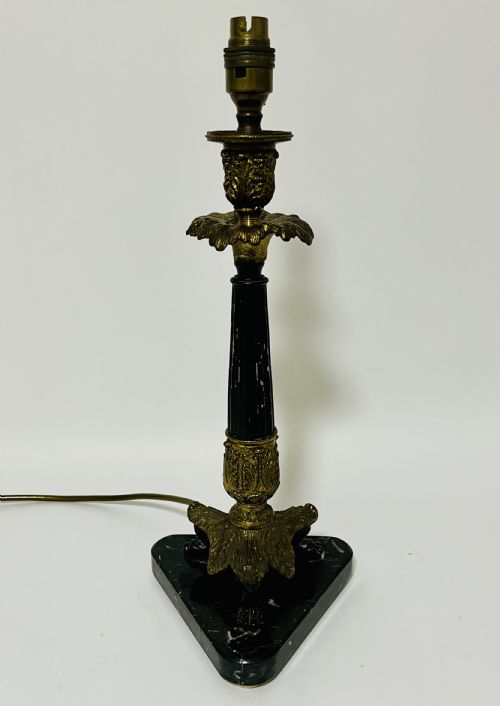
Buyers encounter both direct lighting instruments and converted table lamps, often wired for modern use while retaining their original form. Pairs dominate the selection, offering symmetrical balance for mantelpieces, sideboards, or desks.
The aesthetic vocabulary borrows from ancient Greek and Roman orders, utilising fluted or plain columns topped by decorative capitals. Makers frequently paired the cast metal with contrasting materials to elevate the visual impact.
Materials and Construction
Foundries utilised traditional casting methods to shape the heavy bronze and brass components, achieving crisp botanical or geometric details. Artisans then applied patination through chemical treatments or finished surfaces with applied mercury gilding, known as ormolu.
Many examples incorporate secondary materials such as white or coloured marble plinths, ebonised wood bases, and occasionally glass bodies. These mixed-media constructions required skilled metalworkers and stonecutters to join disparate elements securely without damaging the delicate surface gilding.
Materials appearing across the inventory include patinated bronze, gilt ormolu, contrasting marble plinths, and ebonised wood.
Assessing Quality and Execution
The distinction between standard production and superior examples lies in the crispness of the casting and the depth of the finish. Finer pieces display sharply rendered acanthus leaves, fluting, and figural mounts that retain their original hand-chased definition.
Weight and structural integrity also dictate the tier of a piece, with high-end examples utilising thick-gauge bronze rather than thin sheet metal. The integration of auxiliary materials, such as finely polished marble or genuine ormolu, separates masterwork foundry production from simpler commercial output.
Ferdinand Barbedienne
The Bronze Column Candlesticks Glossary
- Ormolu
- Gilded bronze produced by applying a mixture of gold and mercury to a bronze base, then firing to drive off the mercury. This technique creates a rich, matte gold surface characteristic of French Empire pieces.
- Patinated bronze
- Metal treated with chemical solutions to create a deliberate dark brown, green, or black surface coloration. It provides a stable protective layer and a sophisticated antique finish.
- Reeded column
- A classical architectural shaft decorated with parallel, convex mouldings running vertically along the barrel. This motif is frequently seen on nineteenth-century candlesticks and lamps.
- French Empire
- A decorative style spanning the early nineteenth century defined by heavy classical references, militaristic motifs, and monumental proportions. It draws directly from Roman, Greek, and Egyptian antiquity.
- Capital
- The uppermost member of a column, situated directly below the candle socket or drip pan. Designs typically follow classical architectural orders such as Corinthian, Ionic, or Doric.
Bronze Column Candlesticks: Frequently Asked Questions
Are these wired for electricity?
Many examples on this page have been converted into table lamps over the decades, utilising the central column to run electrical flex. Some retain their original candle sockets and remain strictly as candlesticks.
Buyers should inspect individual listings to determine whether a piece functions as a lamp or a traditional candlestick.
How do I date a pair?
Dating relies on stylistic clues, casting techniques, and material combinations typical of specific decades like the Regency or the French Empire. Neoclassical motifs often point toward the early nineteenth century, while simpler geometric lines suggest later periods.
Examining the underside and construction joints also helps reveal the manufacturing era.
What is the difference between bronze and ormolu?
Bronze is a heavy metal alloy composed primarily of copper and tin, used for the structural body of the candlestick. Ormolu refers specifically to the applied gold-mercury finish that coats parts of the bronze to provide a brilliant golden appearance.
Many pieces use both materials together for visual contrast.
How should I clean them?
Dusting gently with a dry, soft cloth is sufficient for regular maintenance, avoiding harsh chemical polishes that strip historic patina or gold leaf. Ormolu surfaces are particularly delicate and require minimal intervention to preserve the original fire-gilt finish.
Professional restoration is recommended if structural repairs are needed.