
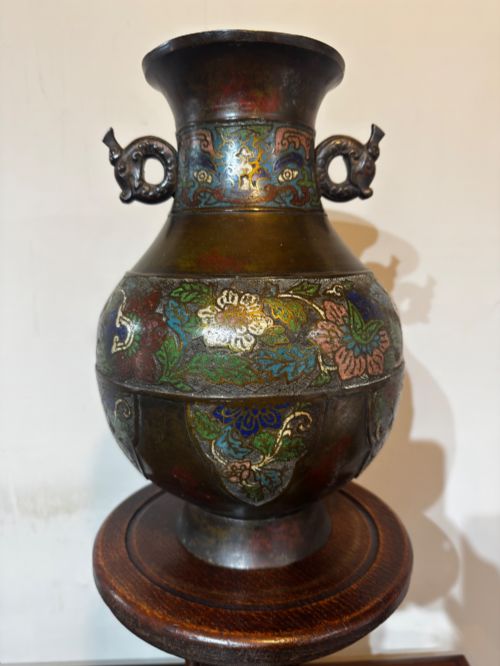
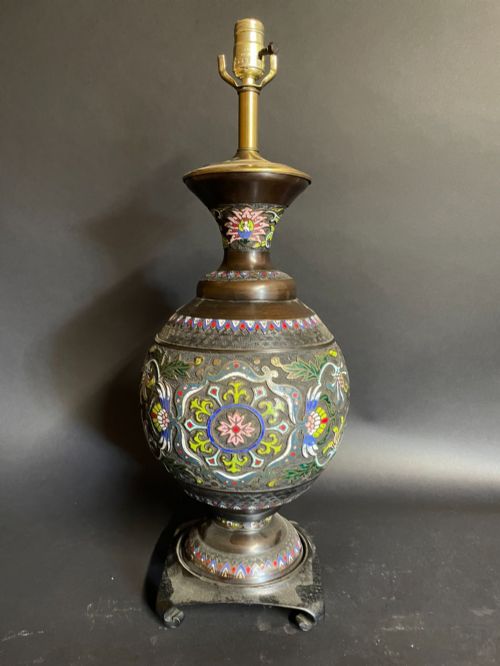


Bronze Cloisonne Urn
A bronze cloisonne urn brings dense metalwork and brilliant enamel together, offering striking decorative presence for any room.
Bronze Cloisonne Urn
A bronze cloisonne urn combines cast metal bases with intricate wirework compartments filled with coloured vitreous pastes. When you search for a bronze cloisonne urn, you encounter forms ranging from large floor vessels to compact ginger jars and censers. The pieces available span nineteenth century items through to early twentieth century examples.
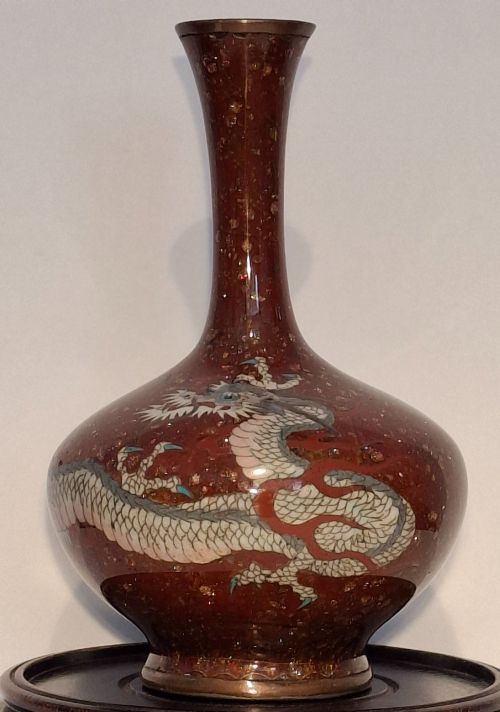
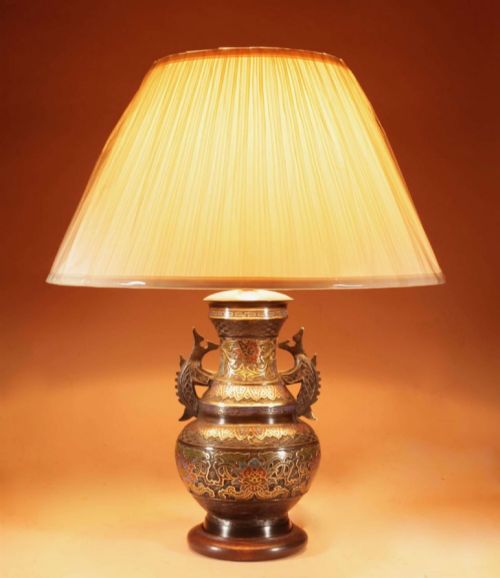
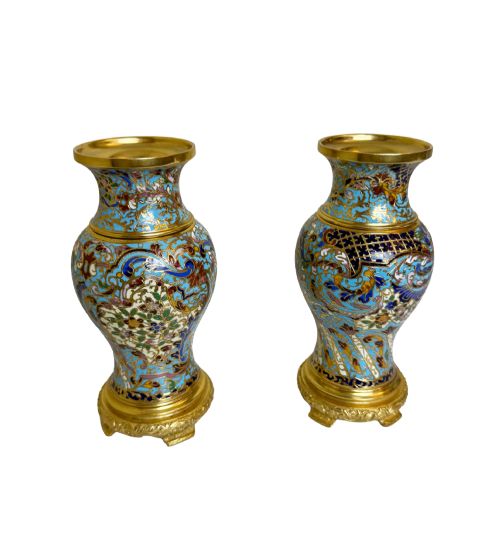
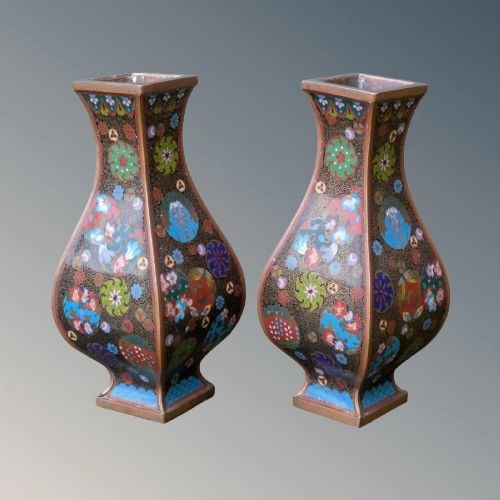
The selection includes Japanese Meiji period creations alongside Chinese Qing style objects and nineteenth century French interpretations. You find vases, table lamps, and jardinieres created in these distinctive decorative traditions. Each object reflects the specific aesthetic choices of its origin, whether Japanese or Chinese in design.
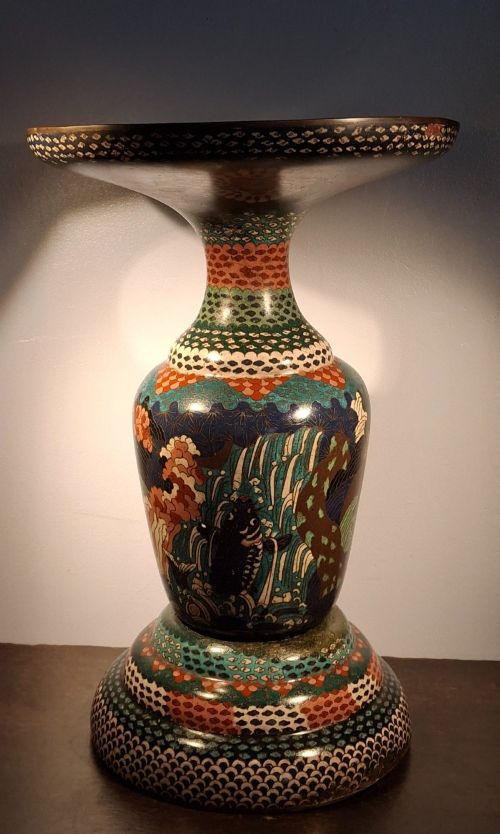
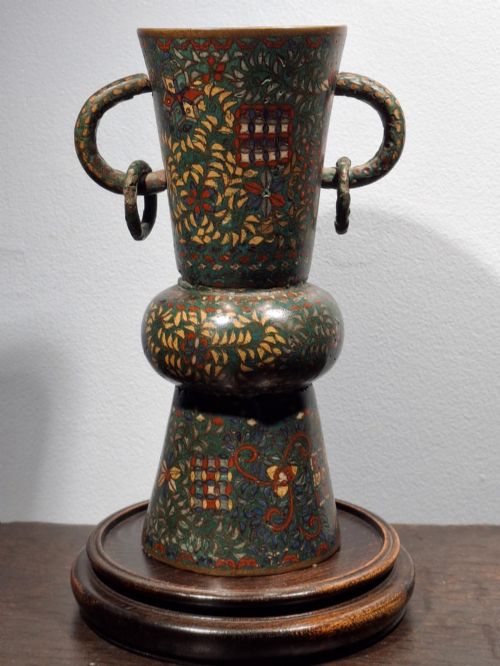
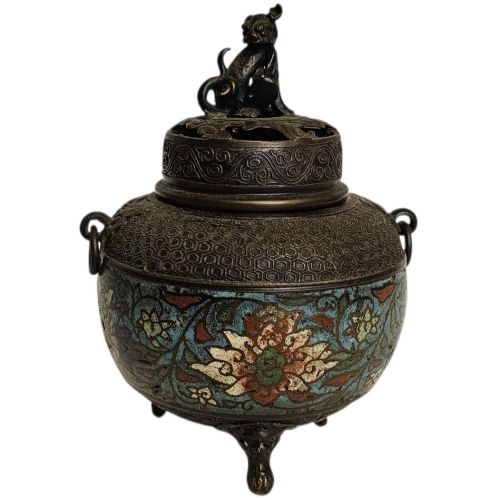
Vessels take many shapes, including tripod censers featuring Qilin lion motifs, large ginger jars with lids, and monumental vases depicting koi. These forms serve primarily decorative purposes, though many function equally well as table lamps or heavy bowls. The variety of sizes ensures a fit for different spaces within a home.
Materials and construction
Artisans formed the core structure of these vessels using cast bronze, copper, or brass, often applying a gilt finish to the metal surfaces. Thin metal wires were soldered onto the bronze body to create the outlined cells of the design. These wire boundaries separated the various compartments that would receive the decorative treatment.
Enamel paste filled each defined cell before the entire object underwent firing in a kiln to vitrify the surface. After firing, craftspeople ground and polished the metal wires and hardened enamel until the exterior became completely smooth. Wood components occasionally appear as part of fitted display bases or internal lamp fittings.
Some vessels feature swimming koi fish rendered in vibrant enamel, swimming permanently inside bronze wire ponds.
Assessing quality and execution
The precision of the wirework defines the upper tier of these pieces, showing uniform gauge and flawless symmetry across complex motifs. Lower quality examples display uneven line work and irregular cell compartments where the design lacks crisp geometric discipline. The complexity of the imagery, such as detailed animal figures or dense floral patterns, indicates the level of artisan skill.
The depth and consistency of the enamel filling separate standard productions from exceptional works of art. Finer vessels exhibit rich colour saturation without pitting or cloudiness in the vitrified paste after polishing. The weight and stability of the underlying bronze casting further distinguish substantial pieces from lighter, less robust alternatives.
The Bronze Cloisonne Urn Glossary
- Cloisonne Enamel
- A technique where thin metal wires are soldered to a metal base to form cells that are filled with enamel paste and fired. This method creates detailed multi-coloured surface patterns across vases and bowls.
- Champleve
- A process where troughs or cavities are carved directly into the thick bronze body and filled with enamel before firing. It differs from wire-based methods by cutting straight into the metal substrate.
- Meiji Period
- The era in Japanese history spanning from eighteen sixty-eight to nineteen twelve, noted for exceptional metalwork and decorative arts exported globally. Pieces from this time frequently utilise bronze and enamel.
- Qing Dynasty
- The final imperial dynasty of China, lasting from sixteen forty-four to nineteen twelve, renowned for sophisticated ceramic and metalcraft traditions. Items styled in this period display distinct cultural motifs.
- Censer
- A vessel designed for burning incense, often featuring tripod legs and a pierced lid. These ritual objects frequently appear in bronze alongside enamel decoration.
Bronze Cloisonne Urn: Frequently Asked Questions
What is a bronze cloisonne urn?
A bronze cloisonne urn is a decorative metal vessel decorated with soldered wire cells filled with coloured enamel. These objects serve as ornamental centerpieces or transformed lighting.
Originating largely from Asian workshops during the nineteenth and early twentieth centuries, they combine heavy cast metal foundations with colourful vitreous artistry.
How do I care for my urn?
Dust the surface regularly with a soft, dry cloth to prevent particulate accumulation within the wire compartments. Avoid using harsh chemical cleaners or abrasive polishes that might damage the delicate enamel or strip the bronze finish.
Keep the piece away from direct sunlight and damp environments to protect both the metal patina and the vitrified paste fillings over time.
Where were these pieces made?
The majority of these decorative vessels originate from Japanese Meiji workshops and Chinese Qing period traditions. European makers also produced champleve and cloisonne items, including nineteenth century French interpretations.
Asian export wares dominated the market during the late Victorian era, satisfying Western demand for exotic decorative objects.
Can I use these urns as lamps?
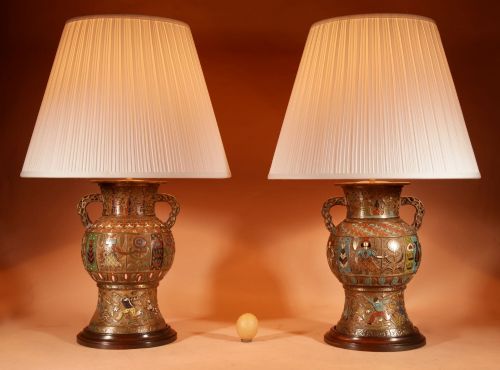
Many historical urns and vases have been converted into table lamps using bronze, brass, or gilt metal fittings. These conversions allow you to incorporate antique metalwork into modern lighting schemes.
Original wiring may require professional updating to meet current safety standards while preserving the antique body of the vessel.