






Bronze Bird on Marble Base
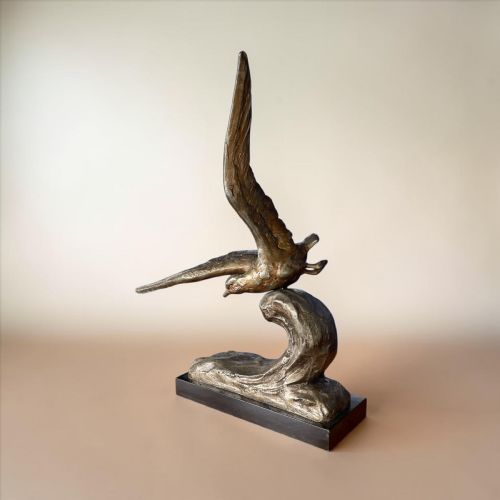
A bronze bird on marble base brings avian grace indoors, combining cast metalwork with polished stone plinths.
Bronze Bird on Marble Base
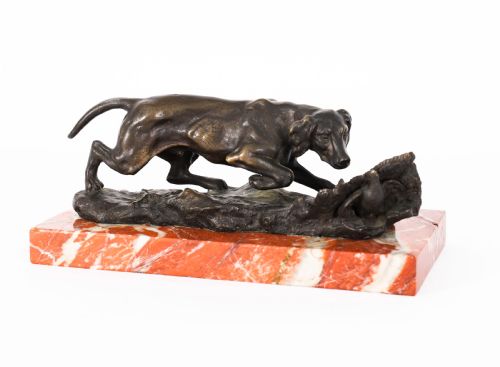
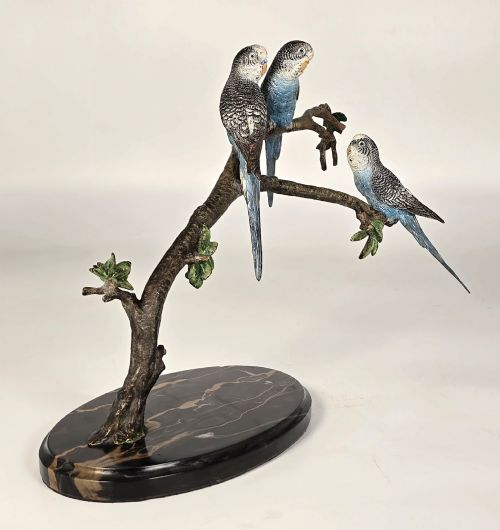
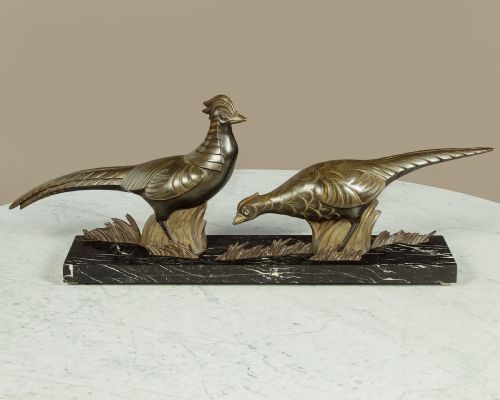
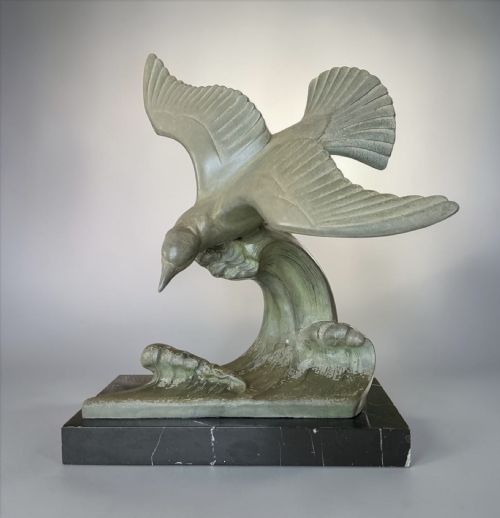
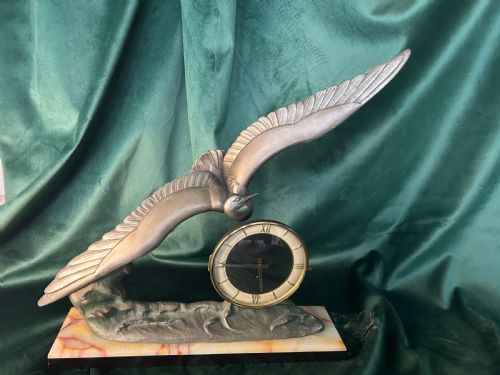
A bronze bird on marble base unites naturalistic bird studies with substantial stone supports, ranging from compact desk ornaments to table lamps and mantel clocks. These sculptures capture various avian forms, from solitary birds on the wing to paired budgerigars, pheasants, and seagulls.
The selections span distinct periods, with Victorian novelty pieces and Grand Tour urns leading into the prominent Art Deco works of the early twentieth century. Most examples feature birds mounted directly onto rectangular, circular, or multi-tiered marble and onyx plinths.
Makers produced these decorative objects in diverse configurations, including bookends, night lights, and functional mood lamps alongside standalone sculptures. The avian subjects often interact with natural elements like leafy branches, crested waves, or rocky outcrops.
How they were made
Masons cut and polished the stone plinths to complement the metallic figures, creating stable geometric foundations that anchor the dynamic postures of the birds. Cold-painted highlights added vibrant hues to specific avian studies, whilst patinated metal surfaces provided muted, enduring tones.
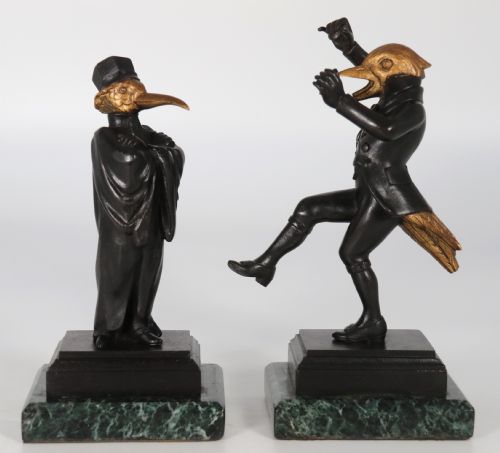
Theatrical birds wear expressions of profound professional grievance, proving that even metal avians suffer from difficult working conditions.
What varies in quality
The refinement of the casting defines the superior examples, showing crisp feather detailing and balanced proportions rather than soft edges. Foundries employed varying levels of artistic skill, which directly impacts the anatomical precision of the bird and the expressive character of the pose.
The selection and preparation of the stone base contribute significantly to the overall presence of the piece, with dense, unblemished marble and onyx providing superior weight and visual depth. Signed works by established sculptors generally demonstrate a higher standard of artistic execution and finishing.
Carl Kauba·Zoldan Kovats·Paul Joris·P. Marec·Becquerel
The Bronze Bird on Marble Base Glossary
- Spelter
- A zinc-based alloy often utilised as a cost-effective alternative to bronze in figural casting. It accepts patination and paint readily to imitate bronze finishes.
- Cold-painted
- A method of applying non-fired paint to metal surfaces after casting. This technique was frequently used on Austrian animalier bronzes to achieve lifelike plumage colours.
- Animalier
- A nineteenth-century artistic movement focusing on the realistic portrayal of animals. Sculptors in this tradition studied anatomy closely to capture creatures in motion.
- Grand Tour
- A cultural tradition of travelling through Europe to collect antiquities and souvenirs. Pieces executed in this manner reflect classical architectural and ornamental motifs.
- Patination
- The natural or chemical alteration of a metal surface over time. Artisans often applied artificial patination to enhance shadows and depth on cast bronzes.
Bronze Bird on Marble Base: Frequently Asked Questions
How do I clean the marble base?
Wipe the stone gently with a soft, slightly damp cloth and dry it immediately with a lint-free towel. Avoid abrasive cleaners or acidic substances that can etch polished marble surfaces.
Keep moisture away from any metal components or cold-painted areas during cleaning to preserve the original finishes and patination.
Are these sculptures signed?
Certain pieces bear artist signatures or foundry marks incised into the bronze or cast onto the base. Signatures indicate individual authorship and often correspond to known sculptors of the period.
Unsigned pieces remain common, reflecting commercial foundry production where individual makers did not mark their work.
What is the difference between bronze and spelter?
Bronze is a durable copper alloy that patinates richly and accepts fine detail during the casting process. Spelter is a softer zinc alloy that feels lighter and requires careful handling to prevent surface damage.
Examining the underside or areas of wear helps reveal the base metal beneath the patinated or painted surface.
How were these decorative objects used?
Many served as ornamental sculptures for mantelpieces, desks, and side tables in domestic interiors. Others integrated practical functions, such as bookends, night lights, table lamps, and mantel clocks.
Their dual role as art and utility made them popular household accessories throughout the Victorian and Art Deco eras.