





Bronze Baluster Vases
Bronze baluster vases are distinct vessels of tapering form and flared necks, valued for their sculptural weight and rich patination.
Bronze Baluster Vases
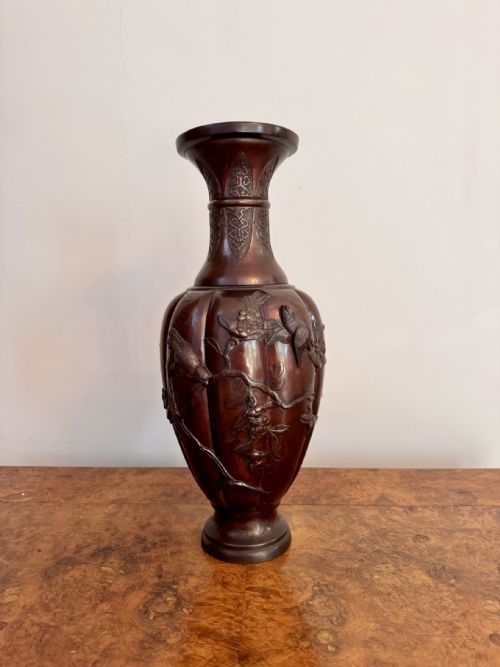
When you search for bronze baluster vases, you encounter substantial metal vessels shaped with a bulbous lower body and a slender neck, often originating from Asian workshops or Victorian European studios. The selections here heavily feature Japanese Meiji period examples alongside Chinese pieces from the nineteenth century, ranging from simple decorative objects to converted table lamps.
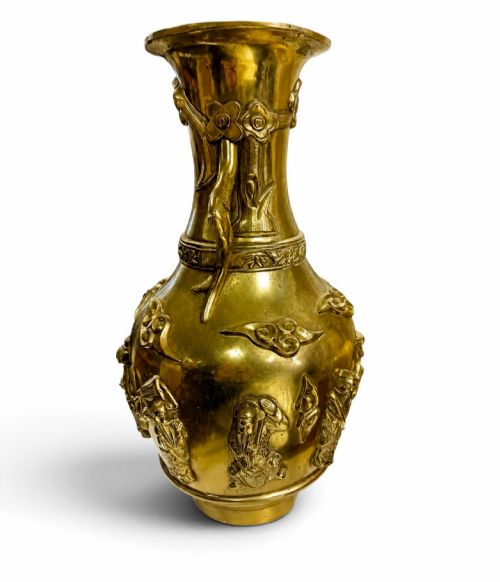
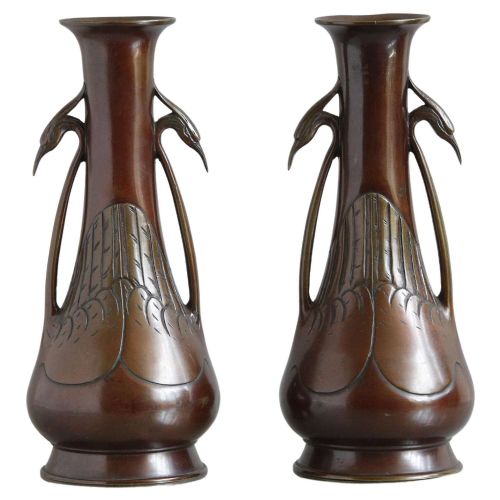
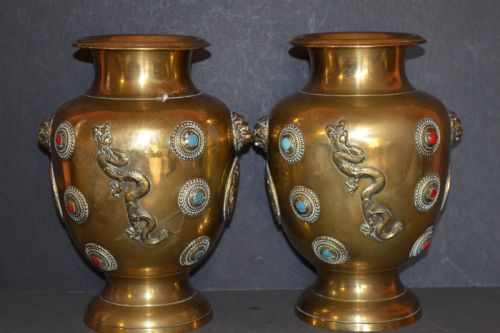
Many of these items display regional decorative motifs, including high-relief figures, dragons, and avian elements like egret handles. You will find both single vessels and matched pairs, demonstrating the enduring appeal of the baluster silhouette across different decorative traditions.
Materials and construction
Makers utilised bronze, copper alloy, and brass, often combining metals to achieve mixed-metal effects or applying surface treatments such as champlevé enamel and gold leaf. Many pieces incorporate elaborate cast relief work, showing intricate detail in figures and dragon motifs.
Some European interpretations add ormolu mounts and porcelain elements to these metal bodies, reflecting the cross-cultural exchange of the Victorian era. The construction typically relies on traditional casting methods suited to heavy decorative urns and vases.
Several items demonstrate cross-cultural collaboration, pairing nineteenth-century Asian bronze vessels with European ormolu mounts and silk fabric shades.
Evaluating quality and execution
The distinction between standard production and exceptional work rests upon the crispness of the casting and the depth of the relief work. Pieces depicting complex scenes with Daoist immortals or intricate dragons demand superior skill from the metalworker compared to plain vessels.
Surface finish and patination also drive the hierarchy, where deliberate mixed-metal applications and well-preserved enamel details elevate a piece. The presence of maker marks, such as base inscriptions, adds documentary value to the physical craftsmanship.
The Bronze Baluster Vases Glossary
- Baluster
- A vertical architectural form resembling a pillar, characterised by a curved, swelling lower section that tapers toward the top. This silhouette defines the classic profile of these vases.
- Champlevé
- An enamelling technique where troughs or cells are carved into the metal surface and filled with vitreous enamel before firing. It creates vibrant coloured patterns against the bronze ground.
- Meiji
- A Japanese historical period lasting from eighteen sixty-eight to nineteen twelve, known for exceptional metalwork and decorative arts produced for export. Pieces from this era often feature highly detailed flora and fauna.
- Ormolu
- Gilt bronze mounted onto decorative objects, popular in European design for adding ornamental feet, handles, or collars. It provides a bright contrast to darker patinated bronze surfaces.
Bronze Baluster Vases: Frequently Asked Questions
What is a baluster vase?
A baluster vase takes its name from architectural columns, featuring a rounded, bulbous lower body that narrows into a slender neck before flaring at the rim. This graceful profile offers stability while allowing artisans generous space for decorative reliefs.
Such vessels were produced in various sizes and materials, serving primarily as decorative display pieces or focal points within a room.
How do I identify Meiji period bronzes?
Japanese bronzes from the Meiji era frequently display meticulous surface details, such as inlaid mixed metals, high-relief dragons, or naturalistic subjects like birds and flowers. Makers during this time pushed casting techniques to new levels of complexity.
These pieces often reflect the opening of Japan to Western trade, combining traditional casting methods with designs intended for international collectors.
Were these vases used as lamps?
Many surviving bronze baluster vases have been adapted into table lamps, often retaining their original proportions while incorporating electrical fittings and fabric shades. This conversion was a common practice in nineteenth-century and early twentieth-century interiors.
Such adaptations allow these decorative metal vessels to function practically in modern homes while preserving their historical aesthetic.
What distinguishes Chinese bronze vases?
Chinese bronze vessels often incorporate archaistic elements, references to earlier dynasties, or depictions of Daoist immortals rendered in high relief. Base marks, such as Xuande indications, frequently appear on these traditional works.
The weight and copper alloy composition of these pieces tend to be substantial, reflecting a long lineage of sophisticated metal casting traditions.