


Bronze Apothecary Mortar
These bronze apothecary mortar examples are heavy metal vessels that served centuries of medical and domestic preparation.
What a bronze apothecary mortar is
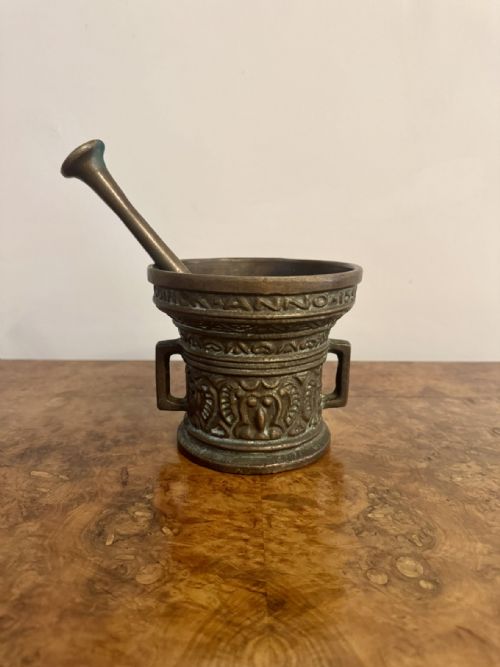
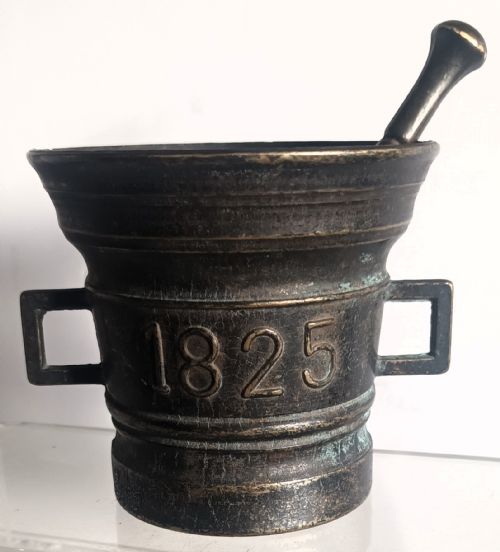
A bronze apothecary mortar is a heavy vessel designed for crushing and grinding medicinal ingredients, herbs, and chemicals with a matching pestle. When searching for a bronze apothecary mortar, collectors encounter forms dating from the seventeenth century through to the nineteenth century.
The inventory includes regional variations spanning English, Spanish, and Dutch origins. Pieces often display specific stylistic traits such as Spanish Baroque, Georgian, William III, or Dutch Baroque designs.
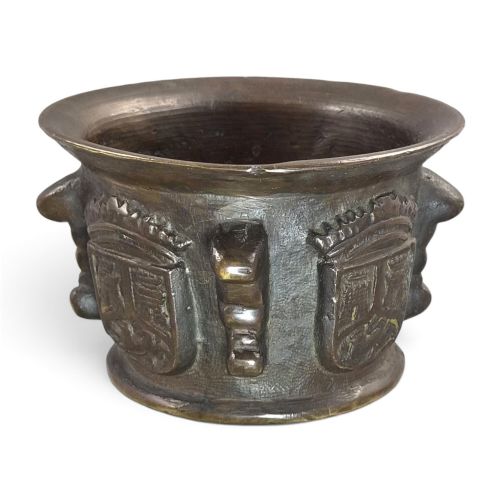
Many examples arrive accompanied by their pestle, forming a complete mortar and pestle set. Others appear as solitary vessels, sometimes featuring specific heraldic stamps like the House of Enríquez arms or Tudor rose motifs.
How they were made
Every bronze apothecary mortar listed originates from metalware casting techniques. Molten bronze is poured into moulds to form the thick, robust walls necessary to withstand the heavy impact of grinding.
Surface details and decorative bands are frequently cast directly into the metal or finished with simple tooling. Makers incorporated cast handles, flared rims, and raised ridges for structural reinforcement and grip.
Retail Price Guide 2026
Typical UK retail prices for bronze apothecary mortar, calculated from the Sellingantiques database of over a million retail prices indexed since 2003. This retail price guide relies exclusively on Sellingantiques data; no external sources or auction records are used, so the figures do not describe the wider market.
One seventeenth-century mortar proudly bears the arms of the House of Enríquez, bringing a touch of Spanish nobility to the apothecary bench.
What varies in quality
Quality in a bronze apothecary mortar rests on the crispness of the cast decoration and the preservation of the original surface patination. Examples with sharply rendered heraldic arms or Tudor rose stamps demonstrate superior workshop execution.
The presence of a matching, period-correct pestle significantly elevates an individual set. Thickness of the cast wall and structural balance also distinguish standard kitchen utility vessels from finer apothecary pieces.
The Bronze Apothecary Mortar Glossary
- Bronze
- An alloy of copper and tin chosen for its durability and resonance. It provides the heavy mass required for crushing dense materials.
- Pestle
- The heavy hand-held club used with a mortar to grind substances. Surviving matching pestles complete the historical function of the set.
- Baroque
- A decorative style prevalent in the seventeenth and eighteenth centuries. It manifests in these metal vessels through bold moulding and dynamic relief work.
- Metalware
- A broad category encompassing utilitarian and decorative objects fashioned from cast or wrought metals. Apothecary mortars form a specialised branch of this field.
Frequently Asked Questions
What is a bronze apothecary mortar?
A bronze apothecary mortar is a cast metal bowl used historically by apothecaries and chemists to grind medical substances. They are heavy vessels designed to withstand repetitive crushing.
Most examples date from the seventeenth and eighteenth centuries, reflecting domestic and professional medical practices of those periods.
Did they always come with a pestle?
Many mortars were manufactured and used alongside a matching pestle for the grinding process. Over the centuries, pestles were frequently separated from their original vessels.
Listings specify whether a pestle accompanies the mortar as a set or if the vessel survives on its own.
How do I identify the period?
Dating relies on stylistic clues such as rim profiles, decorative mouldings, and cast motifs like the Tudor rose or specific regional Baroque traits. Dated inscriptions appear on certain seventeenth-century pieces.
English, Dutch, and Spanish origins each display distinct casting characteristics that help narrow down the date of manufacture.
Were they only used for medicine?
While primarily associated with apothecaries and chemists for compounding remedies, similar heavy mortars served in domestic kitchens for food preparation. Their robust bronze construction suited any heavy crushing task.
Historical records occasionally categorise them as kitchen aids alongside their medical applications.