




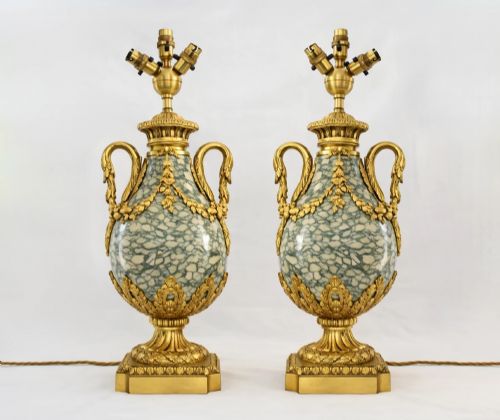
Bronze and Ormolu Vases
These bronze and ormolu vases combine cast metalwork with classical forms to bring decorative presence to an interior.
Bronze and Ormolu Vases
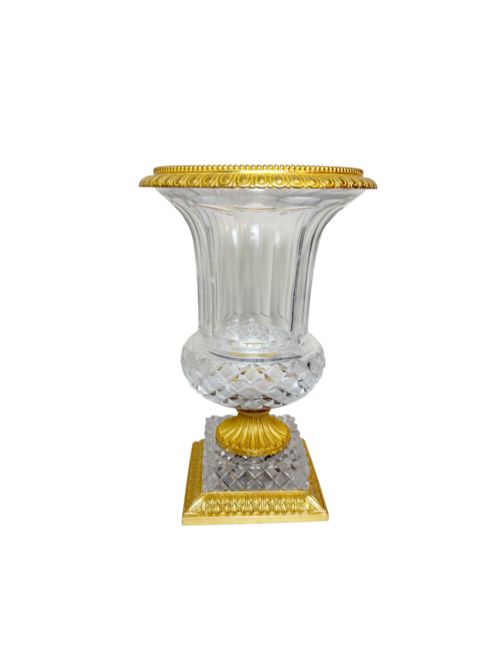
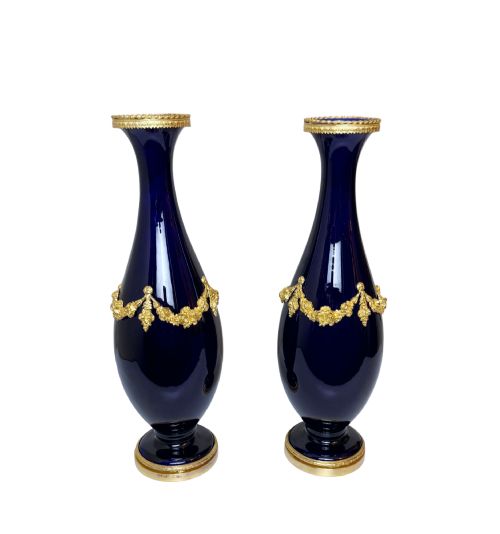
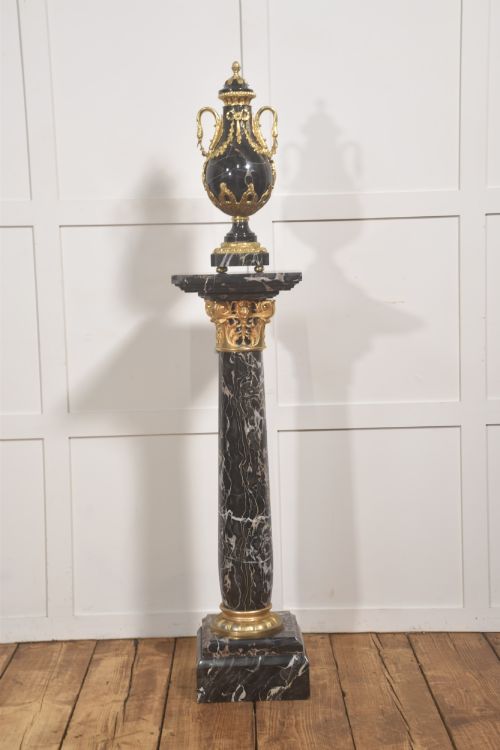
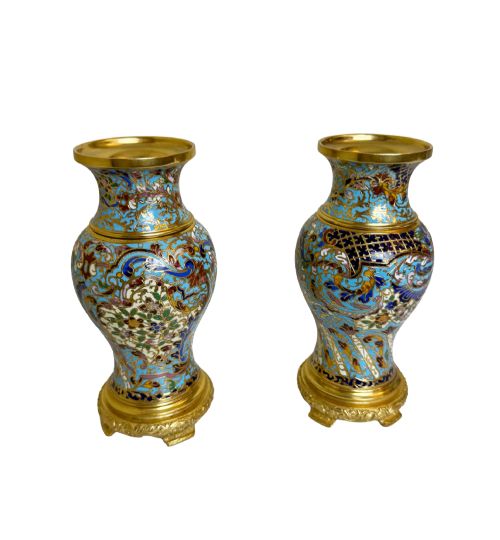
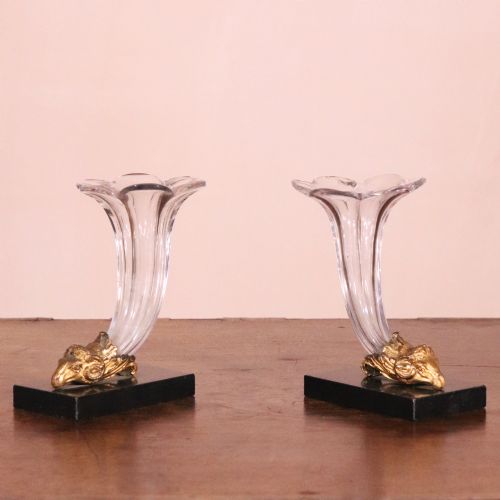
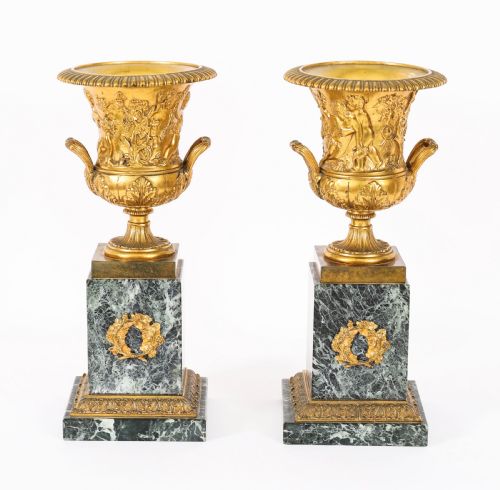
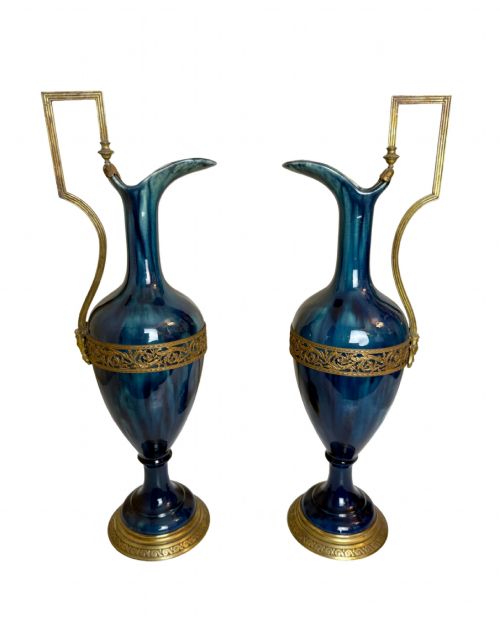
Bronze and ormolu vases encompass ornamental vessels, urns, and ewers created primarily during the nineteenth century in various French revival styles. Buyers encountering these pieces will find them paired with materials such as porcelain, marble, and glass, frequently presented as matched pairs. The forms draw heavily from neoclassical, Louis XVI, and Grand Tour aesthetic traditions.
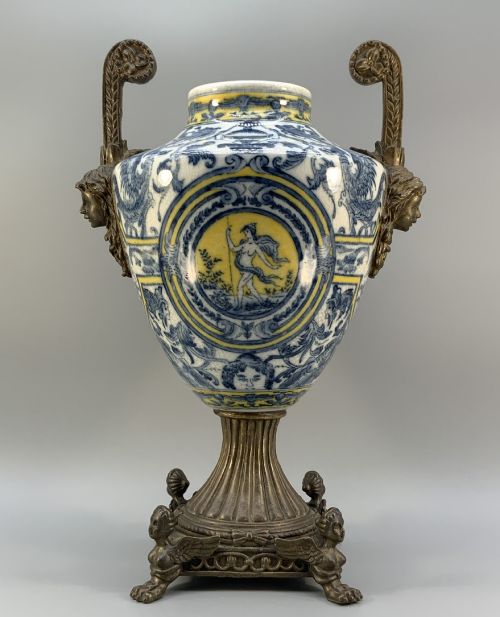
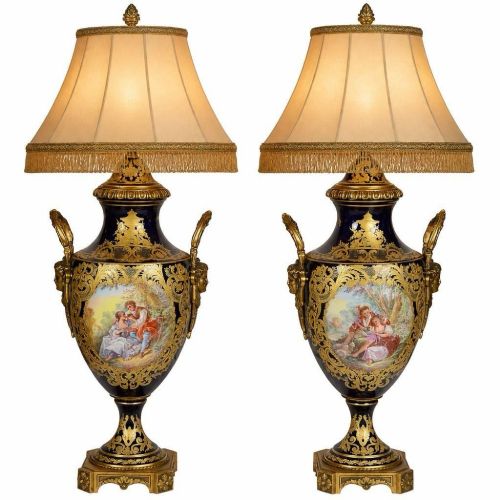
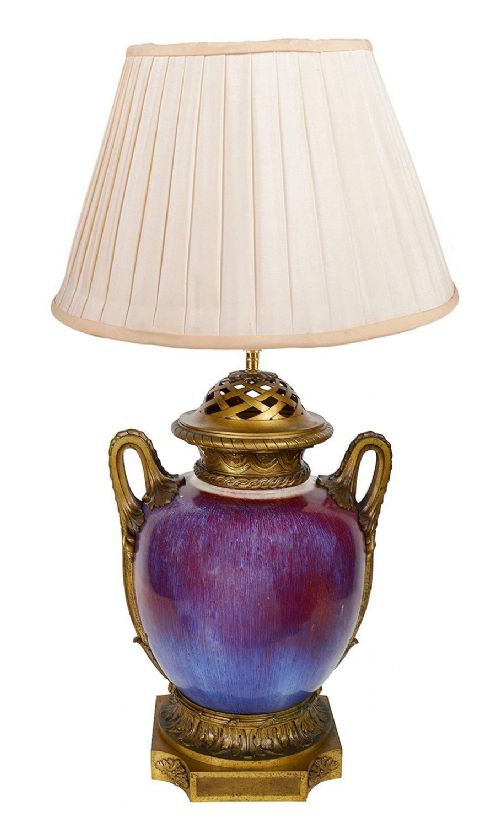
Many examples incorporate porcelain bodies styled after Sevres or Chinese ceramics, fitted with intricate metal mounts. Others take the form of architectural stone vessels resting upon carved marble bases.
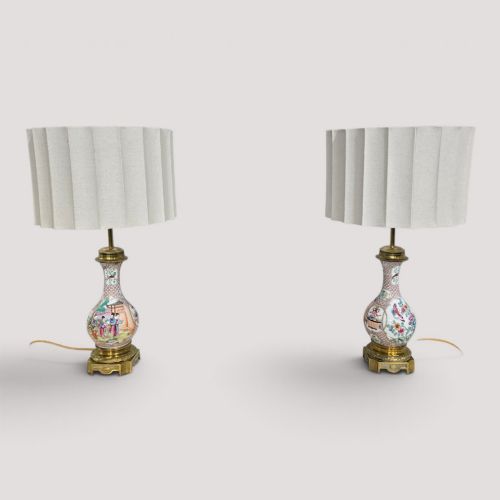
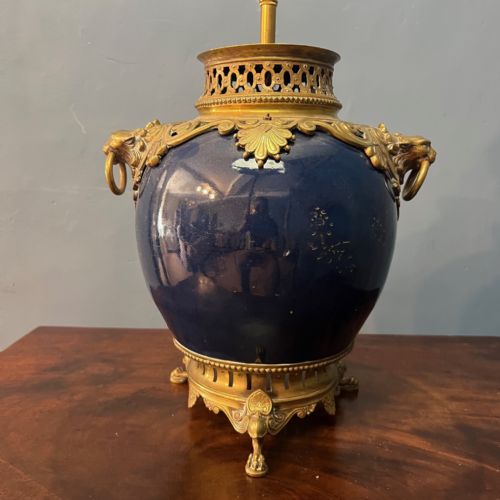
The selection ranges from cabinet-sized decorative objects to large floor-standing garnitures and converted table lamps.
Materials and construction
Makers utilised cast bronze, finished with mercury gilding to produce the characteristic bright ormolu surface, combined with natural stones including white marble, green marble, and white onyx. Ceramic elements comprise hard-paste porcelain, faience, and glass, decorated with enamel work or pate-sur-pate details.
The metal components require precision casting followed by chasing and fire-gilding to achieve contrasting polished and matte textures. These mounts are mechanically fitted to stone bodies or ceramic vessels using pins, screws, and bezels designed specifically for each piece.
Bronze and Ormolu Vases Retail Price Guide 2026
Typical asking prices for bronze and ormolu vases among the pieces listed under this phrase on Sellingantiques today, from the lower quarter to the upper quarter. They describe what is for sale here now, not the wider market.
Listings feature nineteenth-century French production strongly, encompassing Louis XVI, neoclassical, and Rococo Revival styles executed in gilt bronze, marble, and Sevres-style porcelain.
Factors of quality
Quality rests primarily on the crispness of the bronze chasing and the depth of the ormolu gilding. Superior examples exhibit sharp, well-defined foliage and figural details that retain their original dual-finish highlights, whereas lesser pieces show softer, blurrier casting from worn moulds.
The integration of the various components determines the overall success of the object. High-grade items use substantial gauge bronze mounts fitted tightly to high-status marbles or hand-painted porcelain bodies without awkward gaps or inferior replacement hardware.
The Bronze and Ormolu Vases Glossary
- Ormolu
- Gilded bronze, produced by applying a mixture of gold and mercury to a cast bronze object and heating it to vaporise the mercury. This technique creates a durable, luminous golden finish characteristic of French decorative arts.
- Cassolette
- A decorative vase or urn featuring a reversible lid that can function either as a closed vessel or as a burner. These pieces often incorporate stone bodies with elaborate metal mounts.
- Champleve
- An enamelling technique where troughs or cells are hollowed out of the metal surface and filled with vitreous enamel powder before firing. The resulting design shows coloured enamel compartments divided by thin metal lines.
- Garniture
- A set of three or more matching ornamental vases or urns designed to be displayed together on a mantelpiece or sideboard. They typically consist of a central taller vessel flanked by a matching pair.
- Grand Tour
- A nineteenth-century cultural journey undertaken through Europe by wealthy individuals, who collected classical antiquities and reductions of famous monuments as souvenirs. These objects frequently referenced ancient architectural forms and sculptural masterpieces.
Bronze and Ormolu Vases: Frequently Asked Questions
How do I clean bronze and ormolu vases?
Dust these pieces gently with a soft, dry brush to prevent the accumulation of dirt in recessed areas. Avoid all commercial metal cleaners, harsh abrasives, and chemical solvents, as these can permanently strip the delicate gold layer from the ormolu surface.
Marble and porcelain sections can be wiped down with a barely damp cloth and dried immediately. Take care to keep moisture away from any historic felt bases or internal wiring if the vase has been converted into a lamp.
Are these vases functional or purely decorative?
Most nineteenth-century examples were created exclusively as decorative objects for display on mantelpieces, pedestals, or tables. While some feature removable lids or cavities, many incorporate delicate gilding or mixed materials that make holding water impractical.
Several pieces have been adapted over time to function as table lamps, combining historic ceramic and bronze bodies with modern electrical fittings.
How can I tell the period of these vases?
Dating relies on examining the casting quality, the construction of internal fixings, and the style of the materials used. Nineteenth-century interpretations of earlier neoclassical or Louis XVI designs often employ machine-made screws or specific patination techniques characteristic of the period.
Comparative study of the porcelain bodies, such as Sevres-style marks or Chinese export ceramics, also helps narrow down the decade of manufacture.
Where should I display bronze and ormolu vases?
These prominent decorative objects suit stable, flat surfaces away from direct sunlight and excessive humidity. Mantelpieces, entrance hall consoles, and heavy wooden sideboards provide suitable weight support and visual prominence for such reflective pieces.
Ensure they are placed out of heavy traffic paths to prevent accidental knocks to protruding handles, lids, or marble bases.