

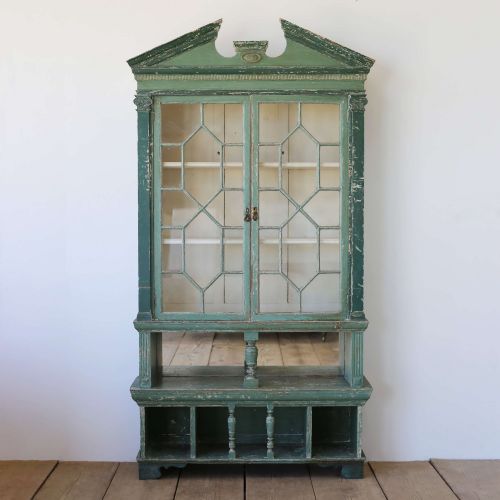
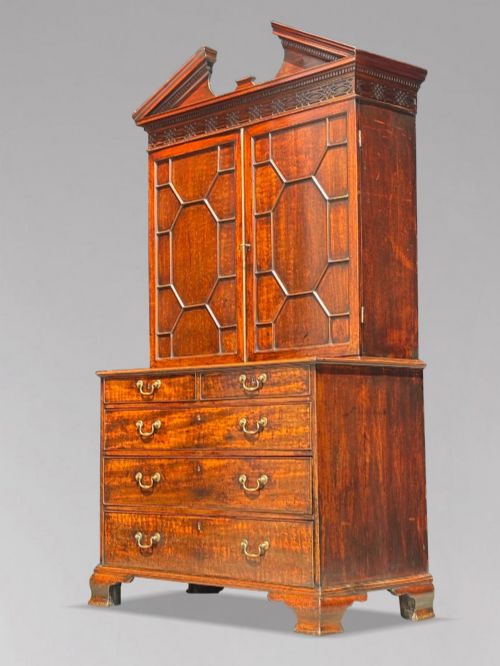


Broken Pediment Cabinet
A broken pediment cabinet brings architectural gravity to a room, offering grand proportions and timeless storage.
Broken Pediment Cabinet
A broken pediment cabinet is defined by its architectural broken arch or swan neck top, drawing the eye upward with classical symmetry. When searching for a broken pediment cabinet, buyers encounter substantial pieces designed to house libraries, display valuables, or conceal writing desks.
The selections span multiple eras, most frequently appearing in eighteenth-century Georgian mahogany and walnut forms alongside later Edwardian revivals. Bureau bookcases and tall corner cupboards dominate the available styles, bringing substantial vertical presence to period interiors.
Regional variations and revival periods introduce lighter timbers such as satinwood and harewood, alongside intricate marquetry inlay. These variations allow collectors to choose between severe eighteenth-century walnut bureau bookcases and lighter Edwardian display cabinets.
Materials and construction
Cabinet makers relied primarily on dense timbers like mahogany, walnut, and oak to construct these large architectural carcasses. Finer details often incorporated boxwood, satinwood, and harewood for contrasting stringing and marquetry panels.
Glass doors were glazed in geometric or arched panes, while hardware utilised cast brass for escutcheons and handles. Structural stability required robust carcase work, particularly to support the heavy timber swan neck and broken arch pediments characteristic of the form.
Broken Pediment Cabinet Retail Price Guide 2026
Typical asking prices for broken pediment cabinet among the pieces listed under this phrase on Sellingantiques today, from the lower quarter to the upper quarter. They describe what is for sale here now, not the wider market.
The listings feature eighteenth-century walnut bureau bookcases alongside Edwardian inlaid mahogany standing corner cupboards and Georgian library furniture.
Markers of quality
Quality reveals itself in the selection of timber grain, where highly figured mahogany or burr walnut elevates the visual weight of the carcase. The crispness of the carved pediment mouldings and the integration of the broken arch dictate the overall architectural success of the piece.
Internal joinery, original brass hardware, and the depth of the marquetry inlay separate standard production from master workshops. Superior examples maintain uncompromised architectural proportions across the cornice, doors, and bracket feet.
Thomas Chippendale·Giles Grendy
The Broken Pediment Cabinet Glossary
- Broken pediment
- A triangular or arched pediment having an intervening space at the apex, often housing a central finial or plinth. This architectural detail gives the cabinet its distinctive vertical focal point.
- Bureau bookcase
- A dual-purpose form combining a sloping fall-front writing desk below a glazed upper bookcase. It represents one of the most complex case furniture types from the eighteenth century.
- Linen press
- A tall cupboard featuring sliding trays or shelves behind upper doors, originally designed for storing household linens. They frequently incorporate grand pedimented cornices above panelled doors.
- Marquetry
- The art of applying decorative veneer pieces in wood to form intricate geometric or floral patterns. It adds surface complexity to cabinet doors and drawer fronts.
- Harewood
- Sycamore wood treated to take on a subtle greyish-brown hue, often used in late eighteenth-century cabinet making for delicate stringing and banding.
Broken Pediment Cabinet: Frequently Asked Questions
What is a broken pediment cabinet?
A broken pediment cabinet is a large storage or display piece featuring an architectural top cornice parted at the centre. This design element adds dramatic height and classical proportion to bookcases and linen presses.
Most examples date from the eighteenth century or later revivals, utilising dense timbers like mahogany and walnut to support the grand superstructure.
How were bureau bookcases used?
Bureau bookcases served as multifunctional furniture for reading, writing, and storing private papers or library volumes. The hinged writing flap folds down to create a desk surface above banks of drawers.
The upper glazed section kept valuable books and porcelain protected from dust while remaining clearly visible for display.
Where should I place a corner cabinet?
Corner cabinets are designed to fit snugly into room angles, making efficient use of overlooked spaces while displaying porcelain or glass. Tall standing versions anchor empty corners in dining rooms and libraries.
Their architectural pediments draw the eye upward, balancing the vertical scale of high-ceilinged period interiors.
How do I distinguish Georgian from Edwardian pieces?
Georgian pieces rely on heavy architectural timber construction, rich mahogany grains, and restrained brass hardware. They reflect proportions rooted in eighteenth-century classical design.
Edwardian interpretations often revive earlier styles with lighter marquetry inlay, satinwood details, and refined stringing across smaller display cabinets.