





British Woodland Painting
British woodland painting captures the quiet dignity of rural trees and shaded paths through nineteenth and twentieth century brushwork.
British Woodland Painting
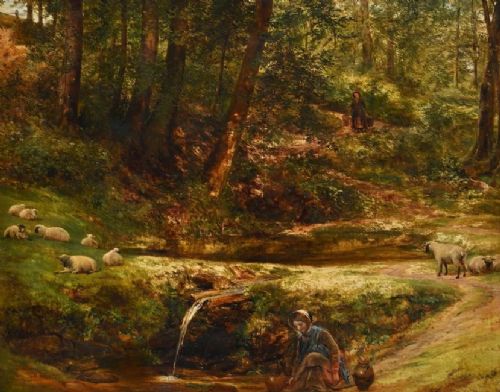
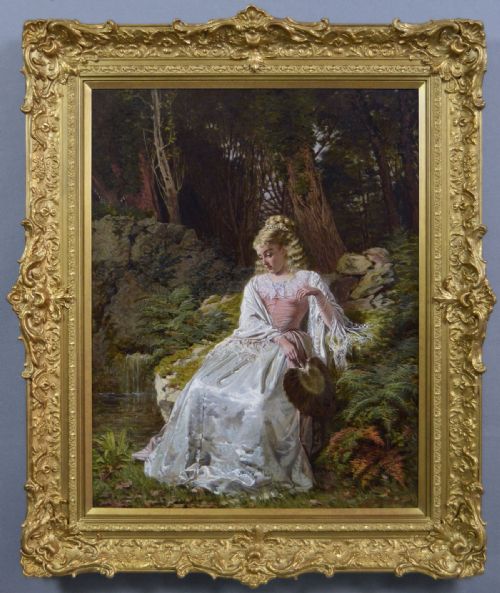
A British woodland painting depicts natural scenery, trees, rivers, and shaded glades created by artists working across the Victorian era into the mid-twentieth century.
The versions most commonly met on this page range from nineteenth century canvas works in oil to delicate watercolours executed on paper.
Compositions frequently incorporate figures, cattle, or rustic paths, rooting the natural landscape in a narrative of daily rural life.
How they were made
Painters utilised oil on canvas, wood panels, or watercolours on paper, applying pigment to capture the shifting light beneath a canopy.
Brushwork varies from the tight realism of the Victorian period to the looser handling associated with British impressionism and early twentieth century fine art.
Several canvases invite viewers to look past the trees to find cows, children gathering firewood, and picnicking Victorians.
What varies in quality
Quality rests in the handling of light and depth, where superior works create a genuine sense of atmosphere within the trees.
The confidence of the draughtsmanship and the preservation of the original canvas or paper support distinguish the finest examples.
Richard Sebastian Bond·William H Myers·Thomas W Lascelles·Richard Redgrave·Arthur Herbert Rigg·Thomas Bromley Blacklock·William Hoggatt·Thomas Edward Roberts·James Mallard Bromley·Owen Bowen·Clarence Henry Roe·David Watts·William Mellor·John Wright Oakes·Walter Follen Bishop·James Proudfoot·Rowland Henry Hill·Edmund George Warren·Abraham Hulk Jnr·Harold Swanwick·Charles James Adams·Ernest Higgins Rigg·George Graham·Charles Edward Holloway·Beatrice Parsons
The British Woodland Painting Glossary
- Oil on Canvas
- Pigment bound in oil applied to a stretched woven fabric support. This combination allowed artists to build rich textures and deep tones.
- Watercolour Painting
- Pigments suspended in a water-soluble vehicle applied to paper. It offers transparency and delicate luminosity.
- British Impressionism
- A painting style focusing on light and everyday subjects with visible brushstrokes. It emerged in the late nineteenth and early twentieth centuries.
- Victorian Naturalism
- An artistic approach aiming for a faithful representation of the natural world. Artists observed flora and light with meticulous detail.
British Woodland Painting: Frequently Asked Questions
What periods do these paintings come from?
The works span from the nineteenth century, through the Edwardian period, and into the mid-twentieth century.
Victorian naturalism gives way to early twentieth century fine art and later post-war expressions.
How do I hang and care for an oil painting?
Keep the canvas away from direct sunlight and damp conditions to protect the pigments and wooden stretcher.
Dust the surface gently with a soft dry cloth without applying pressure to the paint layer.
Are watercolours framed differently than oils?
Watercolours on paper require framing behind glass with a mount to prevent the surface from touching the glazing.
Oil paintings on canvas are typically displayed in open frames without glass.
How can I tell a watercolour from an oil painting?
Watercolours display a transparent quality on paper where the texture of the sheet remains visible beneath thin washes.
Oils possess a heavier texture and opaque pigment built up on canvas or wood.