






British Victorian Portraiture
British Victorian portraiture captures the likenesses of notable figures and everyday subjects in oil and pastel, offering a direct window into nineteenth-century life.
British Victorian Portraiture
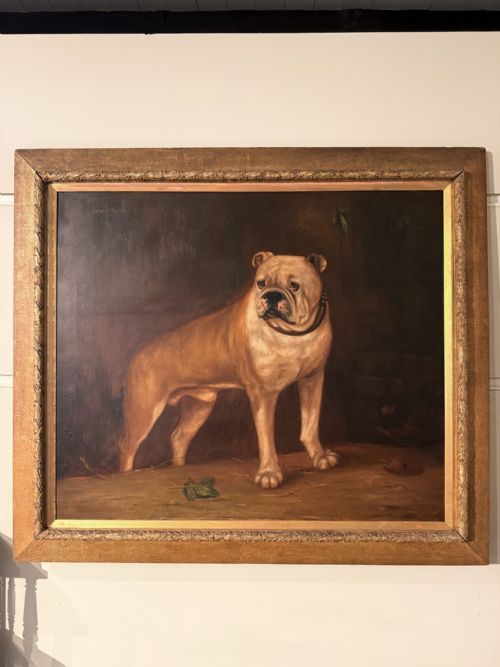
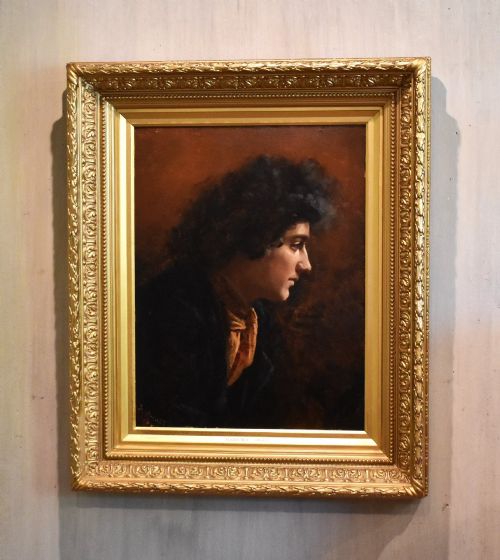
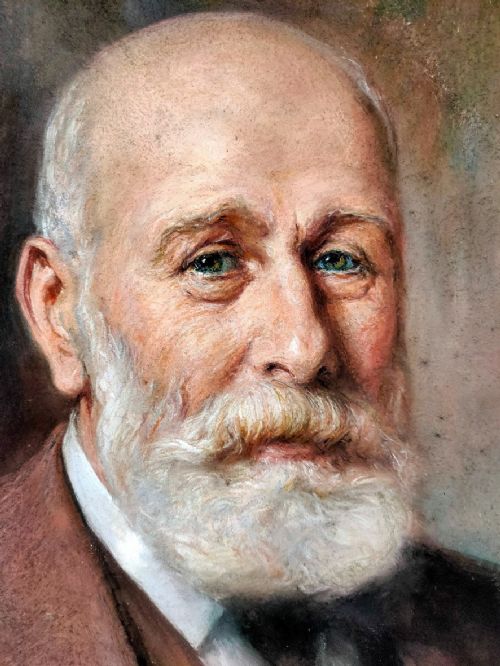
British Victorian portraiture encompasses oil paintings, watercolour works, and pastel drawings produced during the nineteenth century and extending into the Edwardian period. These works record naval officers, political economists, peers, and subjects accompanied by animals such as dogs.
The versions most commonly met on this page include oil on canvas paintings and framed portrait works from the nineteenth century. These pieces range from intimate depictions of individuals with writing slates to formal likenesses of public figures adorned with orders.
Examples span the Victorian era alongside related pieces from the Regency and Edwardian periods, reflecting a sustained tradition of British portrait painting. Each piece presents specific historical subjects, from politicians and campaigners to members of royalty.
Materials and technique
Artists utilised oil paint applied to canvas, wood panels, and paper supports to build up layers of tone and detail. Watercolours and pastels were also employed for lighter, more immediate portrait drawings.
Finished works were frequently housed in wooden frames, often incorporating gilt or gilt wood finishes to complement the domestic and institutional interiors of the period.
British Victorian Portraiture Retail Price Guide 2026
Typical asking prices for british victorian portraiture among the pieces listed under this phrase on Sellingantiques today, from the lower quarter to the upper quarter. They describe what is for sale here now, not the wider market.
Listings feature works executed in oil on canvas, wood, paper, and gilt wood.
Assessing quality
Quality in these portraits rests upon the handling of likeness, expression, and anatomical proportion by the artist. Stronger pieces display confident brushwork and a subtle command of light that brings the subject to life.
The significance of the sitter and the documentation surrounding the subject also influence the standing of a work. Portraits attributed to recognised painters or depicting documented historical figures carry distinct art-historical weight.
Florence Small·R Dering·Charles Sillem Lidderdale·Thomas Robson·Josiah Gilbert·Charlotte Blakeney Ward·Rudolph Lehmann·John Partridge·George Richmond·Thomas Jones Barker·Alexander Melville·John Ward Dunsmore
The British Victorian Portraiture Glossary
- Canvas
- A heavy woven fabric stretched across a wooden frame to serve as a support for oil painting. It provides a textured surface that holds layered paint securely over centuries.
- Gilt wood
- Wood carved and coated with a thin layer of gold leaf or metallic gilt powder. This finish was standard for framing fine art portraits to enhance their presence on a wall.
- Oil paint
- A slow-drying medium made by mixing pigments with drying oils such as linseed. It allows artists to blend tones smoothly and achieve rich depths of colour.
- Pastel
- A dry drawing medium consisting of powdered pigment and a binder rolled into sticks. It produces velvety marks with vibrant colour intensity on paper surfaces.
- Watercolour
- A paint consisting of colorants suspended in a water-soluble binder. It is applied in thin, translucent washes to paper to create luminous effects.
British Victorian Portraiture: Frequently Asked Questions
What subjects appear in these portraits?
The sitters include political figures, campaigners, naval officers, journalists, and private individuals. Many works also feature domestic animals such as dogs alongside their owners.
Subjects range from recognised historical personalities to figures recorded by name, reflecting the diverse social strata captured by nineteenth-century artists.
How should I frame an oil painting?
Traditional gilt wood frames complement the period aesthetic of nineteenth-century canvases. Selecting a frame appropriate to the era ensures the artwork is properly supported.
Consulting a professional framer helps protect the canvas edges and maintains the structural integrity of the piece over time.
Where were these portraits displayed?
Historical portraits were commonly hung in country houses, civic buildings, and domestic parlours. They served as expressions of status, family lineage, or political allegiance.
Today, these works suit both traditional studies and contemporary living spaces, providing a focal point on a wall.
How do I identify the period of a work?
Dating relies on stylistic markers, costume details, and artist signatures recorded in the evidence. Comparing the sitter's attire and the painting technique provides clues to the decade of creation.
Archival records and inscriptions on the reverse of the canvas often confirm the date and identity of the subject.