

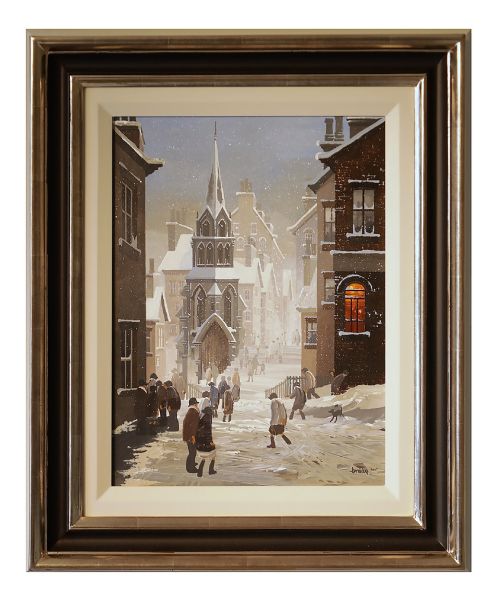
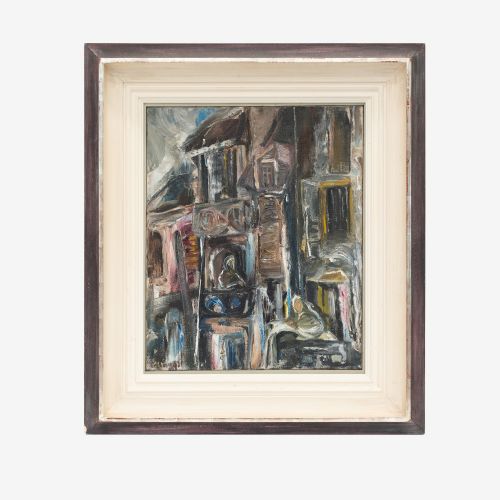
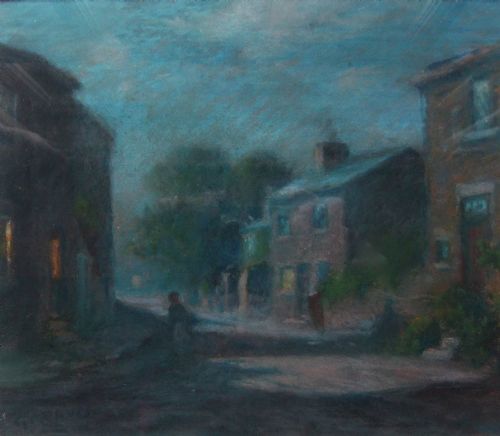


British Street Scene
British street scene paintings capture the daily life, architecture, and atmosphere of towns and cities through various historical periods.
British Street Scene
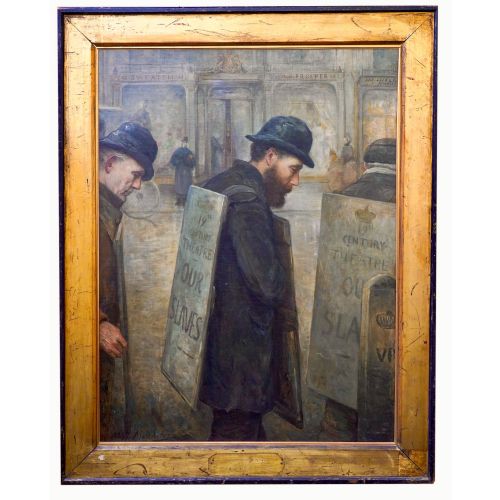
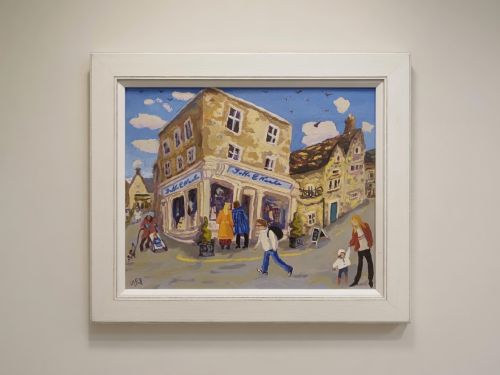
A British street scene depicts public thoroughfares, markets, and townscapes, frequently capturing the character of local life and architecture. These works range from bustling London squares and northern industrial towns to quiet village high streets and coastal ports.
The version most commonly met on this page is the watercolour or oil painting on canvas, created during the Victorian, Edwardian, or mid-twentieth-century periods. Artists focus on specific locations, from named streets in York and Whitby to recognizable landmarks in London.
These pieces function as historical records of urban and rural development, showing how clothing, transport, and shopfronts changed over decades. Collectors acquire them for their topographical interest as well as their artistic merit.
How They Were Made
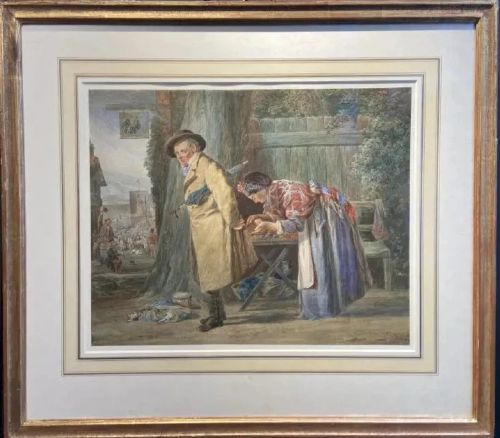
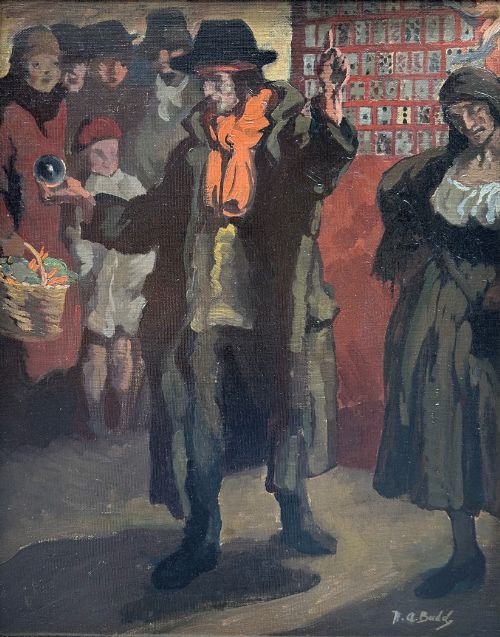
Artists utilise watercolour on paper or oil paint applied to canvas or wood panels, working either <em>en plein air</em> or developing studies back in the studio. Watercolour applications rely on transparent washes and fine brushwork to capture changing light conditions, while oil paintings employ thicker layers of pigment to build texture and depth.
Framed artwork in this category typically utilises traditional wooden framing, sometimes glazed to protect works on paper from environmental degradation. The physical support materials reflect the period of creation, with canvas and heavyweight paper stock predominating across the nineteenth and twentieth centuries.
Listings feature works spanning from the nineteenth century through the mid-twentieth century, executed in oil, watercolour, pastel, and ink.
What Varies in Quality
The strength of a composition separates finer works from ordinary topographical records, specifically in how the artist handles perspective, atmospheric light, and human activity. Superior pieces integrate figures naturally into their architectural surroundings rather than treating them as static additions.
Condition and preservation play a role in the standing of a piece, particularly regarding watercolours where exposure to light can alter pigments over time. Stronger examples retain their original colour vibrancy and show minimal intervention from later restoration.
Felix Stone Moscheles·Thomas Ellison·Lucy Pratt·Joseph H Barnes·Herbert Ashwin Budd·Brian Shields Braaq·Lilian Colbourn·William Greaves·William Manners·Cecil Rochfort Doyly John·Charles James Lauder·Louie Stanley Maurice Prince·John Smith Atherton·George Whyatt·Andrew Young·Robert Hollands Walker·Walter Meegan·David Small·Rowland Henry Hill·Donald McIntyre·Angus Rands·Walter Emsley·Fred Lawson·Tom Dudley·Annie L Lee
The British Street Scene Glossary
- Topography
- The detailed mapping and artistic depiction of specific physical locations, towns, and landscapes. This term describes works anchored to identifiable real-world addresses.
- Plein air
- The practice of painting outdoors to capture direct observations of natural light and atmosphere. Artists utilised this technique to record immediate street conditions.
- Genre painting
- The pictorial representation of scenes from everyday life, involving ordinary people engaged in common activities. Street scenes frequently overlap with this category through depictions of market sellers and pedestrians.
- Wash
- A thin, fluid layer of watercolour paint applied across paper to create transparent areas of tone or colour. It forms the foundation of many nineteenth-century townscapes.
British Street Scene: Frequently Asked Questions
What periods do these paintings cover?
The works span from the Victorian era through the Edwardian period and into the mid-twentieth century, with various examples dated across the nineteenth and twentieth centuries.
Creators active during these times documented shifting urban landscapes and traditional village architecture using contemporary artistic styles.
How were these street scenes created?
Artists employed watercolour on paper or oil paint on canvas, frequently working directly outdoors or translating field sketches into finished studio pieces.
Materials reflect the standard practices of each era, utilising traditional pigments, stretched canvases, and protective framing.
Are the locations in the titles identifiable?
Many works reference specific towns, streets, and landmarks across Britain, including London, York, Whitby, and various regional villages.
These identifiable settings provide clear historical contexts for the architecture and daily activities depicted in the artwork.
How do I care for a watercolour street scene?
Works on paper require protection from direct sunlight and excessive moisture to prevent fading and paper degradation.
Keeping them behind glass with conservation-grade framing ensures the longevity of the delicate pigments.