

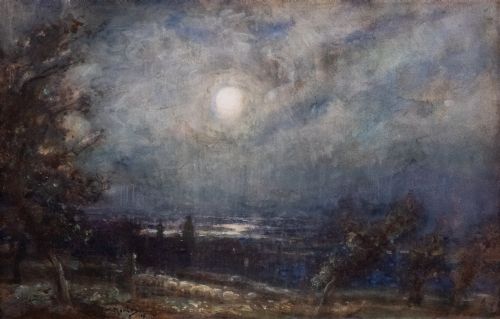
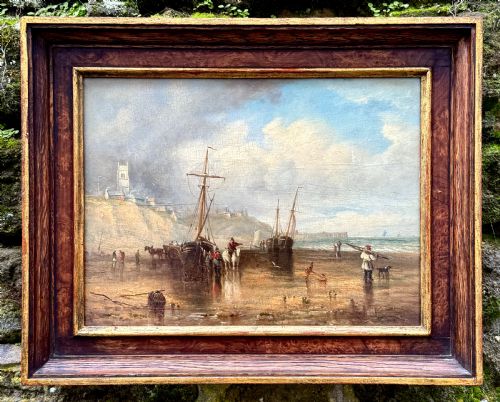


British School Seascape
These british school seascape works capture coastal life and maritime views across various historic periods.
British School Seascape
A british school seascape brings coastal views, shipping scenes, and maritime life into your interior through historical paintings. These works range from peaceful moonlit scenes to dramatic stormy waters along the coast.
The pieces on this page span the nineteenth and twentieth centuries, taking the form of oil paintings on canvas, card, and wood panel, alongside delicate watercolours on paper. You will encounter both named artists and anonymous British school paintings capturing specific coastal locations.
Materials and methods
Artists painted these seascapes using oil paint or watercolour applied to canvas, card, paper, or wood panel surfaces. Some works incorporate ink details or gold leaf accents to catch the light.
Support materials like stretched canvas and wooden panels provided durable foundations for layered oil pigments, while paper suited fluid watercolour washes.
British School Seascape Retail Price Guide 2026
Typical asking prices for british school seascape among the pieces listed under this phrase on Sellingantiques today, from the lower quarter to the upper quarter. They describe what is for sale here now, not the wider market.
Several artists clearly enjoyed painting the sea at night, with multiple watercolours and oils dedicated specifically to moody moonlit coastal landscapes.
Assessing quality and execution
Quality in these coastal paintings rests upon the artist's handling of light, atmospheric conditions, and water movement. Superior examples convey the weight of stormy seas or the stillness of moonlight with confident brushwork.
Compositional balance and the accurate depiction of shipping vessels or coastal architecture distinguish finer works from simpler decorative studies.
Thomas William Morley·Thomas Creswick·William Frederick Settle·George Turland Goosey·Frank H. Mason·Thomas Bush Hardy·S. J. Lamorna Birch·Alec Caruthers Gould·Walter Williams·T Galt
The British School Seascape Glossary
- British school
- A term used to describe artists working in Britain or trained within the British artistic tradition, often applied to anonymous or lesser-documented painters.
- Seascape
- A work of art depicting the sea, coastal views, shipping, or marine subjects.
- Watercolour
- A painting method where water-soluble pigments are applied to paper.
- Oil on canvas
- A traditional painting technique utilising pigments suspended in a drying oil medium applied to a stretched fabric support.
- St Ives School
- An artist community and movement associated with the town of St Ives in Cornwall, known for modernist and impressionist responses to coastal landscapes.
British School Seascape: Frequently Asked Questions
What is a british school seascape?
A british school seascape is a painting or watercolour depicting coastal views, shipping, or marine life by an artist working within the British tradition. These works often record specific historic locations around the British coastline.
They offer a window into maritime history and nineteenth or twentieth-century artistic interpretations of the sea.
How do I date a seascape painting?
Dating these works involves examining the materials used, the style of the painting, and any signatures, dates, or framing evidence. Nineteenth-century works frequently utilise heavy card or traditional canvas supports.
Twentieth-century pieces may show impressionist influences or reflect later artistic movements such as the St Ives or Post-Impressionist styles.
How should I display a watercolour seascape?
Watercolour paintings on paper require protection from direct sunlight to prevent the pigments from fading over time. Framing with conservation-grade mounts keeps the paper away from the glass.
Placing them in rooms with stable humidity levels helps preserve both the paper support and the watercolour pigments.
What subjects appear in these paintings?
Common subjects include fishing trawlers, clippers, frigates, stormy coastal cliffs, and quiet moonlit harbours. Artists frequently recorded working vessels and local shipping activity.
Scenes range from dramatic open seas with sea birds to calm river estuaries and city skylines viewed from the water.