

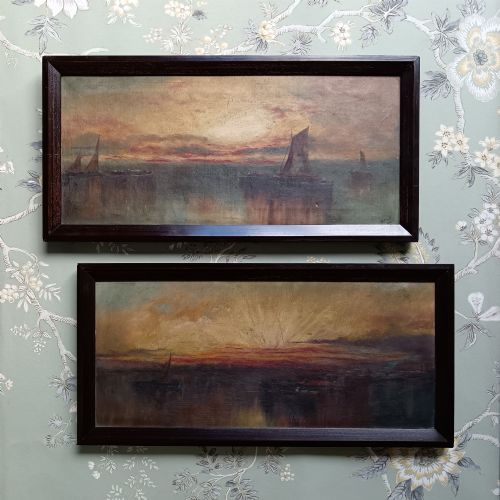
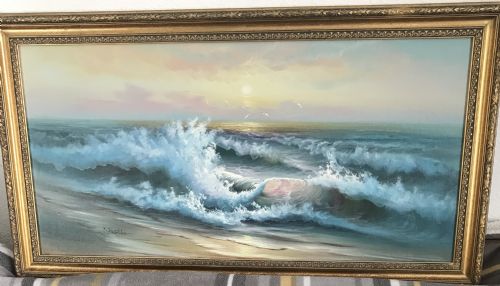


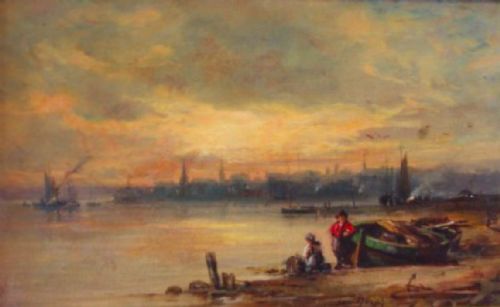
Coastal Sunset Landscape
These coastal sunset landscape pieces capture maritime light on canvas and paper, offering a window into dusk across nineteenth and twentieth-century shores.
Coastal Sunset Landscape
A coastal sunset landscape brings together the expanse of the shore and the low light of dusk, appearing primarily in oil and watercolour mediums across this collection. These works range from nineteenth-century maritime scenes to mid-century interpretations.
Makers and artists captured these coastal settings during distinct periods, including Edwardian marine art and British Impressionism. Buyers will encounter framed waterscapes, marsh views with geese, and harbour scenes featuring boats at eventide.
The assortment spans traditional nineteenth-century depictions through to mid-century French and British fine art. Each piece focuses on the atmospheric shifts of light over water, sand, and stone as day turns to night.
Materials and methods
Artists relied upon oil paint applied to canvas and board, alongside watercolour applied to paper, building texture and translucency. These traditional mediums were often complemented by gesso and gold leaf within the framing.
Wood provided the primary support structure for stretchers and ornate frames, securing the canvas or paper surface. Skilled hands worked the pigments to render the distinct evening glow of coastal waters and sky.
Coastal Sunset Landscape Retail Price Guide 2026
Typical asking prices for coastal sunset landscape among the pieces listed under this phrase on Sellingantiques today, from the lower quarter to the upper quarter. They describe what is for sale here now, not the wider market.
The collection includes works spanning from the nineteenth century through to the mid-twentieth century, executed in oil and watercolour on wood, canvas, and paper.
Judging quality
Quality rests in the artist's command of light, tone, and atmospheric depth rather than the mere recording of a shoreline. Stronger examples demonstrate confident brushwork or watercolour washes that convey the specific chill and warmth of dusk.
The integrity of the original wood frames and the preservation of the canvas or paper surface elevate a piece. Finer works maintain stable pigment layers without heavy restoration, keeping the artist's initial touch intact.
Roger de la Corbiere·Herbert Royle·Hirst Walker·William Langley·Lennard Lewis·Walter Williams·Samuel Bough·William Collingwood Smith·William Burns·William Stephen Coleman
The Coastal Sunset Landscape Glossary
- Gesso
- A plaster-like mixture applied to wood frames to create a smooth surface for gilding or painting. It provides the foundation for decorative moulding details.
- British Impressionism
- A painting style focusing on light and everyday subjects, prominent in British art from the late nineteenth century onward. Artists worked with looser brushstrokes to capture fleeting atmospheric effects.
- Watercolour
- A paint consisting of pigment suspended in a water-soluble binder, traditionally applied to paper. It allows for luminous, transparent washes of colour.
- Maritime
- Pertaining to the sea, ships, and coastal environments. This category covers both calm shorelines and active harbour scenes.
Coastal Sunset Landscape: Frequently Asked Questions
How should I hang coastal paintings?
Position these works away from direct sunlight to protect delicate watercolours and oil pigments from fading over time. Ensure the wall brackets securely support the weight of the wood frames.
Keep the centre of the canvas at eye level to replicate gallery placement and enhance the viewing experience in a domestic room.
How do I clean an antique frame?
Dust the gilded or wood surfaces gently with a soft, dry brush to remove particulate matter without disturbing the finish. Avoid using liquid cleaners or household polishes which can strip the gesso.
Consult a professional restorer if the frame shows signs of cracking or loose ornamentation.
What defines Edwardian marine art?
This style focuses on coastal waters, shipping, and shorelines created during the Edwardian era, marked by careful attention to maritime detail and naturalistic light. Artists often depicted specific locations along the British coast.
The works bridge traditional nineteenth-century realism with softer atmospheric observations of sea and sky.
How can I tell watercolour from oil?
Watercolour paintings are executed on paper, frequently displayed behind glass to protect the delicate medium from moisture and dust. Oil paintings utilise canvas or wood panels with a heavier, textured paint layer that requires no glass.
Examining the surface under a strong light reveals the characteristic matte finish of watercolour versus the sheen of cured oil paint.