



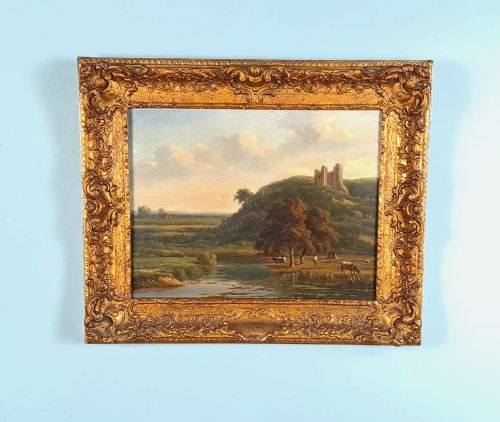
British Pastoral Oil Scene
When you search for a british pastoral oil scene, you encounter framed canvases capturing rural life, riverbanks and agricultural landscapes from past centuries.
British Pastoral Oil Scene
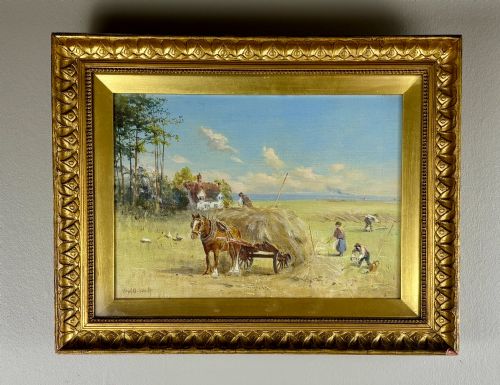
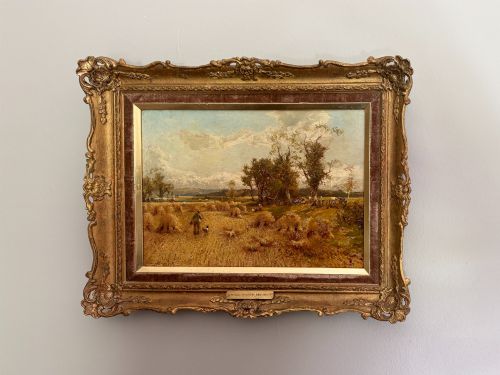
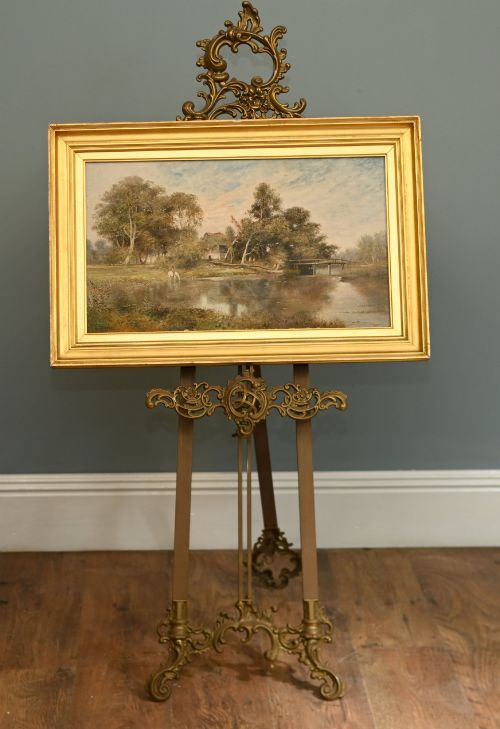
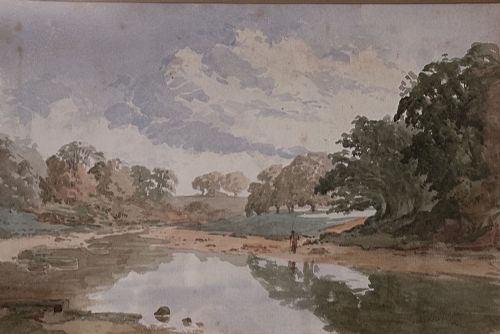
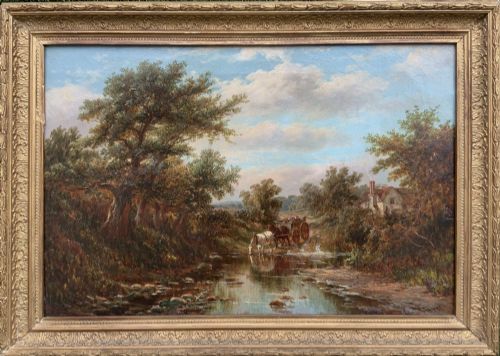
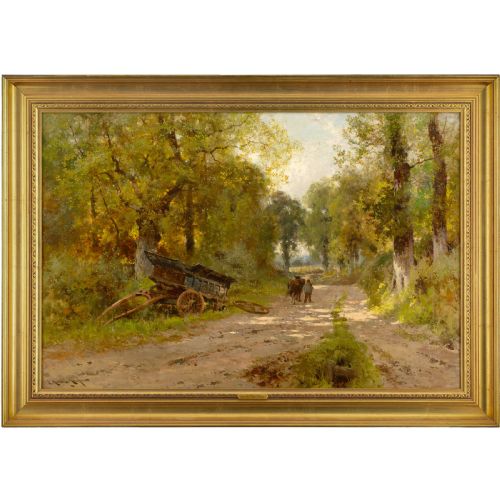
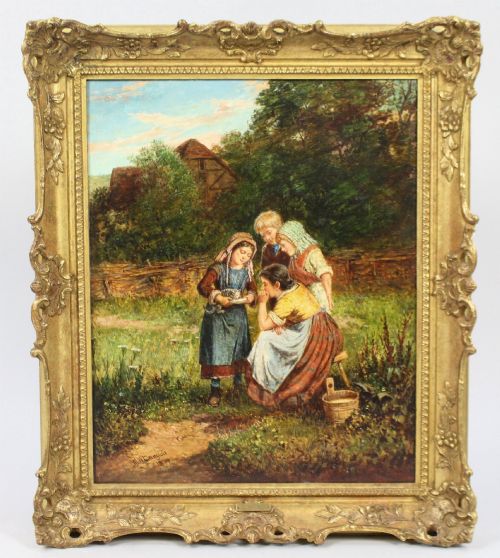
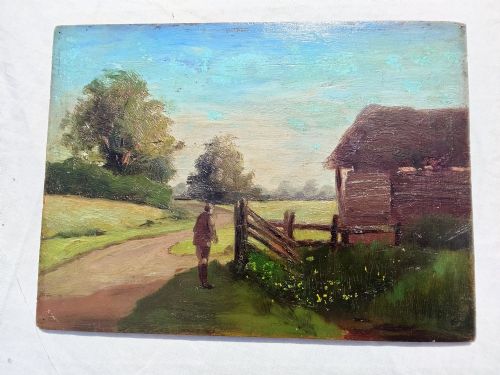
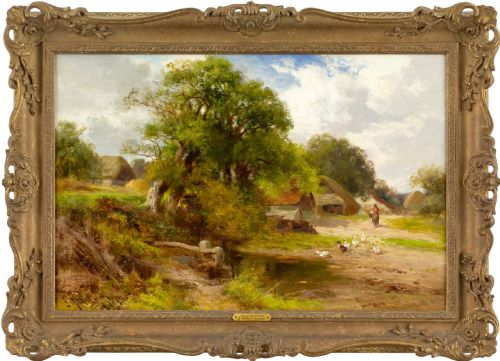
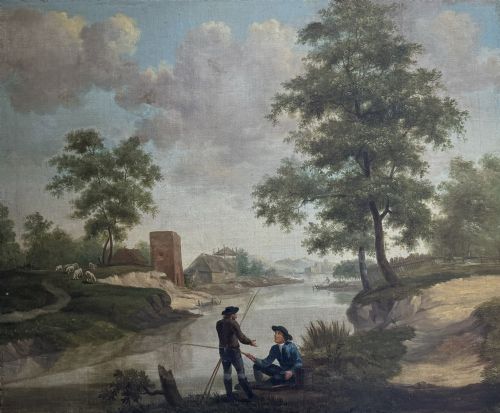
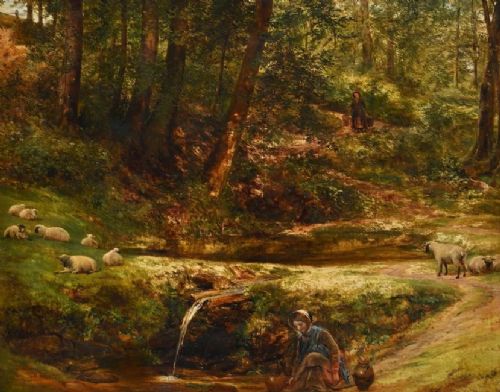
A british pastoral oil scene captures traditional rural life, featuring rivers, cottages, cattle, and agricultural workers across the English countryside. These works reflect the visual language of Victorian, Edwardian, and British Impressionist painting traditions.
Most pieces met on this page date from the nineteenth and early twentieth centuries, recorded across periods like 1850, 1890, 1900, and 1910. The forms range from small panel studies to expansive framed canvases depicting rivers, harvest fields, and livestock.
The subjects focus heavily on working landscapes, showing figures herding cows, fishing by willow trees, or gathering the harvest near thatched cottages. Collectors seek these works to bring quiet, rural nineteenth-century topography into domestic spaces.
Materials and painting techniques
Artists applied oil paint using traditional brushes onto prepared canvas or wooden board supports. Many works utilise oil on canvas stretched over wooden frames, occasionally housed in period giltwood and gesso frames.
The technique relies on layered oil pigments to build depth in skies, water, and foliage, often capturing natural light and atmospheric shifts in rural settings.
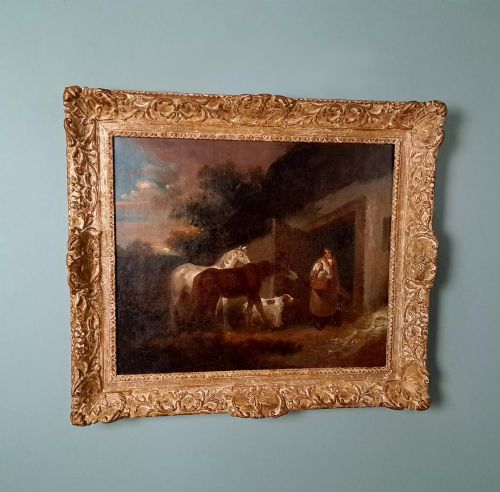
Several canvases faithfully preserve nineteenth-century farmyard ducks, stubborn shire horses, and cats demanding attention.
Distinctions in quality and execution
Quality separates through the artist's handling of light, anatomical precision in rendered livestock and figures, and atmospheric depth in the landscape background. Finer works demonstrate confident brushwork and balanced composition.
The preservation of the original paint surface and the presence of a period matching giltwood or gesso frame also influence the overall standing of an individual canvas.
William H Myers·George Graham·John Horace Hooper·William Joseph Shayer Senior·Mark William Langlois·David Bates·Richard Redgrave·T C Hofland·Henry H Parker·Thomas Baker of Leamington·Ernest Higgins Rigg·John Sanderson Wells·Owen Bowen·Henry John Boddington·Robert John Hammond·Frederick James Knowles·Robert Thorne Waite·Walter J Watson·John Linnell·Robert Finley McIntyre·James Gunson Atkinson·Benjamin Williams Leader·Peter Deakin·Florence Hess·Herbert Royle
The British Pastoral Oil Scene Glossary
- Canvas
- A heavy woven fabric stretched across a wooden frame to serve as a support for oil painting.
- Giltwood
- Wood carved and coated with gold leaf or a gold-coloured finish, commonly used for traditional picture frames.
- Gesso
- A paint mixture consisting of a binder mixed with chalk, gypsum, or pigment, used to prepare surfaces for painting or framing.
- Board
- A rigid wooden panel utilised as a flat painting support instead of woven fabric.
- English School
- A classification for paintings produced by British artists sharing regional stylistic traditions without belonging to a single formal academy.
British Pastoral Oil Scene: Frequently Asked Questions
What periods do these paintings date from?
The listings span from the eighteenth century through the nineteenth and twentieth centuries, with a heavy concentration in the Victorian and Edwardian eras. Painters worked across decades such as the 1850s, 1890s, and 1910s.
While some examples reach back towards the late seventeen hundreds, the vast majority reflect nineteenth-century and early twentieth-century British landscape traditions.
Where were these rural scenes painted?
Artists painted various regional landscapes across Britain, including Berkshire, Sussex, Surrey, Yorkshire, and locations along the River Severn and the Thames.
Specific topographical titles often reference local rivers, cottages, and farmland that served as direct inspiration for the artists.
How do I display an antique oil painting?
These works require hanging on interior walls away from direct sunlight and excessive moisture to protect the oil paint and canvas. Pairing the canvas with a sympathetic period frame enhances its appearance.
Ensure the wall fixings safely support the weight of the wooden frame and stretcher bars.
How do I tell an 1850 scene from a 1910 scene?
Stylistic shifts help separate mid-nineteenth-century Victorian realism from early twentieth-century British Impressionism. Brushwork becomes looser and the palette shifts in later Edwardian works.
Examining the canvas stretcher, framing materials, and artist signatures also provides helpful chronological clues.