


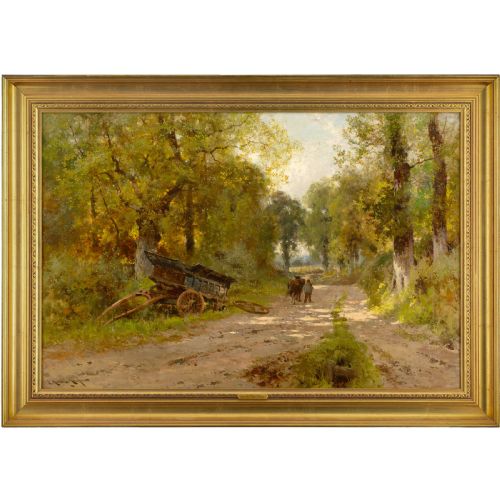
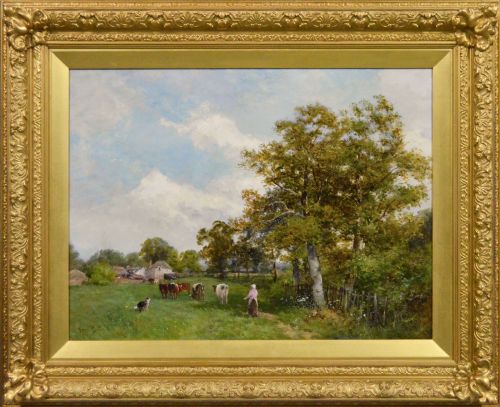
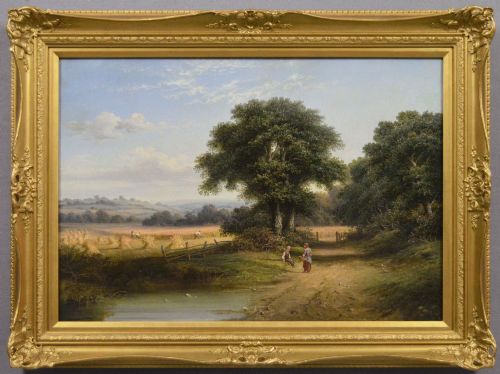
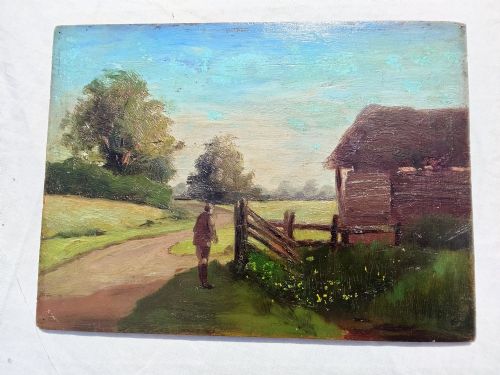
Green Pastoral Landscape Artwork
Green pastoral landscape artwork captures the quiet beauty of fields, rivers and herds, bringing the calm of the countryside directly into a room.
Green Pastoral Landscape Artwork
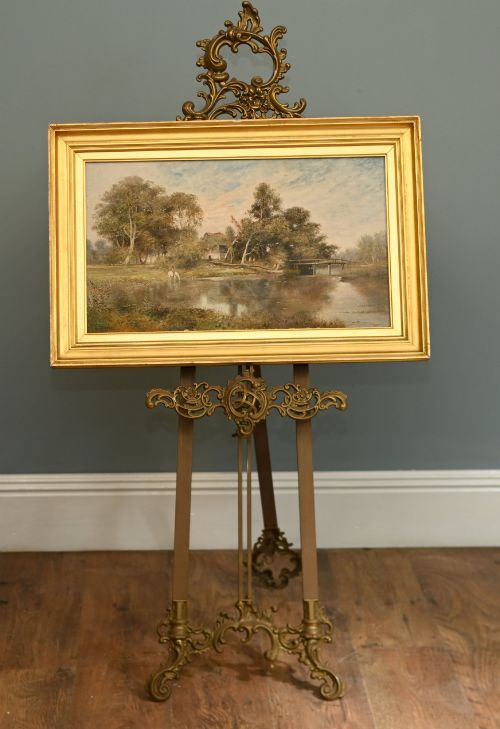
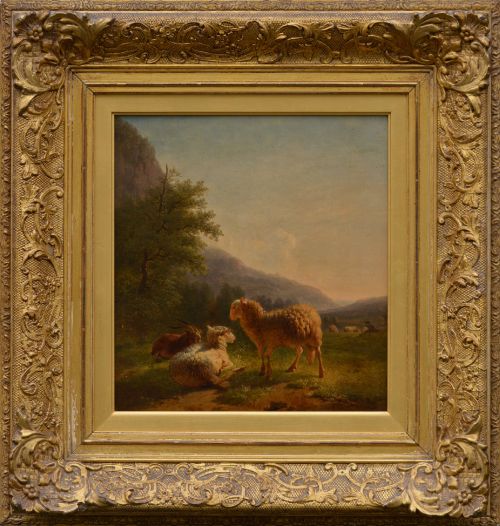
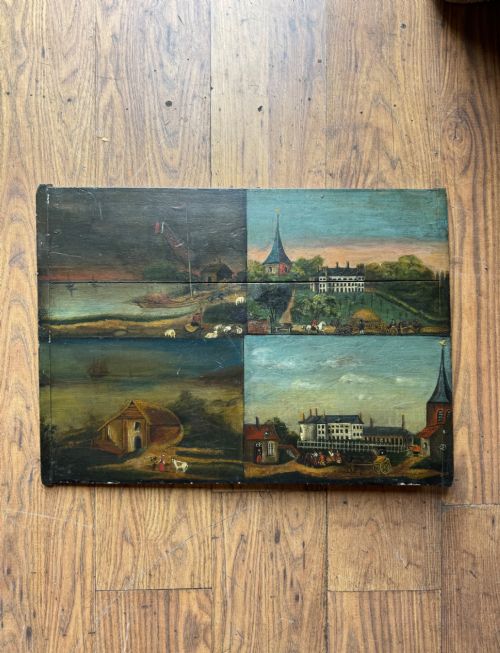
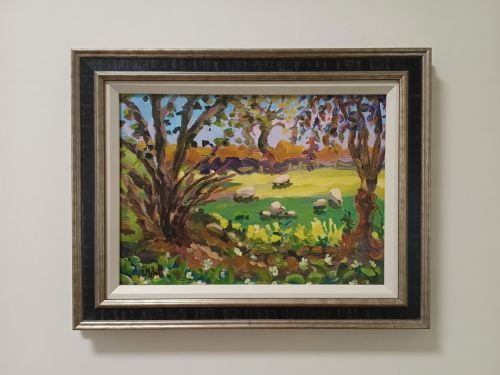
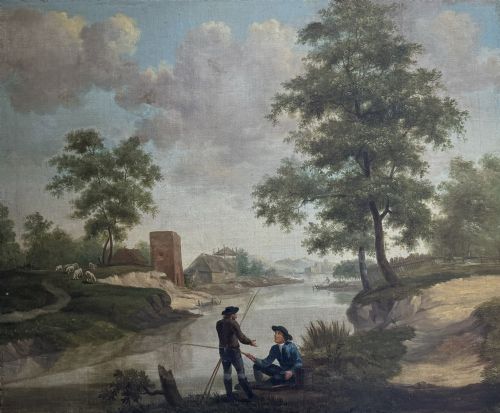
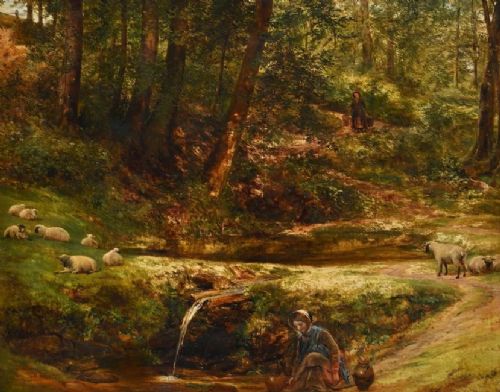
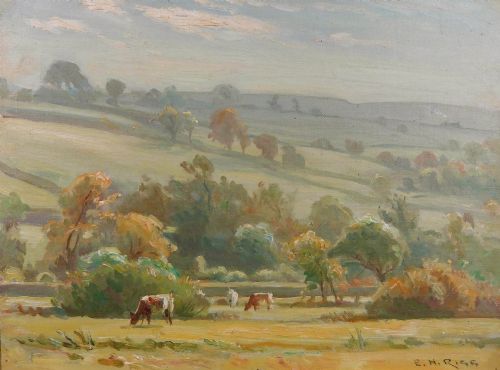
Green pastoral landscape artwork depicts rural scenes populated by farm animals, figures near harvest fields and quiet riverbanks. These pieces range from the 19th Century and Victorian eras through to the early decades of the 20th Century, including Edwardian and 1930s works.
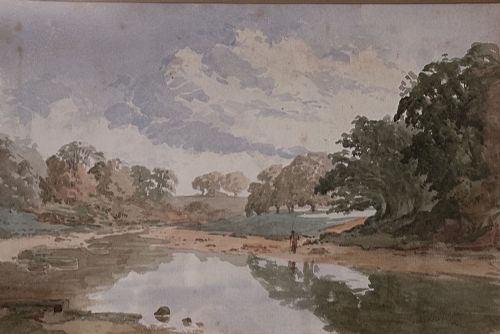
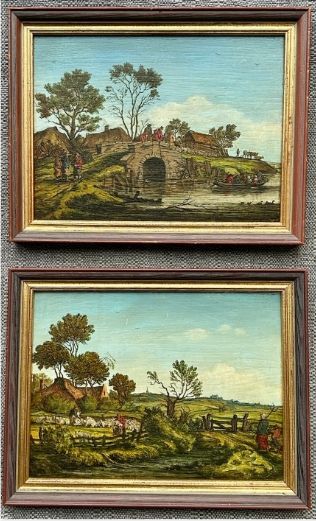
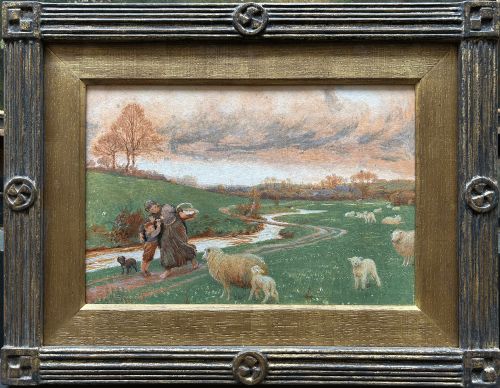
The most common formats on this page are oil paintings on canvas or wood panels, alongside delicate watercolour paintings on paper. Subjects frequently include cattle, sheep and shepherds set against British, Scottish and Flemish countryside backdrops.
The aesthetic leans heavily towards British Impressionism, Romanticism and the English School, capturing a nostalgic view of agrarian life. Buyers encounter both polished gallery pieces and provincial naive folk art within this category.
Materials and technique
Artists relied primarily on oil paint applied to canvas or wooden boards, building rich textures that captured the changing light of the fields. Watercolours on paper offered a lighter, more translucent medium suited to detailed depictions of river landscapes and farmland.
Many of these works are housed in their original giltwood and gesso frames, which provide a heavy, ornate contrast to the natural greens and browns of the painted scenes. Wood panels were frequently utilised for smaller oils, offering a stable surface that has preserved the brushwork well over the centuries.
Listings span from the 18th century through the Victorian era and into the 1930s, using oil on canvas, wood and watercolour on paper.
Distinctions in quality
Quality in these rural scenes rests on the artist's ability to render light, atmosphere and anatomical accuracy in the animals and figures. Masterful brushwork brings vitality to a flock of sheep or a herd of cattle, whereas weaker works can feel stiff and formulaic.
The integrity of the surface and the preservation of the original medium matter immensely, as does the harmony between the painting and its period frame. Works by established regional schools or exhibited artists generally demonstrate superior compositional balance and tonal depth.
Eugène Verboeckhoven·Tom Campbell·David Bates·Walter Heath Williams·George Oyston·Robert Watson·Johann Friedrich Voltz·Henry H Parker·Philip Richard Morris·Oswald Garside·William Henry Mander·Thomas Sidney Cooper·Franz van Severdonck·John Sanderson Wells·Henry John Kinnaird·Alfred Augustus Glendening Jnr·Owen Bowen·William Sydney Cooper·Samuel Joseph Clark·Thomas Hunn·James Orrock
The Green Pastoral Landscape Artwork Glossary
- Pastoral
- Relating to the countryside and rural life, typically presenting an idealized or romanticized view of agricultural scenes. This term defines the entire thematic focus of these artworks.
- Giltwood
- Wood that has been covered with a thin layer of gold leaf or gold paint. Frames of this material are frequently found surrounding 19th-century oil paintings.
- Wood Panel
- A rigid wooden support used instead of canvas for painting. Artists often selected panels for smaller landscapes because they provided a smooth and durable base.
- Impressionism
- An art movement focusing on accurate depiction of light in its changing qualities. British Impressionist works in this collection emphasise open-air rural views.
- Provenance
- The chronology of the ownership or location of a historical object. Documented history adds significant context to signed original paintings.
Green Pastoral Landscape Artwork: Frequently Asked Questions
What subjects appear most often?
These pieces predominantly feature rural scenes populated by grazing cattle, sheep and horses tended by shepherds or farm workers. Rivers, cottages and harvest fields complete the typical countryside setting.
Artists drew endless inspiration from the daily rhythms of agricultural life, recording pastoral views across Britain and mainland Europe.
How should I display a heavy gilt frame?
Ornate giltwood frames require a sturdy wall anchor to support their substantial weight safely. Position the artwork away from direct sunlight to protect both the gesso and the pigments of the painting.
Maintain stable room humidity to prevent the underlying wood panels or canvas supports from warping over time.
Are watercolours as durable as oils?
Watercolour paintings on paper are more sensitive to light than oil paintings on canvas and must be glazed securely. Proper framing behind protective glass ensures these delicate works survive without fading.
Keeping them out of direct glare preserves the subtle washes used by artists to depict skies and water.
How do I recognise a 19th-century piece?
Clues lie in the clothing of the figures, the specific pigments used and the traditional construction of the wooden stretcher bars or panels. Signatures, exhibition labels on the reverse and period gilt frames also offer reliable dating evidence.
Stylistic movements such as Victorian realism or early British impressionism help narrow down the exact decade of creation.