


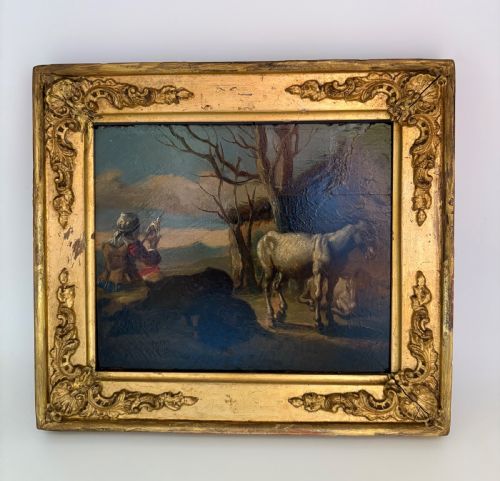


Framed Livestock Landscape Art
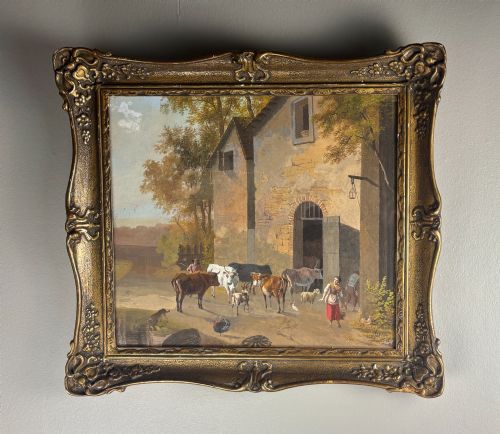
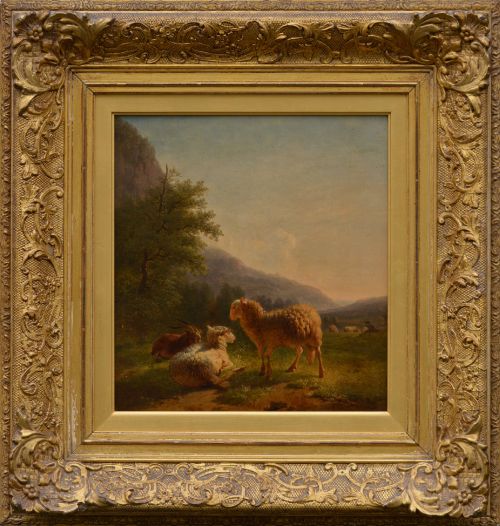
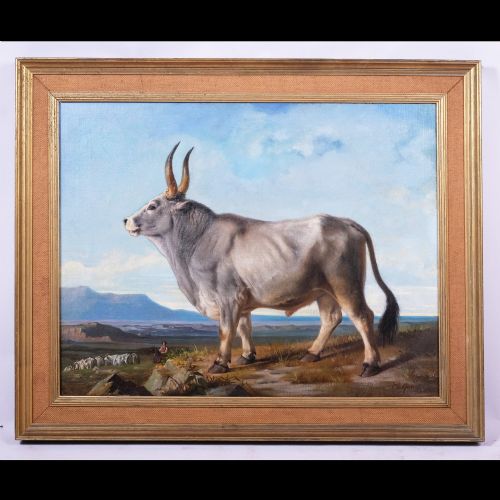
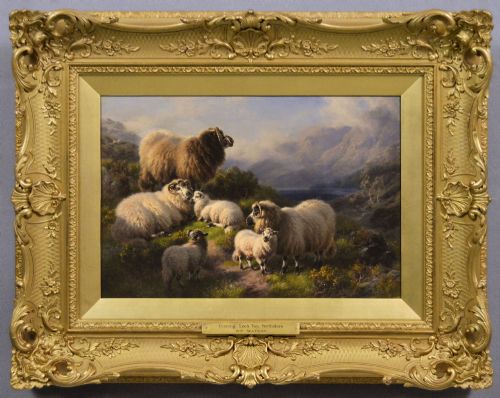
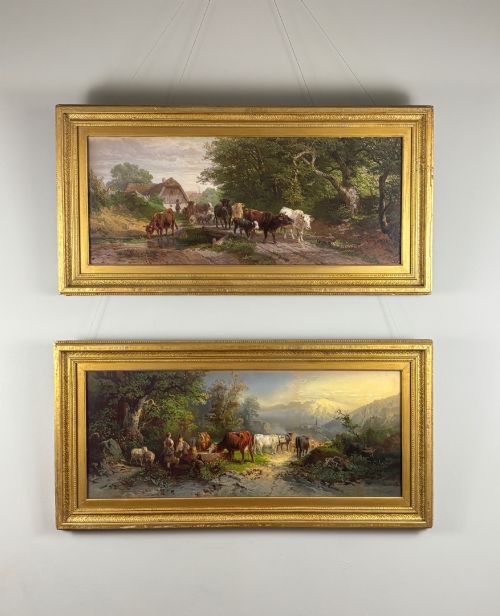
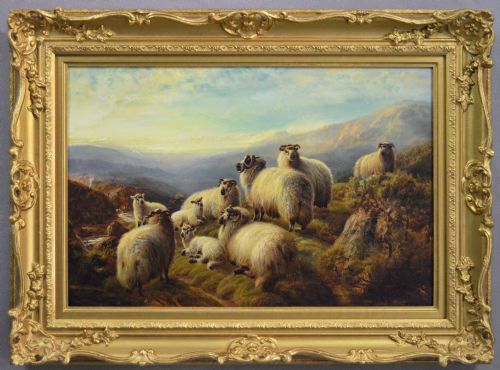
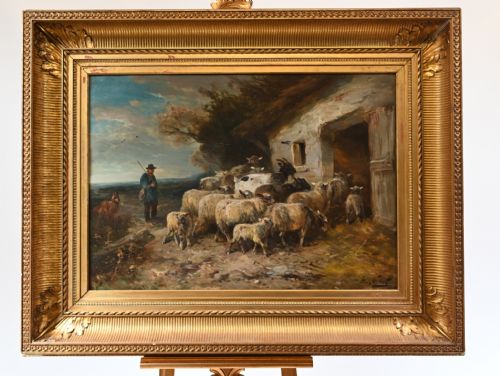
Framed livestock landscape art captures agrarian life through pastoral scenes of cattle, sheep, and horses set within expansive rural settings.
Framed Livestock Landscape Art
Framed livestock landscape art places domesticated animals at the centre of pastoral scenery, uniting agricultural subjects with wide terrain. These works record rural life through depictions of sheep, cattle, and horses tended by shepherds or farmers.
Origins stretch across Britain, Scotland, Wales, and continental Europe, reflecting diverse regional landscapes from Highland glens to pastoral lowlands. Viewers encounter compositions attributed to named artists as well as works from recognised British and European schools.
Materials and Construction
Painters relied primarily on oil paint applied to woven canvas or wood panels, whilst others utilised watercolour pigments on paper. These mediums created depth in rural skies and texture in animal coats.
Current listings demonstrate a concentration of nineteenth-century oil paintings on canvas alongside early twentieth-century watercolours featuring British and European livestock.
Distinctions in Quality
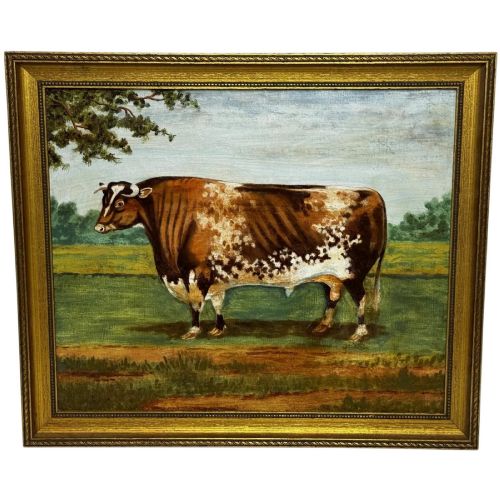
Anatomy and posture separate standard animal portraits from superior compositions. Skilled painters render the musculature of a shorthorn bull or the fleece of a highland sheep with precise observation rather than generic outlines.
Integration between the animals and their surrounding topography distinguishes the tier of execution. Weaker canvases isolate figures against a backdrop, whereas accomplished works merge light and atmosphere across both landscape and livestock.
Eugène Verboeckhoven·William Watson Jnr·Johann Friedrich Voltz·Henry Schouten·Franz van Severdonck·Ernest Pile Bucknall·Heinrich Harder·James de Rijk·Julius Caesar Ibbetson·Thomas Sidney Cooper·Charles Jones·Arthur Charles Dodd·Claude Cardon·John W Morris·Frederick Richard Lee·Henry Brittan Willis·William Henry Mander
The Framed Livestock Landscape Art Glossary
- Oil on Canvas
- Pigment mixed with drying oil applied to a stretched fabric support. This combination allowed artists to build rich textures across nineteenth-century pastoral scenes.
- Giltwood
- Timber treated with a thin layer of gold leaf or metallic powder. It provides the reflective border characteristic of period frames.
- Gesso
- A paint mixture consisting of a neutral binder mixed with chalk, gypsum, or pigment. Artisans used this substance to build moulded relief ornamentation on wooden frames.
- Watercolour
- Pigments suspended in a water-based solution applied to paper. This medium produced lighter, translucent studies of rural subjects.
- Pastoral
- A genre of art depicting the rustic life of shepherds and farm animals in idealized country settings. These compositions emphasise harmony between humans, beasts, and nature.
Framed Livestock Landscape Art: Frequently Asked Questions
What defines framed livestock landscape art?
These works combine natural scenery with domesticated animals such as sheep, cattle, and horses. They record rural working life and agricultural animals within topographical settings.
Most examples originate from the nineteenth and early twentieth centuries, painted in oil or watercolour and housed in decorative period frames.
Where were these paintings created?
The pieces originate from British, Scottish, Welsh, and continental European studios. Artists painted local topography, ranging from Scottish highlands to pastoral European lowlands.
Regional framing styles often accompany these geographic origins, utilising traditional giltwood and moulded gesso designs.
How should I hang these artworks?
These pieces suit traditional drawing rooms, studies, or dining spaces where pastoral subjects complement period interiors. They require stable wall spaces away from direct sunlight.
Matching the weight of the gilt frame to the wall space ensures the artwork anchors the room effectively.
How do I identify the period?
Dating relies on stylistic clues, framing techniques, and artist signatures where available. Nineteenth-century works often employ specific canvas preparations and Victorian framing methods.
Inscribed titles or stretcher marks frequently reveal the exact decade and regional school of the painter.