
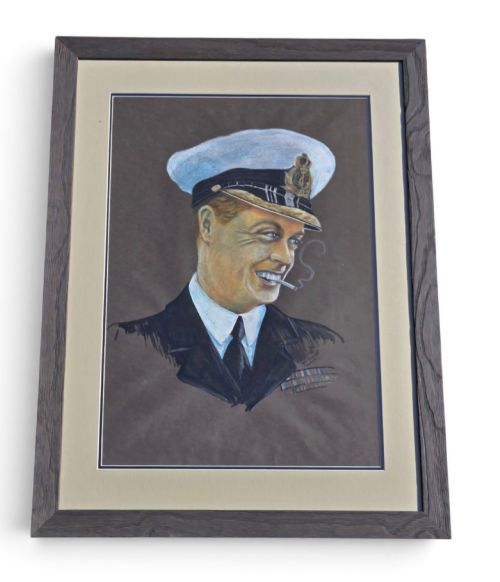


British Naval Officer Portrait
A british naval officer portrait captures the commanding presence and service of historical maritime figures through fine oil paint, enamel, and watercolour.
British Naval Officer Portrait
A british naval officer portrait takes the form of oil paintings on canvas, delicate enamel miniatures, and watercolours spanning from the seventeenth century through to the mid-twentieth century. These works depict notable admirals and commanders dressed in service uniforms, reflecting the changing ranks and dress of Britain's maritime history.
The pieces on this page range from grand Georgian and Regency canvases to Victorian and mid-century representations. Buyers encounter both intimate portrait miniatures framed in gold and large-scale oil paintings meant to project authority.
Materials and Technique
Artists painted these works primarily using oil paint on canvas or panel, building up rich layers of pigment to render the deep blues and golds of naval uniforms. Miniature portraits utilise specialised supports such as enamel and agate panels, demanding immense precision from the painter.
Framing plays an integral part in the construction of these pieces, with period examples utilising heavy wood frames or precious metal surrounds to complement the formality of the sitter.
Several depicted officers hold swords, torches, or gaze sternly past the viewer as if forever issuing orders from the quarterdeck.
Judging Quality
The integrity of the original support and the survival of contemporary framing elevate the standing of a piece, distinguishing workshop productions from masterworks.
Henry Bone ARA·Sir Thomas Lawrence PRA·George Frederick Clarke·Robert Ker Porter·Ambrosini Jerome
The British Naval Officer Portrait Glossary
- Portrait Miniature
- A small, highly detailed painting, often executed on enamel, ivory, or vellum, designed for intimate viewing or portable display.
- Oil on Canvas
- Pigment mixed with a drying oil binder applied to a woven fabric support stretched over a wooden frame.
- Regency
- The period in British history from 1811 to 1820 characterised by distinct artistic styles in portraiture and decorative arts.
- Enamel
- A glassy substance fused to a metal substrate through firing, providing a durable and luminous surface for miniature painting.
British Naval Officer Portrait: Frequently Asked Questions
What is a british naval officer portrait?
These artworks depict historical commanders and admirals, usually shown in full uniform to record their rank and service.
They serve as both fine art objects and historical documents recording Britain's maritime heritage.
How do I date a british naval officer portrait?
Dating relies on the style of the uniform, the artist's recorded working dates, and the physical materials of the canvas and frame.
Changes in naval dress regulations provide a reliable guide for narrowing down the decade of execution.
Where were these portraits displayed?
Original sitters hung these paintings in grand country houses, Admiralty offices, and family drawing rooms to project status.
Today, collectors display them in studies, libraries, and galleries alongside other historical artefacts.
What distinguishes a miniature from a standard painting?
Miniatures are scaled down significantly, often painted on specialised surfaces like enamel or agate for personal portability.
Standard portraits use large oil canvases designed to dominate the wall space of a formal room.