


Blue Naval Officer Portrait
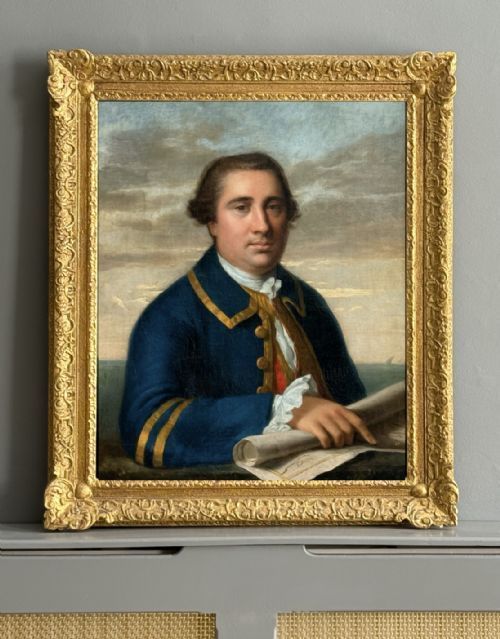
A blue naval officer portrait captures the commanding presence of sea service through oil on canvas, delicate watercolour, and enamel miniature.
Blue Naval Officer Portrait
A blue naval officer portrait records figures from sea service across several centuries, spanning the eighteenth century through the mid-twentieth century. These works appear primarily as oil paintings on canvas and intimate portrait miniatures on agate panel or enamel.
The subjects range from anonymous young gentlemen in naval jackets to named admirals and captains. Examples encompass Regency grandeur, Victorian character, and mid-century British portraiture.
Buyers encounter everything from small pocket-sized miniatures framed in gold to large canvas works intended for public or domestic display. Each piece preserves the distinct dark blue uniform and gold braid associated with maritime rank.
Materials and construction
Painters used oil paint on canvas or worked in watercolour on paper to capture the sitters and their uniforms. Portrait miniatures demanded exceptional precision, executed in enamel or painted directly onto agate panels.
Frames play a structural and aesthetic role, frequently formed from wood and finished in giltwood or cast in gold. These materials support the preservation of the painted surface over generations of handling and display.
Some officers stared down history with such intensity that their gold buttons outshine the admiral.
Distinguishing quality in maritime portraiture
Materials dictate the upper tiers of quality, particularly where works feature precious metal framing or specialist enamel surfaces. The reputation of the artist, whether a recognised Royal Academician or a skilled miniaturist, further elevates the standing of a piece.
Lemuel Francis Abbott·Henry Bone·Sir Thomas Lawrence·Henry L Gates·Samuel Lane·John Laviers Wheatley·Maurice Codner·Richard Hall
The Blue Naval Officer Portrait Glossary
- Oil on Canvas
- A painting medium where pigments suspended in oil are applied to a stretched cloth support. This combination allows for rich colour blending and durable longevity.
- Portrait Miniature
- A small, highly detailed painting designed for close viewing or personal carriage. These pieces often measure only a few inches across and require a magnifying glass to appreciate fully.
- Enamel Miniature
- An artwork painted with vitreous enamel on a metal base, then fired in a kiln to fuse the colours. This technique results in a glossy, permanent finish that resists fading.
- Agate Panel
- A thin slice of semi-precious stone used as a rigid painting support. The natural banding of the stone occasionally forms part of the visual background in miniature art.
- Giltwood
- Wood carved and coated with gold leaf or a gold-coloured metallic finish. It provides a traditional decorative border for oil paintings.
Blue Naval Officer Portrait: Frequently Asked Questions
What periods do these portraits cover?
The pieces span from the eighteenth century through the Regency and Victorian eras into the mid-twentieth century.
This broad timeline demonstrates how naval uniform styles and portraiture techniques evolved over hundreds of years.
Are all the sitters identified?
Many works name specific historical figures, including admirals, captains, and royalty. Other pieces depict anonymous young gentlemen and officers whose identities are lost to time.
Inscribed frames and contemporary records often help historians connect a face to a name.
How were portrait miniatures displayed?
Miniatures were often created to be worn close to the heart or kept safely within small protective cases. Some were mounted in precious metal frames for desk or wall placement.
Their compact size allowed officers to carry likenesses of themselves or their commanders during long voyages.
What materials make up the frames?
Frames utilise traditional woods finished in giltwood alongside fine metals like gold. Enamel and agate panels frequently incorporate specialised casing to protect the delicate painted surface.
These materials reflect the high status afforded to naval officers during their careers.