




British Landscape Drawing
British landscape drawing captures the changing topography of the countryside and towns through the direct touch of pencil, ink and watercolour.
British Landscape Drawing
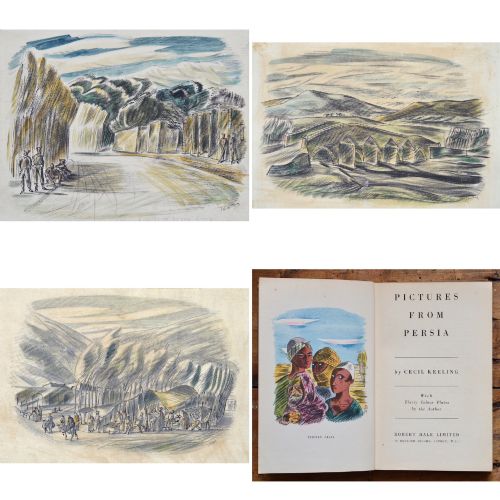
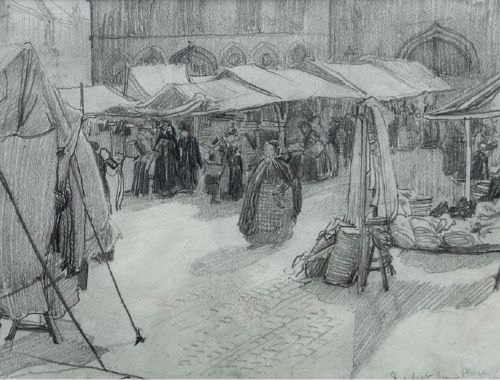
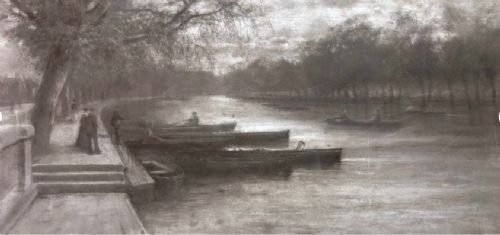
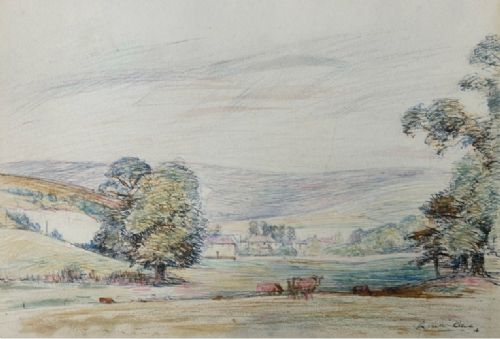
A british landscape drawing reveals the topographical interests and rural scenery recorded by artists from the Georgian era through to the mid-twentieth century. Collectors encounter atmospheric watercolours, precise pencil sketches and expressive pastels depicting regional architecture, river valleys and pastoral fields.
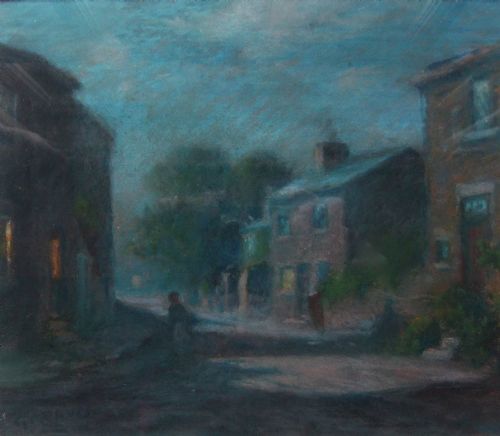
The selections span distinct periods including Victorian, Edwardian and Modern British movements, alongside regional traditions such as the Norwich School. Pieces frequently record specific locations ranging from Yorkshire villages and Scottish castles to urban street scenes.
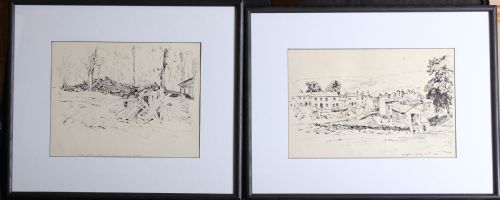
Original artwork on paper dominates the selection, appearing either as standalone finished watercolours or intimate preparatory sketches torn from artists' notebooks. These works preserve the immediate response of the draftsman to the changing British weather and terrain.
Materials and methods
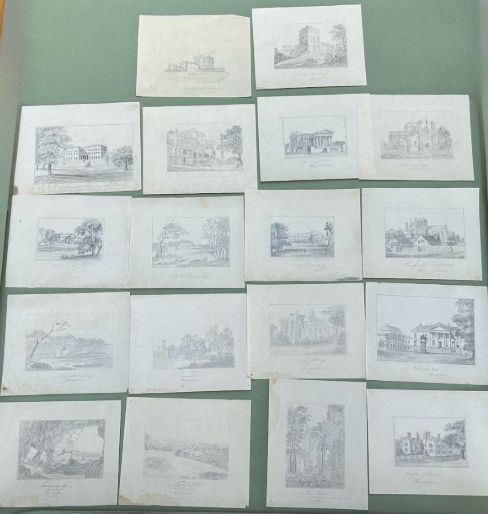
Draftsmen relied primarily on paper supports, applying watercolours, ink, graphite and pastel to build up tone and colour. Many sheets combine pencil underdrawing with washes of pigment to define both structural detail and atmospheric light.
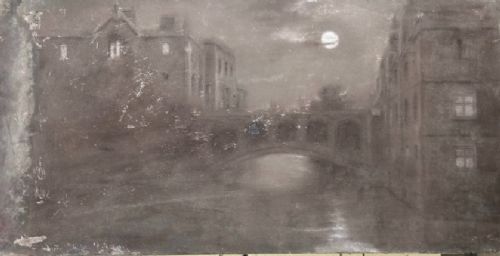
Charcoal and gouache also appear across the selection, offering artists broader strokes for nocturnal scenes or stark winter landscapes. Framing under glass protects these delicate mediums from atmospheric moisture and surface abrasion.
Regional British topography dominates the selection, featuring specific locations from Scotland down to the West Country.
Distinctions in execution
The success of a drawing rests on the confidence of the line and the economy with which the artist captures light and form. Superior sheets demonstrate a sure hand in pencil or ink, where every mark contributes to the sense of place without hesitation or overworking.
Condition and preservation heavily influence the standing of a piece, particularly regarding the retention of fugitive watercolour pigments against fading. Works retaining their original paper tone and pigment intensity offer a truer witness to the artist's initial intention.
Fred Lawson·William Manners·Henry H Parker·John Baragwanath King·Leonard Richmond
The British Landscape Drawing Glossary
- Watercolour
- A paint consisting of a pigment suspended in a water-soluble vehicle, applied in transparent washes on paper. It allows artists to build luminous atmospheric effects.
- Pastel
- A dry medium composed of powdered pigment and a binder, shaped into sticks for direct application. It produces velvety textures and rich colour saturation.
- Graphite
- A form of crystalline carbon used in pencils to create monochrome lines and shading. Artists utilise it for both preliminary outlines and finished tonal studies.
- Norwich School
- The first provincial art movement in Britain, flourishing in the early nineteenth century and focusing on local Norfolk scenery. Members worked extensively in watercolour and oil.
- Gouache
- An opaque water-based paint that includes a white pigment filler, creating denser and heavier coverage than standard watercolour. It provides sharp highlights and solid colour areas.
British Landscape Drawing: Frequently Asked Questions
How should I display works on paper?
Drawings require protection from direct sunlight to prevent the fading of watercolours, inks and pastels. Archival framing with acid-free mounts ensures the paper remains stable over time.
Positioning pieces away from high humidity sources preserves the integrity of both the support and the medium. Gentle, indirect lighting displays the subtle tones of pencil and wash most effectively.
What defines the Norwich School?
This regional group focused on the natural scenery of East Anglia, capturing local rivers, churches and rural life. Artists within this circle prioritized direct observation of the British countryside.
Their output heavily shaped nineteenth-century watercolour practice through luminous skies and faithful topographical rendering.
How do I identify a preparatory sketch?
Preparatory studies often feature visible grid lines, rapid compositional notes or multiple overlapping pencil strokes. These sheets were created to explore lighting or perspective before executing a larger finished work.
Collectors value them for offering an unfiltered view into the working method of the artist.
What distinguishes pastel from watercolour?
Pastel uses dry pigment sticks applied directly to textured paper, producing rich, opaque surfaces with soft edges. Watercolour employs wet transparent washes that rely on the white of the paper for luminosity.
Both mediums capture atmospheric shifts in the landscape but demand entirely different handling by the draftsman.