



British Industrial Clock
A genuine british industrial clock brings utilitarian graft into a modern room with honest engineering.
British Industrial Clock
A british industrial clock combines heavy utility with functional reliability, built for stations, offices, and factories. When you search for this phrase, you encounter robust wall and mantel timepieces that served the infrastructure of the nation.
The pieces on this page span from the Victorian era through the Edwardian period and the decades leading up to the 1950s. Railway companies, post offices, and municipal buildings commissioned these reliable timekeepers to keep strict schedules.
Wall clocks dominate the selection, often featuring clear painted dials and protective bezels designed for public spaces. Railway companies and postal authorities accounted for many of the most durable examples produced.
Materials and construction
Workshops constructed these clocks using durable timbers like oak and mahogany alongside heavy iron and brass for structural integrity. Glass protected the vital painted dials from dust and damage in busy working environments.
Movement design prioritized accuracy and ease of maintenance, utilising fusee movements and reliable 8-day mechanisms. Smiths and other prominent makers engineered these clocks to withstand decades of continuous vibration and heavy use.
British Industrial Clock Retail Price Guide 2026
Typical asking prices for british industrial clock among the pieces listed under this phrase on Sellingantiques today, from the lower quarter to the upper quarter. They describe what is for sale here now, not the wider market.
Materials across these listings include solid oak, mahogany, heavy brass, cast iron, and protective glass.
Judging quality in industrial timepieces
Quality rests upon the integrity of the original movement and the preservation of the dial. Crisp lettering on a painted face and heavy brass bezels distinguish institutional timepieces from domestic knock-offs.
Association with specific transport networks or municipal departments elevates a piece beyond standard utility. Original railway markings and intact maker signatures provide historical context that simple mass-produced items lack.
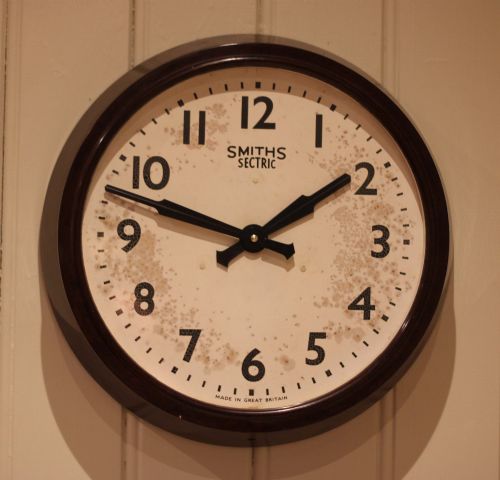
John Walker·Smiths Sectric·Gents of Leicester·Armstrong of Manchester
The British Industrial Clock Glossary
- Fusee
- A conical pulley used in clock movements to maintain an even pull as the mainspring unwinds. This mechanism ensures consistent timekeeping across the duration of the wind.
- Dial
- The face of the clock where numerals indicate the hours and minutes. Industrial dials typically feature bold painted digits for maximum legibility from a distance.
- Bezel
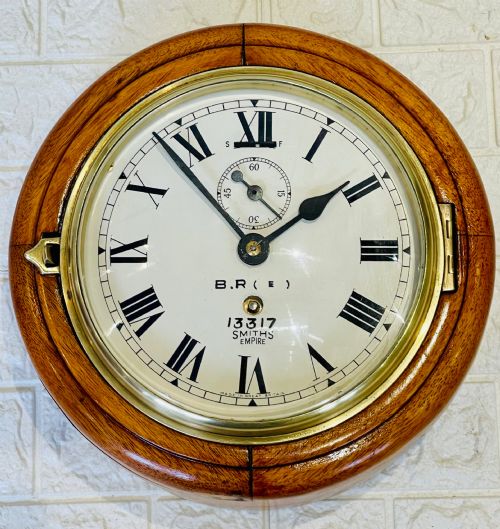
- The metal ring that holds the protective glass in front of the dial. Brass and iron bezels often hinge open to allow hand adjustments.
- Signal box
- A railway cabin housing levers and instruments for controlling train movements. Clocks housed within these boxes endured rigorous shifts and vibration.
British Industrial Clock: Frequently Asked Questions
Where were these clocks used?
These clocks served in railway stations, signal boxes, post offices, and hospitals across the country. Their primary purpose was keeping synchronized time for workers and the public.
Industrial and transport networks relied on these robust timepieces to coordinate complex schedules. Today, they transition easily into domestic hallways and kitchens.
How do fusee movements work?
A fusee movement uses a conical drum and a chain or cord to equalize the power output of the mainspring. As the spring unwinds and loses tension, the chain moves to a wider part of the cone.
This ingenious mechanical adjustment ensures the clock maintains steady accuracy throughout its running cycle. It remains a hallmark of better-quality British clockmaking.
How do I date a railway clock?
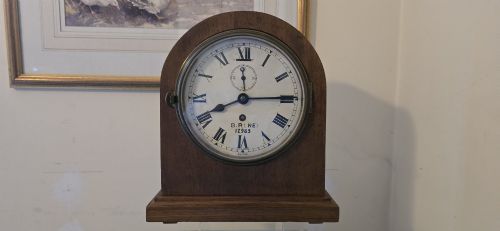
Dating often relies on company lettering, dial style, and movement characteristics recorded by the manufacturer. Railway company initials changed frequently through mergers and nationalisation.
Pre-1923 groupings and later British Railways regional stampings provide clear chronological markers. Maker signatures and patent dates stamped on the movement plates offer further clues.