





British Impressionist Floral Art
British impressionist floral art brings domestic gardens and gathered blooms to life through loose brushwork and direct observation.
British Impressionist Floral Art
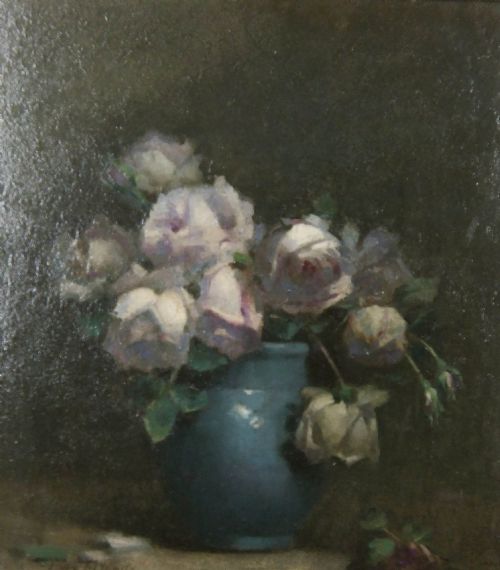
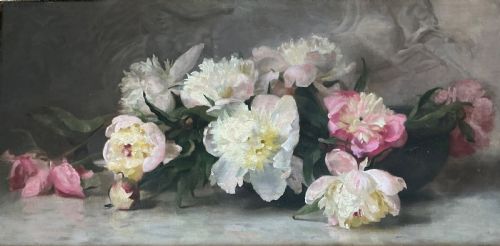
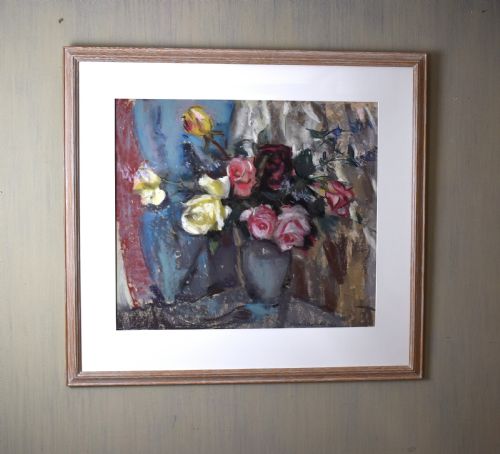
British impressionist floral art captures the light and colour of gardens and cut flowers across the opening decades of the twentieth century. These pieces record familiar floral subjects, from studio arrangements of roses and anemones to cottage gardens and walled enclosures.
Most examples on this page are oil paintings on canvas or delicate watercolours on paper. Artists working in this manner focused on immediate visual impressions rather than rigid botanical precision, capturing the shifting atmosphere of daylight on petals and leaves.
Materials and technique
Painters relied primarily on oil paint applied to canvas or wood panels, alongside watercolours and gouache on paper. These mediums allowed artists to build textured surfaces and luminous washes that suggested rather than meticulously described each bloom.
Framing often included gesso mouldings that complemented the period aesthetic of the paintings. The handling of the brush remained loose and expressive, prioritising colour harmonies and natural light over strict academic finish.
The listings span periods from the late Victorian era through the 1960s, featuring oil, watercolour, and pastel.
Judging quality
Quality rests on the confidence of the brushwork and the artist's command of tone and light within the composition. Stronger pieces demonstrate a purposeful rhythm of marks that gives vitality to the subject.
Lesser works can feel formulaic or heavy-handed, lacking the luminous transparency and structural clarity found in the more accomplished examples from this tradition.
William Thomas Wood·Owen Bowen·Gertrude Hayes·Ernest Higgins Rigg·Kershaw Schofield·Lilian Stannard·Sir Matthew Smith·Herbert Davis Richter
The British Impressionist Floral Art Glossary
- Impressionism
- A style of painting emphasising light, loose brushwork and ordinary subject matter. This approach prioritised transient visual effects over detailed academic realism.
- Gouache
- An opaque water-based paint that dries to a matte finish. It provides stronger coverage than traditional watercolour.
- Gesso
- A plaster-like mixture applied to wood or canvas as a prepared base for painting, or moulded into decorative frames.
- Post-Impressionism
- An art movement extending impressionist techniques while exploring emotional depth and structural form. Artists used expressive colour and heavier outlines.
- Staithes Group
- A collective of artists working in Yorkshire influenced by French impressionist plein air methods. Their output frequently featured coastal scenes and garden subjects.
British Impressionist Floral Art: Frequently Asked Questions
What subjects do these paintings show?
These works primarily depict cut flowers in vases, garden borders, and cottage exteriors. Common botanical subjects include roses, anemones, peonies, and wallflowers.
The compositions focus on domestic and cultivated spaces, capturing seasonal blooms from spring through late summer.
How should I frame a watercolour?
Watercolours require framing behind glass with acid-free mount board to protect the paper from humidity and fading. Conservation-grade materials ensure the pigment remains stable over time.
Traditional wood frames with simple profiles suit the early twentieth-century aesthetic of these pieces without overpowering the delicate medium.
Where should I hang these paintings?
These works suit dining rooms, studies, or hallways where natural light enhances the brushwork and colour palette. Avoid direct, harsh sunlight to prevent fading on both watercolours and oil paintings.
Pairing smaller still lifes with period furniture creates a cohesive display that reflects the domestic origins of the art.
How do I distinguish watercolours from oils?
Watercolours on paper display a matte, translucent quality where the texture of the paper remains visible beneath the pigment. They are traditionally framed under glass for protection.
Oil paintings feature textured brushstrokes and a heavier paint layer applied to canvas or wood panels, often displaying a subtle surface sheen.