



British Fusee Clock
A British fusee clock is a precision timekeeper driven by a cone-shaped pulley, prized by collectors for its steady power delivery and clean dial design.
British Fusee Clock
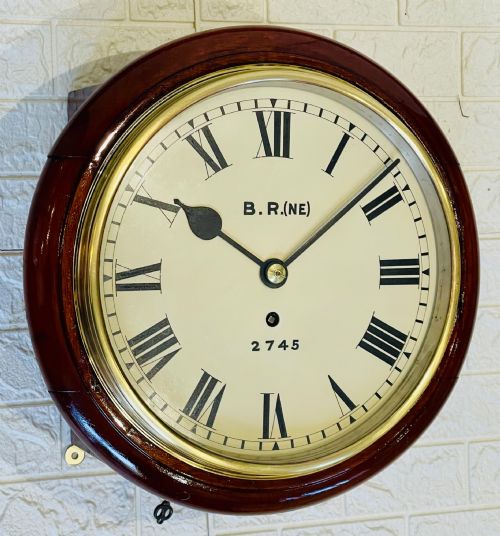
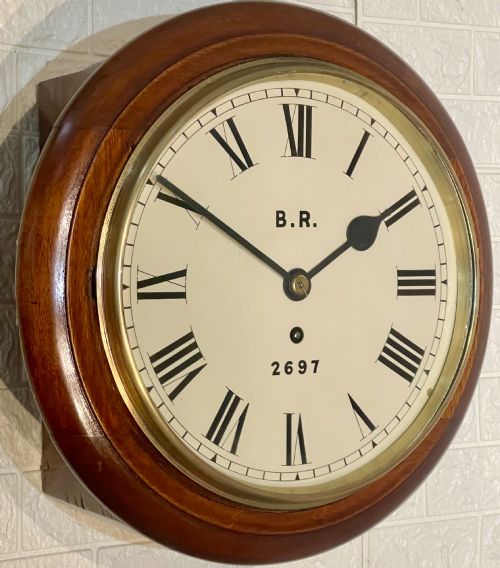
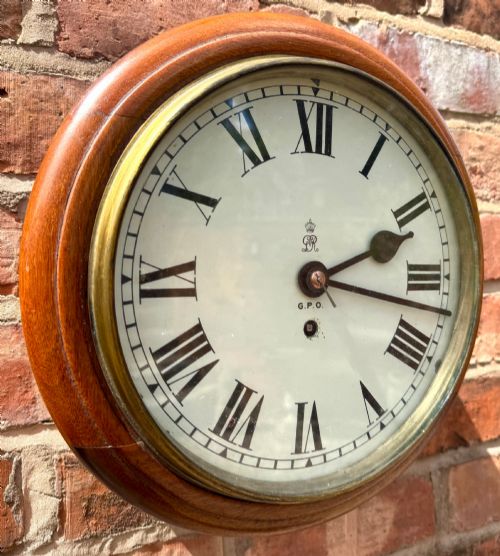
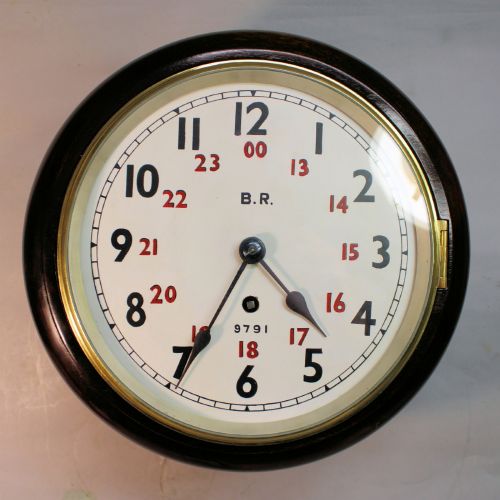
A British fusee clock primarily appears as a dial wall clock intended for stations, offices, and public buildings. These round-faced instruments were built to keep exact time across various networks.
The selections span the Victorian era, Edwardian period, and mid-twentieth century iterations. Many carry specific regional markings relating to railway companies and government departments.
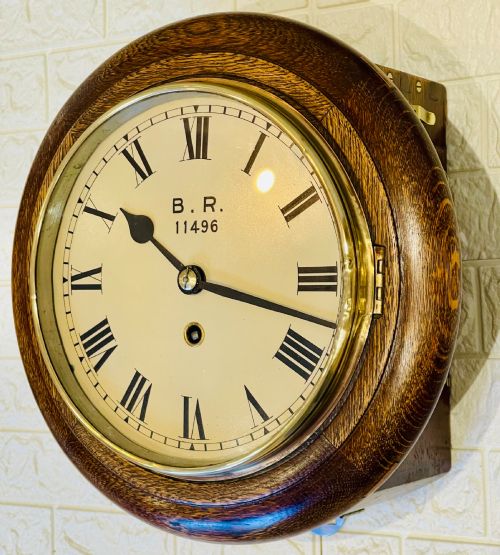
Wall clocks dominate the selection, alongside occasional mantel pieces housed in robust wooden cases. These items reflect utilitarian durability combined with precise mechanical engineering.
Materials and construction
The defining mechanical feature is the fusee itself, a conical pulley that maintains even tension on the chain as the mainspring unwinds. Glass covers the painted dials to protect the hands from dust and damage.
British Fusee Clock Retail Price Guide 2026
Typical asking prices for british fusee clock among the pieces listed under this phrase on Sellingantiques today, from the lower quarter to the upper quarter. They describe what is for sale here now, not the wider market.
Object forms are focused primarily on railway, station master, and dial wall clocks alongside mantel pieces.
Judging quality and provenance
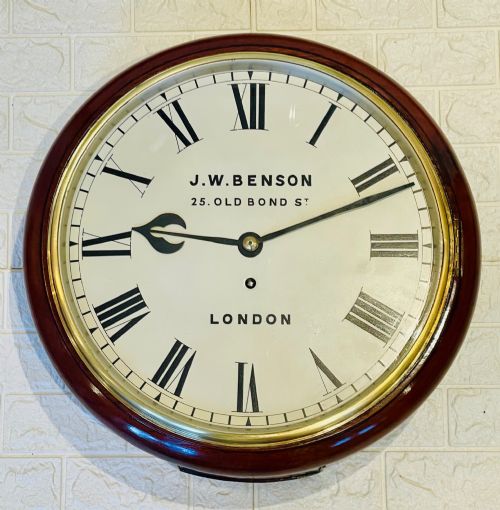
Quality rests upon the crispness of the dial lettering, the integrity of the wooden case, and the maker's signature. Named makers like John Walker or Camerer Cuss add historical significance to a piece.
Originality of components and clearly stamped railway or postal service numbers elevate the standing of a clock. Well-preserved timber finishes and clean mechanical gear trains separate standard examples from finer specimens.
J W Benson·John Walker·Camerer Cuss And Co·Fatton Eleve De Breguet
The British Fusee Clock Glossary
- Fusee
- A conical pulley connected to the mainspring by a chain or cord, designed to equalise the torque as the spring unwinds. This mechanism ensures consistent force is applied to the escapement for accurate timekeeping.
- Dial clock
- A wall-mounted timepiece featuring a prominent circular face and a short pendulum drop. These were standard issue for public buildings and transit stations.
- Chain fusee
- A system utilising a fine steel chain rather than gut or wire to link the barrel to the fusee cone. This provides robust and reliable power transmission.
- Drop dial
- A wall clock case extended downwards to accommodate a pendulum box beneath the circular dial. This configuration balances aesthetic proportions with mechanical necessity.
British Fusee Clock: Frequently Asked Questions
What is a fusee movement?
A fusee movement uses a conical drum to regulate the pull of the mainspring. As the spring loses tension, the chain moves to a wider part of the cone to maintain steady power.
This clever mechanical arrangement ensures the clock maintains consistent accuracy throughout its running cycle.
How do I identify a railway clock?
Railway clocks typically feature clear white painted dials with bold black numerals for rapid reading by staff. Many bear initials on the dial or stamped numbers on the case corresponding to specific transport regions.
These timepieces were essential instruments for synchronising train schedules across the British network.
Where were these clocks hung?
These clocks were installed in station masters' offices, ticket halls, and platform waiting rooms. Government departments such as the General Post Office also utilised them.
Their robust construction and clear faces suited busy, functional environments where reliability mattered above all else.
How do I wind a fusee clock?
Winding requires inserting a key into the dial aperture and turning it gently until the movement reaches resistance. Care must be taken not to overwind the mechanism.
Most examples require weekly attention to keep the chain and spring functioning correctly.
How are periods told apart?
Victorian and Edwardian pieces often display detailed timber bezels and hand-painted wooden or metal dials. Mid-twentieth century models tend towards simplified utility designs.
Maker signatures, regional lettering styles, and case woods help narrow down the decade of manufacture.