




British Floral Still Life
British floral still life paintings capture domestic blooms across canvas, board, and paper from the Victorian era into the mid-century.
British Floral Still Life
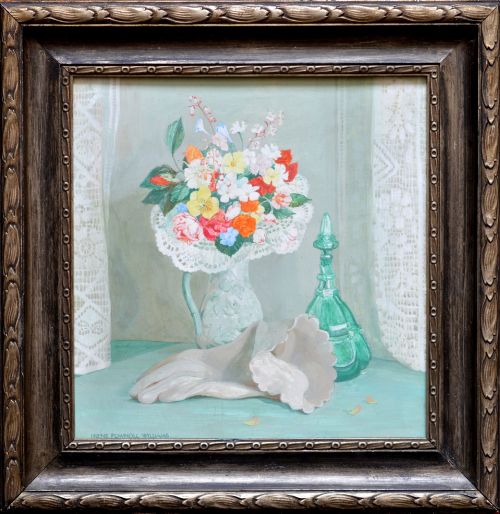
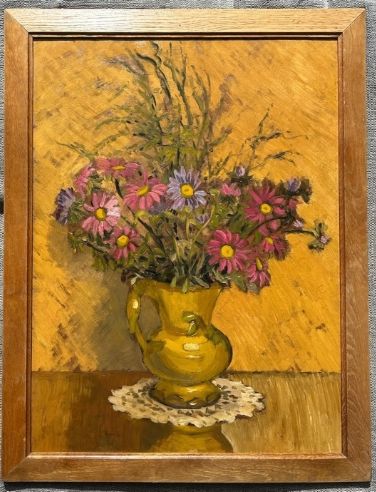
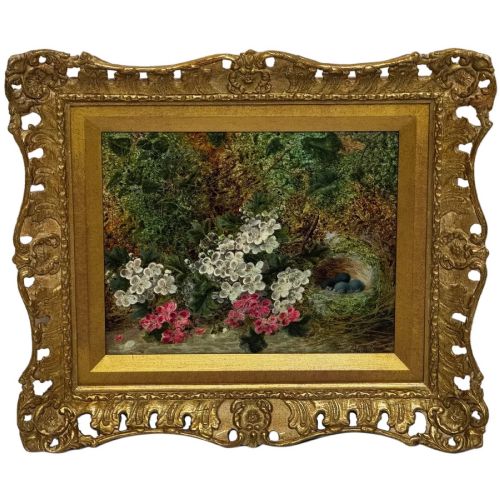
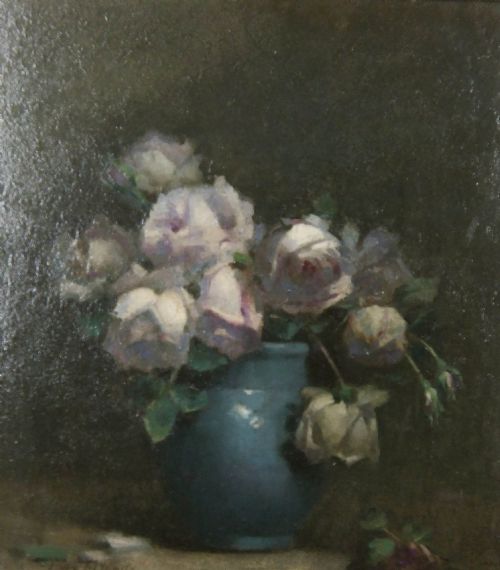
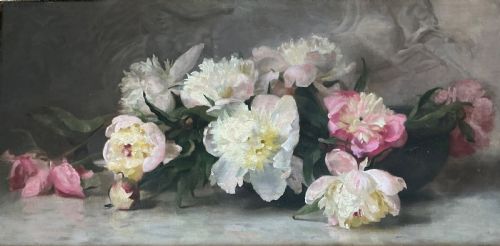
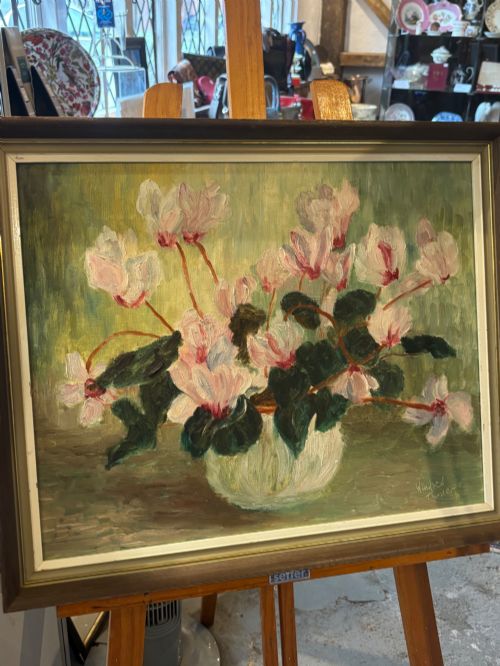
When you search for british floral still life, you encounter painted studies of cut flowers, vessels, and botanical arrangements from various twentieth-century and nineteenth-century periods. The selections span oil paintings, watercolours, gouache, pastels, and tempera works depicting roses, anemones, and seasonal blossoms.
You are most likely to meet works executed during the 1920s and 1930s, alongside Victorian examples and mid-century modern pieces. These range from detailed watercolours on paper to robust oil paintings on canvas and wood panel.
The subjects focus on familiar flora arranged simply in jugs, vases, bowls, and baskets. Artists from regional groups and academies recorded these domestic arrangements with differing degrees of formal abstraction or academic precision.
How they were made
Makers applied oil paint, watercolour, gouache, tempera, or pastel to supports such as stretched canvas, wood board, paper, and panel. Canvases and panels frequently received preparatory grounds before the application of pigments.
Works on paper relied on translucent washes of watercolour or opaque gouache pigments, whilst oil painters built up rich impasto textures and tonal depths. Selected pieces incorporated gold leaf accents or protective glass framing.
Listings feature works created across eight distinct decades, spanning from the 1890s to the 1960s using canvas, wood, and paper.
What varies in quality
The confidence of brushwork and the handling of light distinguish exceptional compositions from routine decorative studies. Masterful works demonstrate a deliberate command of colour relationships within the arrangement and the surrounding space.
Condition of the pigment and support influences the standing of a piece, with stable paint layers and minimal intervention preserving the artist's original touch. The quality of the framing and the preservation of the paper or canvas surface also contribute to the distinction of individual examples.
Oliver Clare·James Tower·Stuart Armfield·Sir Matthew Smith·Owen Bowen
The British Floral Still Life Glossary
- Tempera
- A permanent, fast-drying painting medium consisting of coloured pigments mixed with a water-binder agent such as egg yolk. It produces a flat, matte surface.
- Gouache
- An opaque water-based paint consisting of pigment, water, and a binding agent such as gum arabic. It allows for solid blocks of colour.
- Impasto
- The process of applying paint thickly on a canvas so that the brush or palette knife marks remain visible. This technique adds tactile dimension to floral petals.
- Panel
- A flat piece of wood or other rigid material used as a support for painting instead of stretched canvas. Artists often utilised panels for smaller cabinet-sized works.
British Floral Still Life: Frequently Asked Questions
What periods do these paintings date from?
The works span from the late nineteenth century through the Edwardian period and into the mid-twentieth century. Most examples originate from the interwar decades.
Artists working in these periods adopted diverse stylistic approaches, moving from academic realism toward modern British abstraction.
How should I hang and light them?
Display these works away from direct sunlight to protect sensitive watercolours, pastels, and oil pigments from fading. Stable indoor humidity prevents warping on wood panels and canvas supports.
Use directional picture lights with low heat emission to illuminate the surface without damaging the historic materials.
What surfaces were used?
Painters utilised stretched canvas, wooden boards, paper, and rigid panels as supports for their floral compositions. Each substrate interacts differently with oil, watercolour, or tempera mediums.
Watercolours and pastels typically require paper mounted under protective glass, whereas oil and tempera works on canvas or board remain open.
How do I distinguish watercolours from oils?
Watercolours and gouache feature thin, translucent or matte applications on paper surfaces, often showing the grain beneath. They are lighter in weight and generally framed under glass.
Oil paintings exhibit textured pigment layers, brushstrokes with physical relief, and a semi-gloss or satin sheen on canvas or wooden panel.