


British Equestrian Wall Art
British equestrian wall art brings the energy of the hunt, the paddock and the open landscape directly onto the room's walls.
British Equestrian Wall Art
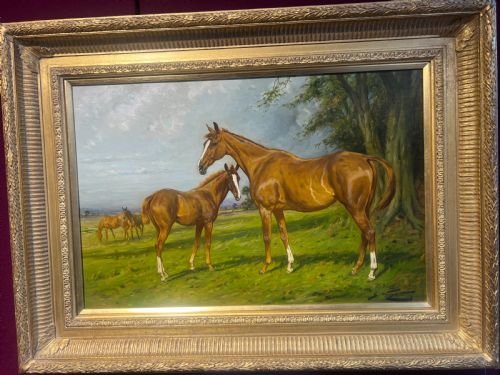
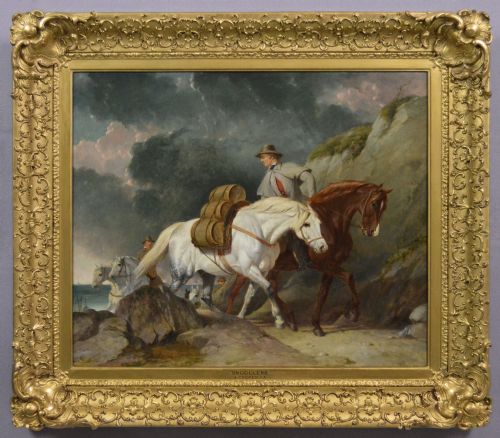
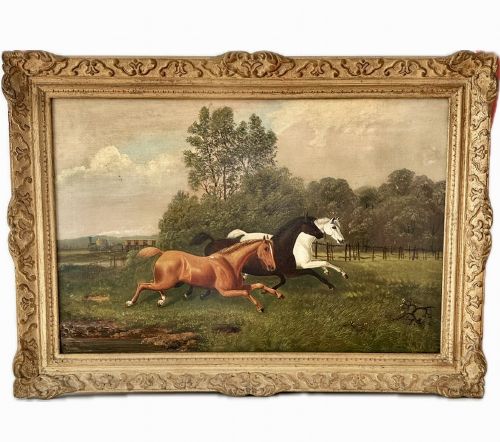
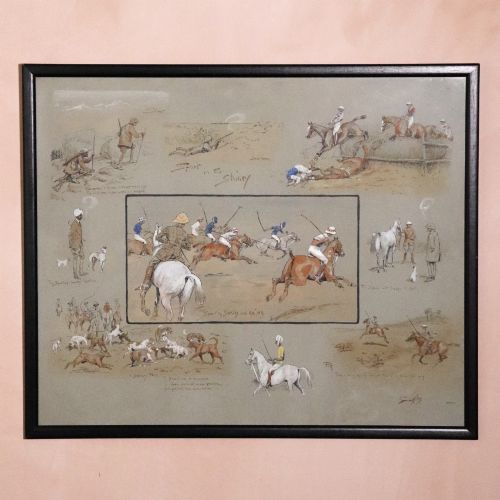
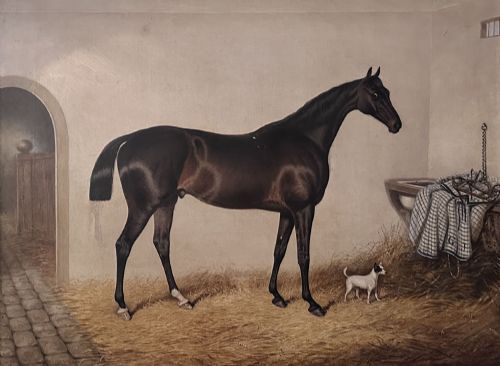
British equestrian wall art captures horses, riders and hounds through oil paintings, watercolours, etchings and original prints. These pieces record specific hunting scenes, racehorses, coaching travels and quiet stable portraits across more than a century of production.
The selections available here lean heavily into nineteenth-century works and early twentieth-century pieces, moving from traditional sporting art into mid-century modern interpretations. A buyer will frequently encounter framed oils on canvas alongside chalk drawings and pastels on coloured paper.
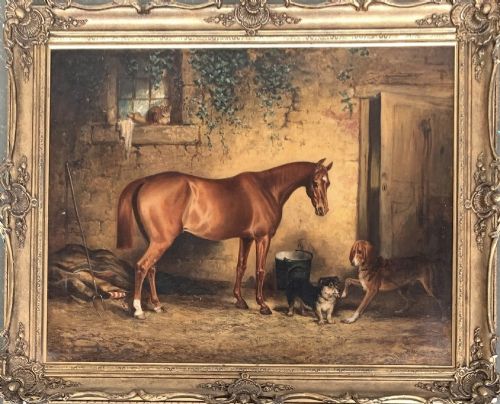
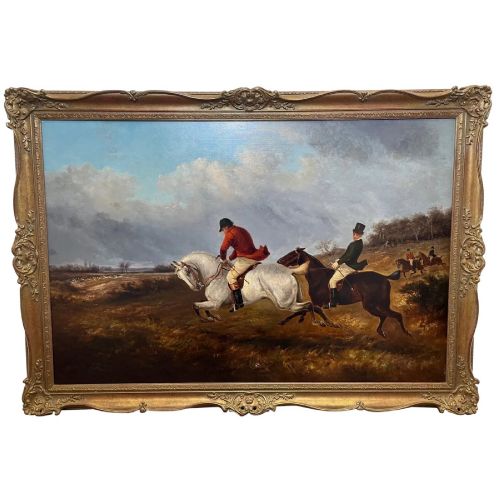
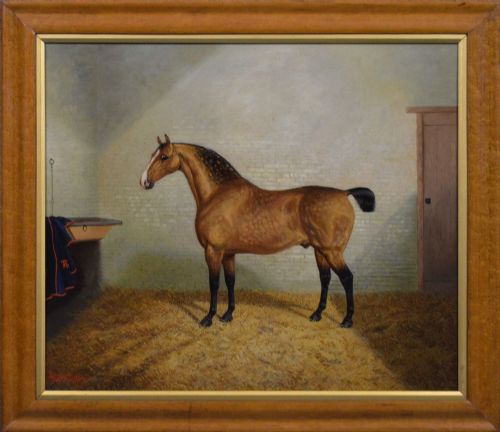
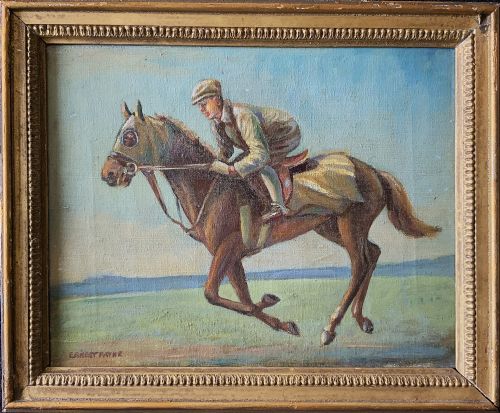
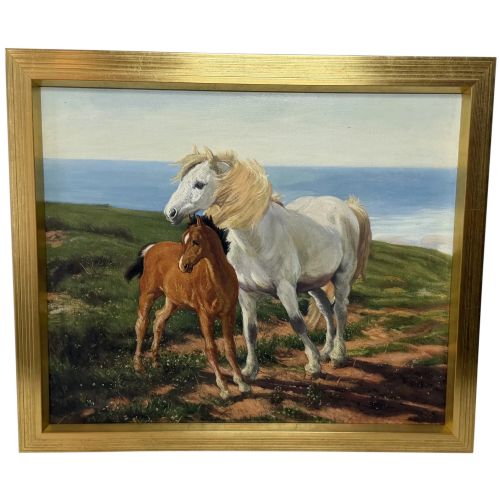
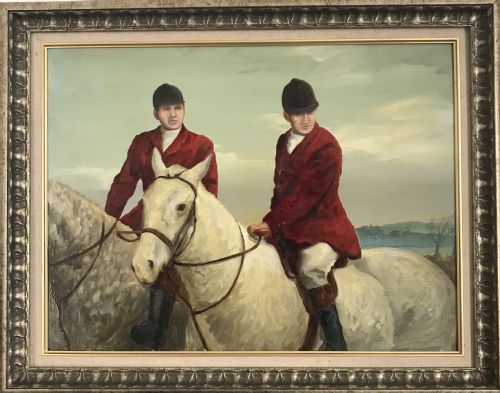
Subjects range from individual portraits of bay hunters and grey mares to vast compositions of the Berkeley Hunt in full cry. Each format brings a distinct mood, whether through the academic precision of a Victorian canvas or the direct lines of a mid-century racing sketch.
Materials and construction
Artists relied primarily on oil paint applied to canvas or wood panels, capturing the sheen of a horse coat and the motion of a gallop with rich pigments. Watercolours and gouache on paper offered a lighter touch, often preserved behind glass within wooden or gilt wood frames.
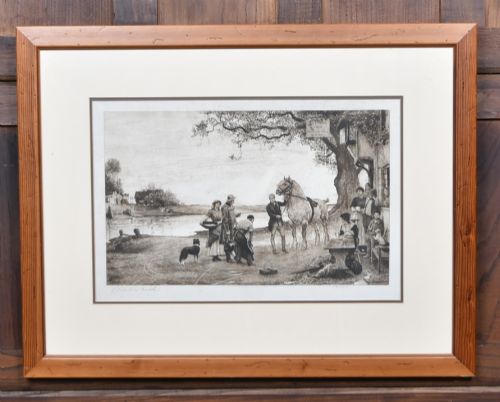
Printmakers utilised etching and original print techniques to reproduce sporting subjects for wider distribution, sometimes mounting them with hand-coloured details. Framing often matches the period of the artwork, utilising walnut or moulded wood to anchor the piece to the wall.
Several horses captured in these paintings appear to be glancing directly at the artist with a critical eye on their likeness.
Distinctions in quality
Quality rests upon the artist's command of equine anatomy, where the skeletal structure and muscle tension of a galloping horse demand precise observation. Master painters render light across a dappled buckskin or a chestnut coat with an accuracy that lesser hands miss.
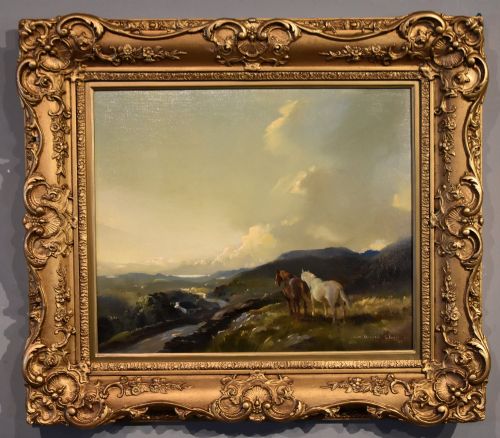
The integration of horse and landscape marks the upper tier of these works, ensuring the animal sits naturally within a river valley or a misty coaching route rather than pasted onto a background. Originality of medium and the preservation of the canvas or paper surface also define the standing of each piece.
Henry Barraud·Thomas Smythe·Albert Clark·Abraham Cooper RA·John Ferneley Senior·John Rattenbury Skeaping·Charles Walter Simpson·John Sanderson Wells·Philip Henry Rideout·John Atkinson
The British Equestrian Wall Art Glossary
- Bay
- A horse coat colour ranging from red-brown to dark brown, with black points on the mane, tail and lower legs. It is the most frequently encountered horse colour in nineteenth-century portraits.
- Fox hunting
- A mounted pursuit of a fox with a pack of hounds across the countryside. This activity forms the narrative backbone for a large proportion of traditional sporting art.
- Etching
- A printmaking method where lines are bitten into a metal plate with acid before being inked and pressed onto paper. Robert W. Macbeth utilised this technique for rural scenes.
- Gouache
- An opaque water-based paint that allows for dense highlights and solid colour blocks. John Rattenbury Skeaping employed gouache alongside watercolour for his racing scenes.
- Full cry
- The moment during a hunt when the entire pack of hounds is actively barking as they follow the scent. It denotes a scene of maximum movement and speed in sporting paintings.
British Equestrian Wall Art: Frequently Asked Questions
How do I choose between an oil painting and a print?
Oil paintings on canvas offer thick textures and deep layers of pigment that catch natural room light in ways flat paper cannot match. They anchor a study or a hallway with a heavy, traditional presence.
Original prints and watercolours provide a lighter visual weight behind glass. They suit smaller spaces or rooms where reflections need careful management.
Where should I hang these works at home?
Equestrian art traditionally sits well in libraries, dining rooms and hallways where dark wood furniture and heritage wall colours complement the subject matter. A single large portrait of a hunter makes a strong focal point above a mantelpiece.
Smaller watercolours and sketches work effectively when grouped together on a shared wall. This arrangement lets you compare different artists and periods within the same field of view.
How do I date a piece of equestrian art?
Look first to the signatures and any inscribed dates left by the artist in the corners of the canvas or paper. Clothing styles of the riders, carriage designs and framing materials also offer reliable clues to the decade of creation.
Victorian works tend towards heavier, highly detailed realism, while mid-century pieces from artists like John Rattenbury Skeaping embrace faster, more expressive line work.
What framing should I look for?
Many pieces retain their original Victorian or Edwardian gilt wood frames, which show appropriate signs of age and complement the period of the artwork. These frames often feature ornate moulded corners that enhance the depth of the painting.
If a piece has been reframed later, ensure the moulding style respects the era of the canvas. Simple wooden frames often suit mid-century modern works better than heavy gilt.