



British Castle Landscape Painting
A british castle landscape painting captures historic fortresses within rolling countryside, offering a tangible connection to nineteenth and twentieth-century artistic interpretations of national heritage.
British Castle Landscape Painting
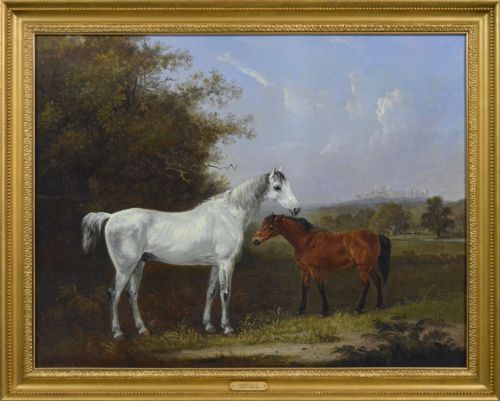
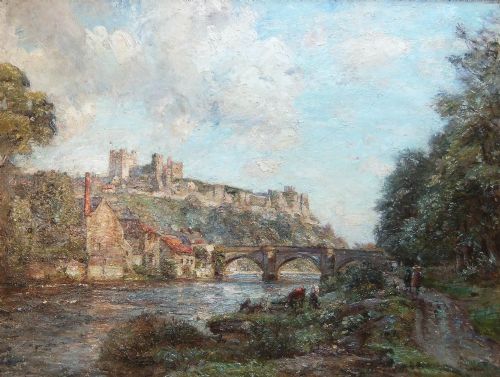
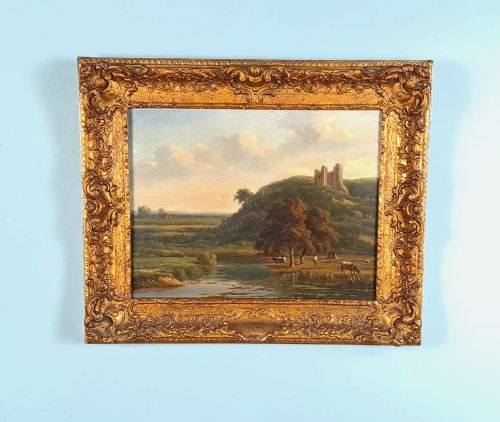
When exploring british castle landscape painting, a buyer encounters historic architectural subjects depicted in various regional settings across the country. These works range from grand royal fortresses like Windsor to northern strongholds such as Bolton and Bamburgh.
The selections span multiple eras, encompassing Georgian origins, Victorian compositions, and twentieth-century interpretations. Watercolour and oil on canvas or board dominate the forms available on this page.
Artists frequently pair the stone ramparts of a castle with local rivers, coastal bays, or pastoral valleys. This pairing defines the traditional composition found throughout these listings.
Materials and technique
Makers utilised traditional mediums including oil paint, watercolour pigment, and graphite applied to canvas, paper, wood panels, or board. Support materials often dictate the texture and preservation style of each piece.
Watercolour applications rely on fluid washes and delicate layering on paper, whereas oil paintings employ heavier impasto and blended strokes across canvas or wooden boards. Glazing and framing under glass frequently protect paper-based watercolours.
Several castle vistas share space with local wildlife, including peacocks wandering near historic Yorkshire stone walls.
Distinctions in quality
Superior examples demonstrate confident brushwork, precise architectural rendering of stone fortifications, and atmospheric depth within the surrounding landscape. Weaker pieces display rigid perspective and flat, uninspired colour application.
The handling of natural light and shadow across castle walls and adjacent rivers separates accomplished works from ordinary topographical records. Provenance and documented artist attribution further elevate the standing of individual paintings.
Alfred Young Nutt·Herbert Royle·T C Hofland·Fred Lawson·James Orrock·William Mellor·Claude Thomas Stanfield Moore·Frank Wood·William Wyld·Alfred Robert Quinton·Thomas Whittle the Younger·George Lambert·Willie Stephenson·William Edward Webb·George Willis Pryce·Charles Walter Radclyffe·Victor Haddrell
The British Castle Landscape Painting Glossary
- Watercolour pigment
- A colour medium suspended in a water-soluble binder, traditionally applied to heavy paper surfaces.
- Oil on canvas
- A painting technique using pigments bound in drying oils, stretched across a woven fabric support.
- British Impressionism
- A late nineteenth and early twentieth-century painting style focusing on light, loose brushwork, and everyday domestic or rural scenes.
- Topographical art
- Artworks dedicated to the accurate depiction of specific places, buildings, and local landscapes.
- Grisaille
- A painting executed entirely in shades of grey or neutral monochrome to emulate sculpture or create a foundational underpainting.
British Castle Landscape Painting: Frequently Asked Questions
What periods do these paintings cover?
The collection spans from the eighteenth century through the Victorian and Edwardian eras into the mid-twentieth century. Works reflect changing artistic movements such as British Impressionism alongside traditional topographical recording.
Specific dates on listings help buyers identify whether a piece originated during the Georgian period or later twentieth-century decades.
How do I care for watercolour and oil paintings?
Watercolour paintings require protection from direct sunlight and damp conditions to prevent fading and paper degradation. Framing behind glass preserves the delicate pigments over time.
Oil paintings on canvas or board benefit from stable indoor humidity and occasional gentle dusting of the surface. Avoiding extreme temperature fluctuations protects the structural integrity of the paint layer.
Where were these castle scenes typically painted?
Artists travelled across Britain to record notable strongholds, including Windsor Castle in Berkshire, Bolton Castle in Yorkshire, and Bamburgh Castle on the Northumberland coast. Rivers like the Thames and the Medway frequently appear alongside the architectural subjects.
Regional depictions extend to Welsh landmarks such as Conwy Castle and various northern landscapes.
How can I distinguish between oil and watercolour works?
Oil paintings feature a thicker, textured surface applied to canvas, wood panels, or board, often displaying visible brush marks and rich pigment depth. Watercolour works appear on paper supports, showing translucent washes and fluid blending.
Watercolours are typically displayed beneath glass, whereas many oil paintings remain unglazed in traditional frames.