




Traditional River Bridge Painting
These traditional river bridge painting works capture spans crossing quiet rural streams and bustling waterways alike, offering a timeless focal point for any room.
Traditional River Bridge Painting
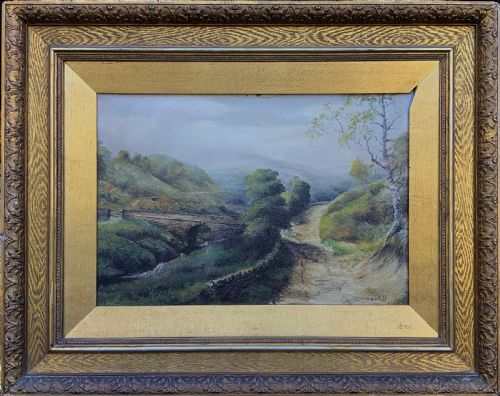
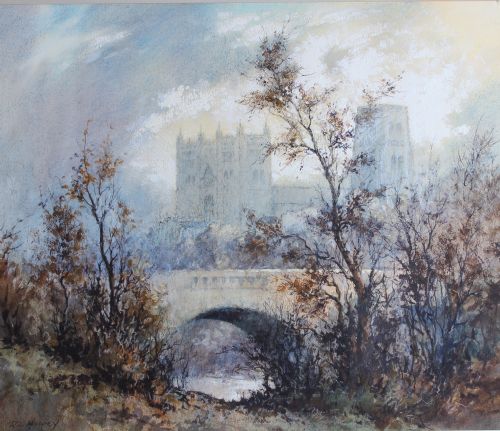
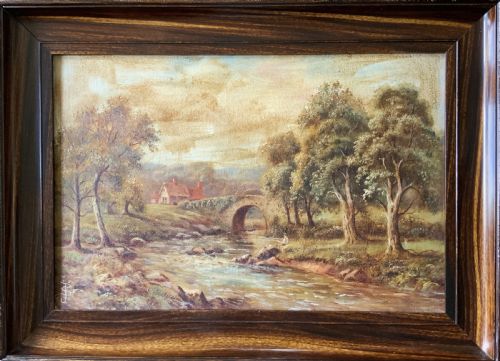
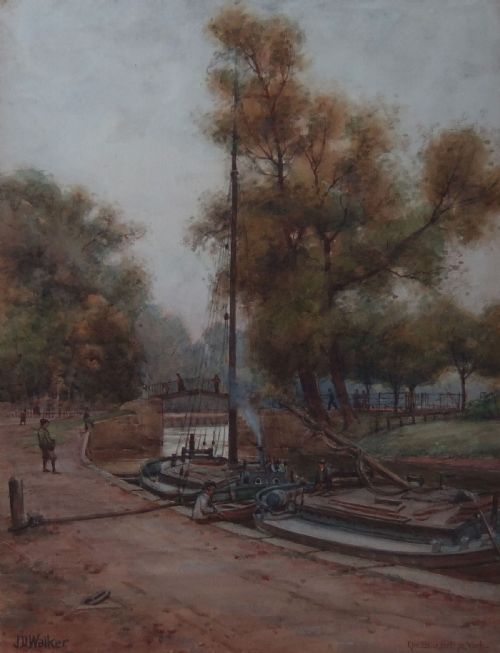
A traditional river bridge painting brings historical waterways and architectural spans into domestic spaces, usually rendered during the Victorian era, the Edwardian period, or the early twentieth century. These works depict stone arches, wooden crossings, and industrial spans set within British landscapes and maritime scenes.
The compositions frequently centre on figures, boats, or livestock near crossings such as Ludford Bridge, Richmond Bridge, and Tower Bridge. Painters ranging from the British School to named artists record these structural landmarks alongside rural streams and tidal rivers.
Most examples appear as oil paintings on canvas or delicate watercolours on paper, often framed in gilt wood. The selection spans quiet West Country streams and grand urban rivers under changing daylight.
Materials and Technique
Artists built these scenes using oil on canvas or watercolour paint on paper, handling pigments to capture shifting light on water and masonry. Canvases are stretched over wooden supports, whilst works on paper rely on fluid washes and precise brushwork.
Frames play a structural role in presentation, frequently utilising gilt wood moulding to complement the palette of the artwork. Inscribed stretchers and margins occasionally preserve attribution, dates, and specific locations written by the hand of the artist.
Listings feature works spanning the Victorian era through the mid-20th century, executed in oil on canvas and watercolour on paper.
Quality and Execution
The distinction between works rests upon the confidence of the brushwork and the atmospheric depth achieved within the landscape. Superior examples command attention through balanced composition, convincing rendering of water reflections, and subtle control of natural light.
Attribution to documented hands or recognised members of the British School elevates a piece, as does a well-preserved original gilt wood frame. The ability of the painter to integrate architectural bridge stonework naturally into the surrounding riverbank dictates the visual success of the piece.
Robert Leslie Howey·Sydney Yates Johnson·Frederick Waters Watts·Percy Lancaster·Noel Harry Leaver·Henry Dawson·Frederick Tully Lott·John D. Walker·Edward Fletcher·Edward Seago·Sir David Murray·Arthur Netherwood
The Traditional River Bridge Painting Glossary
- Oil on Canvas
- A painting medium where pigments suspended in drying oils are applied to a stretched fabric support. This technique allows for rich texture and deep colour saturation.
- Watercolour Paint
- A water-based medium applied to paper in transparent washes. It produces luminous effects well suited to atmospheric river and bridge scenes.
- Gilt Wood
- Timber framing coated with a thin layer of gold leaf or metallic gilt finish. These frames often accompany traditional landscapes to enhance the presentation.
- British School
- A designation for artists working within Britain who share stylistic traditions rather than a formal academy. Many nineteenth-century landscape and maritime works carry this attribution.
- Stretcher
- The wooden frame upon which a canvas is pulled taut before painting. Inscriptions regarding the bridge location often appear directly on this timber.
Traditional River Bridge Painting: Frequently Asked Questions
How do I date a river bridge painting?
Dates are often indicated by the costume of figures crossing the bridge, the style of the gilt frame, and any inscriptions on the canvas stretcher or reverse of the paper. Comparing the architectural style of the bridge itself to known historical structures provides further context.
Signatures, exhibition labels, and the specific medium also help narrow the decade of creation, linking the work to periods such as the Victorian era or the 1930s.
Where should I hang a landscape painting?
These works suit traditional living spaces, studies, or hallways where natural light complements the oil or watercolour pigments without causing fading. Placing them away from direct sunlight preserves the integrity of the canvas and paper.
Pairing the painting with period furniture or neutral walls allows the gilt wood frame and the colours of the river scene to remain the primary focus of the room.
What is the difference between oil and watercolour?
Oil paintings feature thick pigments on canvas, offering textured brushstrokes and deep, saturated tones that withstand atmospheric changes well. Watercolours utilise transparent washes on paper, creating a delicate and luminous quality that requires protective glass framing.
Oils were traditionally chosen for durable, large-scale compositions, whilst watercolours captured spontaneous effects during plein-air sketching excursions.
Are these paintings cleaned or restored?
Many historical paintings undergo conservation to remove accumulated surface grime, stabilize flaking pigment, or repair minor tears in the canvas. Professional cleaning restores the original vibrancy of the palette without altering the artist's initial brushwork.
Original frames may also receive minor gilt touch-ups to ensure the piece presents cohesively whilst retaining its historical character.