




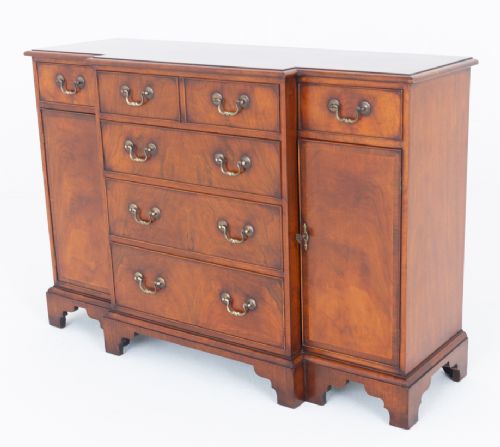
Breakfront Storage Cabinet
When you need a breakfront storage cabinet, you look for a substantial piece that combines architectural presence with deep shelving and generous proportion.
Breakfront Storage Cabinet
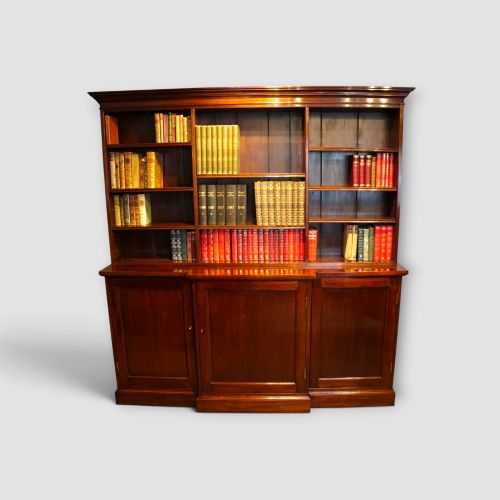
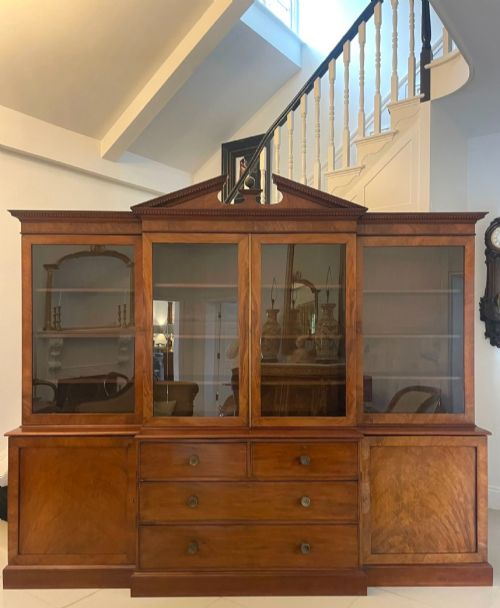
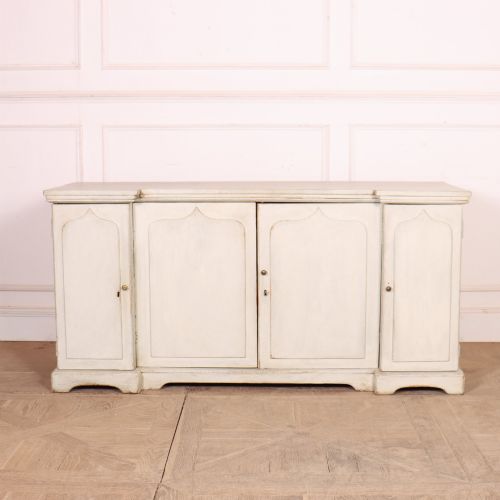
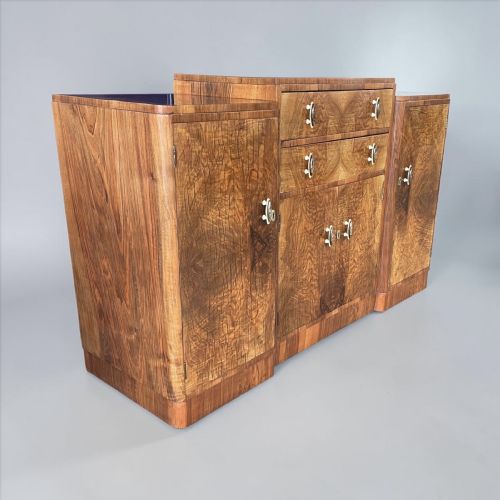
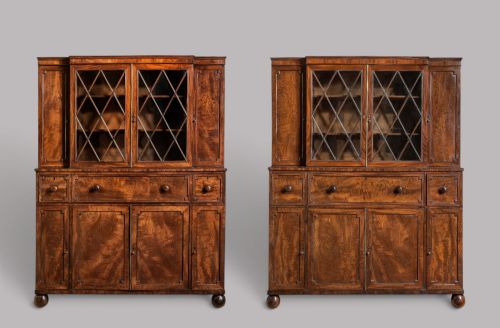
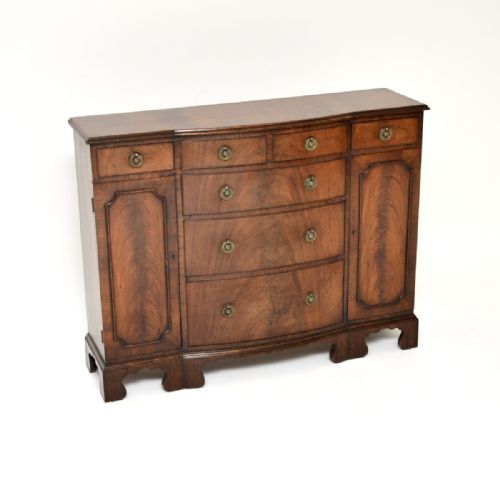
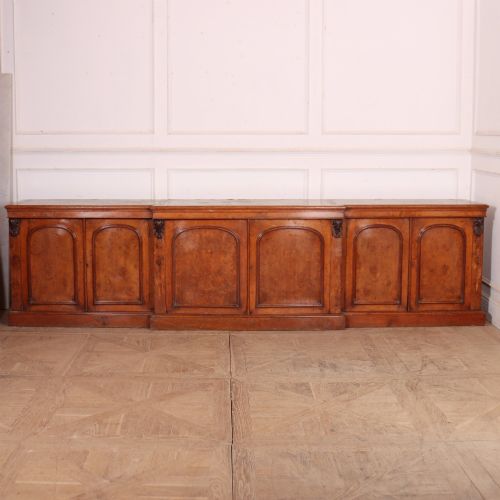
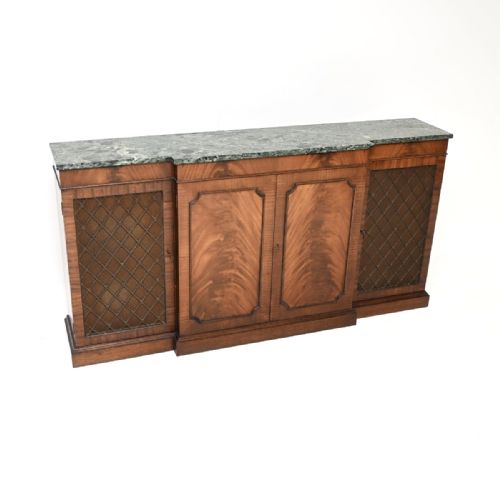
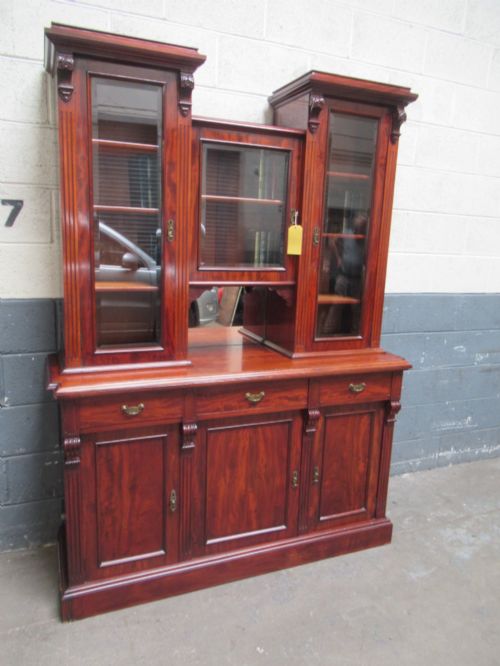
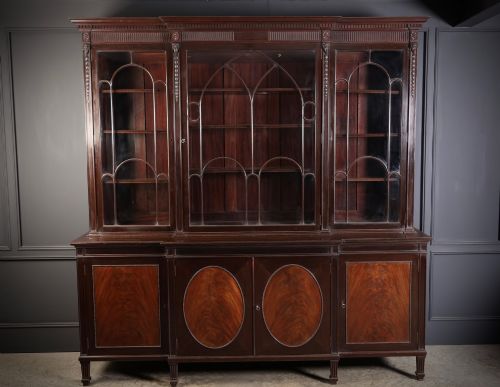
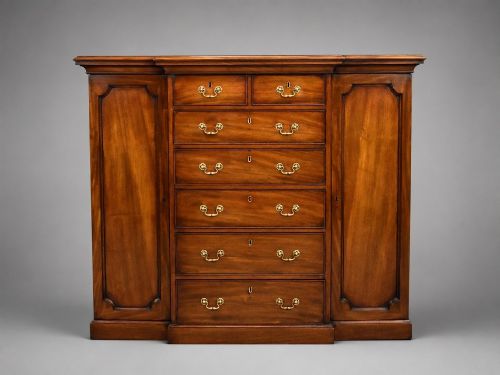
A breakfront storage cabinet projects forward in its central section, creating a distinct stepped silhouette that breaks the flat plane of a wall. The form appears across multiple centuries and takes various functional shapes in the evidence.
You meet this architectural form most often as a mahogany or walnut bookcase, sideboard, or dresser base originating from the eighteenth, nineteenth, and early twentieth centuries. These pieces serve as major storage points in a room while displaying books, china, or textiles.
The layout adapts to domestic service and display through glazed doors, solid timber panels, and fitted drawers. Makers apply the breakfront design to library bookcases, kitchen dressers, and large sideboards alike.
How they were made
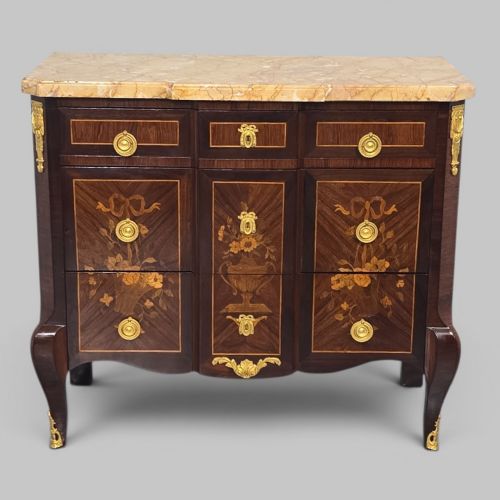
Cabinet makers built these pieces using primary timbers such as mahogany, walnut, rosewood, oak, and pine, often selecting burr veneers for decorative surfaces. They integrated brass hardware, glass panels, and occasionally marble tops into the construction.
Joinery techniques included deep paneling, fine inlay work, and glazed frame assembly to support the extended central sections. Timber selection prioritized stability and grain figure, particularly on large bookcases and sideboards.
Breakfront Storage Cabinet Retail Price Guide 2026
Typical asking prices for breakfront storage cabinet among the pieces listed under this phrase on Sellingantiques today, from the lower quarter to the upper quarter. They describe what is for sale here now, not the wider market.
Some nineteenth-century bookcases conceal their literary contents behind leather dummy books arranged upon the shelves.
What varies in quality
The grade of timber and the precision of the veneer work dictate the refinement of a breakfront storage cabinet. Finely figured burr walnut, flame mahogany, and detailed marquetry separate standard storage from exceptional decorative pieces.
Proportion and architectural detailing define the success of the breakfront profile. The crispness of the carving, the integration of glazed doors, and the balance of the protruding central section govern the visual weight of the piece.
Gillows·Maple & Co.
The Breakfront Storage Cabinet Glossary
- Breakfront
- An architectural furniture form where the central section projects forward beyond the flanking wings. This configuration creates visual depth and organises large storage pieces.
- Credenza
- A low cabinet for storage and display, frequently fitted with doors and sometimes mirrors. The form appears in nineteenth-century walnut and marquetry examples.
- Marquetry
- Decorative veneer work arranged in pictorial or geometric patterns using various coloured woods. Craftsmen apply this technique to cabinet doors and drawer fronts.
- Dresser Base
- The lower section of a kitchen or dining room dresser, often fitted with drawers and cupboards. These heavy oak and mahogany pieces provide functional surface and internal storage.
- Library Bookcase
- A tall storage cabinet designed for housing books, typically featuring glazed upper doors and solid lower cupboards. Examples range from Regency rosewood to large Victorian mahogany formats.
Breakfront Storage Cabinet: Frequently Asked Questions
What is a breakfront storage cabinet?
A breakfront storage cabinet is a large case piece featuring a central section that projects forward from the side sections. This design provides architectural depth and organises the storage capacity within bookcases, sideboards, and dressers.
Cabinet makers used this configuration across eighteenth, nineteenth, and early twentieth-century periods. It allows for varied internal layouts, including adjustable shelves, deep drawers, and enclosed cupboards.
How do I style a breakfront bookcase?
You style a breakfront bookcase by balancing books and decorative objects behind the glazed doors or within open shelving. The prominent central section naturally draws the eye, making it the focal point of a library or drawing room.
Ensure the room has sufficient scale to accommodate the substantial proportions of mahogany or walnut cabinetry. Position the piece against a long wall where the stepped silhouette can be fully appreciated.
What woods were used for these cabinets?
These cabinets utilise a range of primary timbers including mahogany, walnut, rosewood, oak, and pine. Cabinet makers frequently selected figured veneers such as burr walnut and flame mahogany for visual impact on doors and drawer fronts.
Secondary woods like pine or oak appear in internal linings and backboards. Brass fittings and glass panes complete the construction of glazed and panelled versions.
How do I identify the period of a cabinet?
You identify the period by examining the timber choice, construction methods, and stylistic details such as Georgian proportions or Victorian carving. Eighteenth-century pieces often show simpler Georgian lines, while nineteenth-century examples incorporate heavier mouldings and burr veneers.
Makers active during the Regency, Victorian, and Edwardian eras applied distinct decorative vocabularies, from parcel gilt rosewood to inlaid walnut and satinwood.