
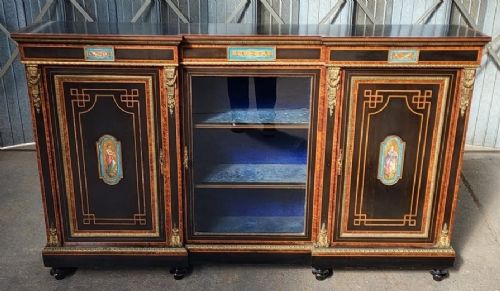


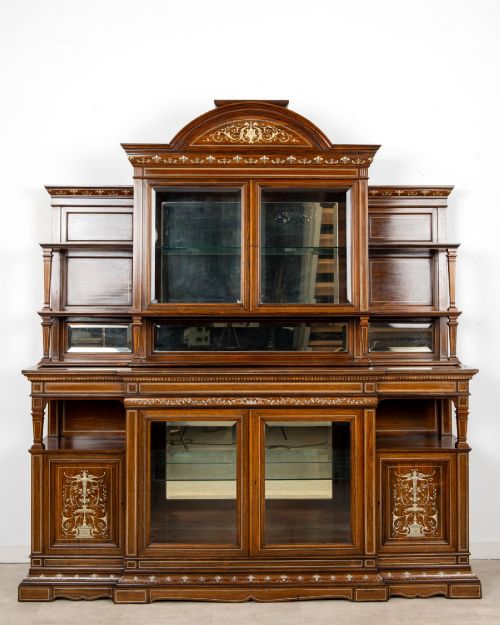
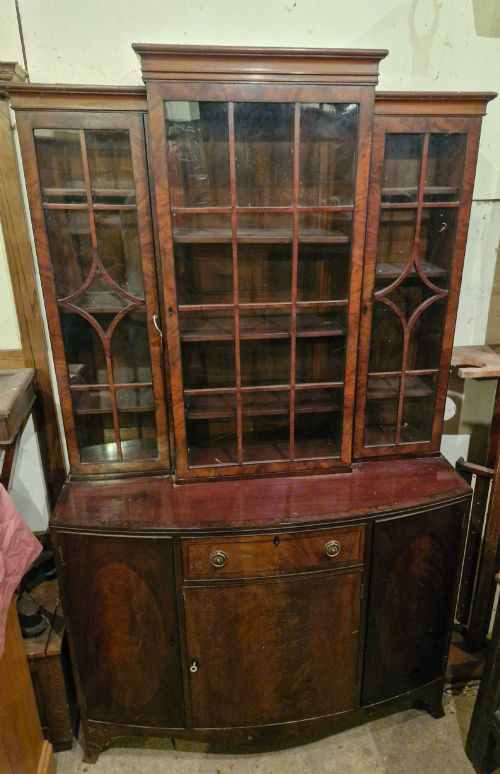
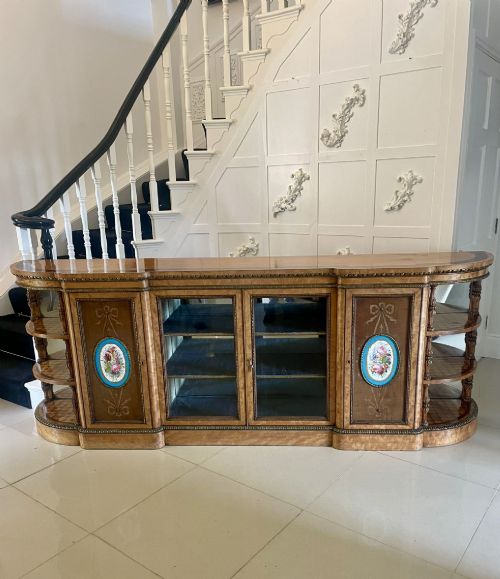
Breakfront Glazed Sideboard
A breakfront glazed sideboard offers a commanding display surface and deep enclosed storage, bringing refined nineteenth-century presence to a principal room.
Breakfront Glazed Sideboard
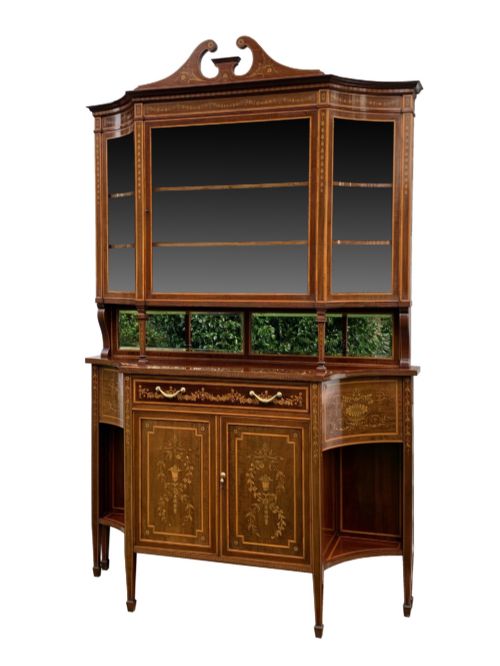
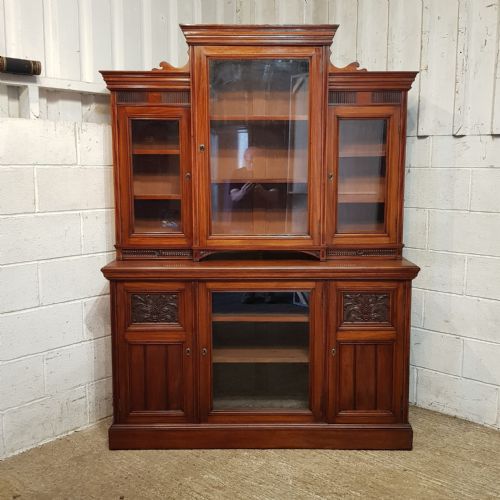
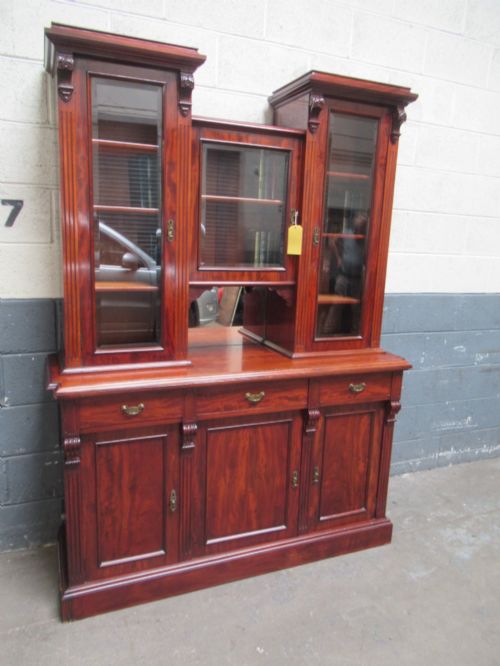
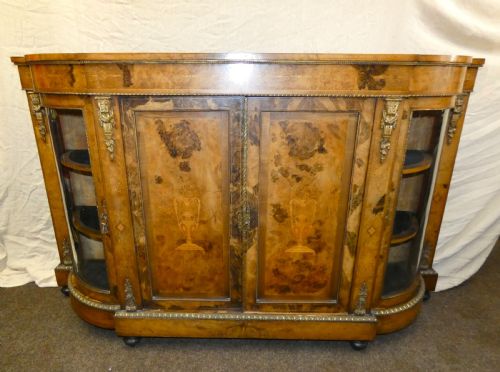
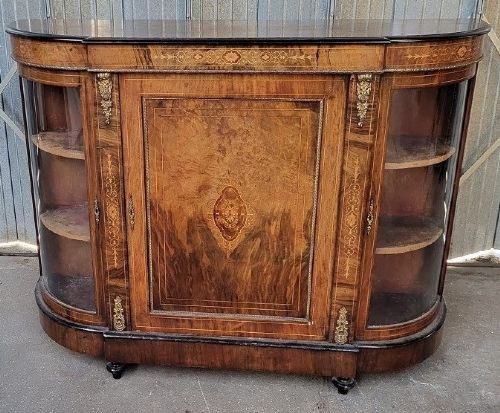
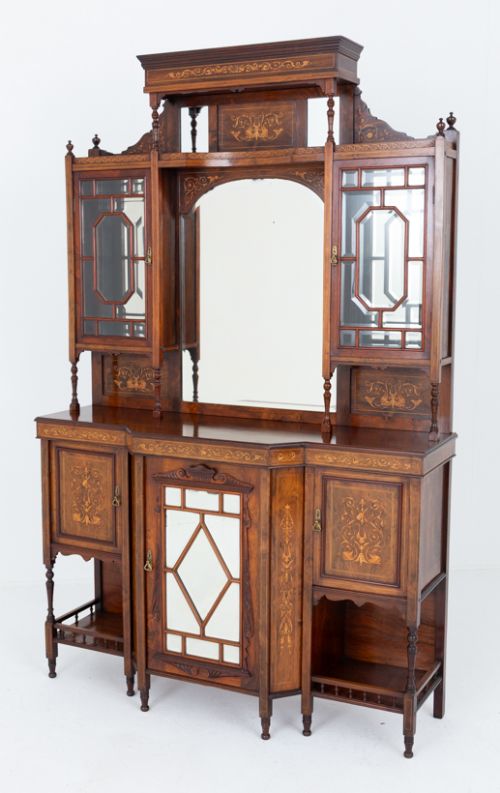
A breakfront glazed sideboard combines the architectural prominence of a central projecting section with glazed doors designed to display porcelain, books and collected objects. These forms emerge primarily through Victorian and later revival periods, spanning credenzas, sideboards and library bookcases.
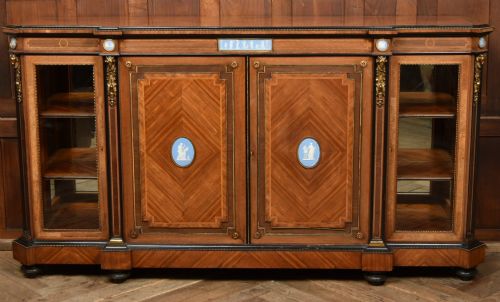
Most examples encountered here take the form of credenzas or side cabinets featuring glazed central or flanking compartments. Walnut, burr walnut and ebonised woods dominate the construction, often enhanced with marquetry inlay and gilt metal mounts.
What Varies in Quality
The sophistication of the timber selection and the precision of the marquetry define the upper tier of these pieces. Grain alignment across multiple doors and complex cross-banding demonstrate a higher standard of workshop execution.
Secondary enrichment elevates certain cabinets above standard production. Hand-chased ormolu mounts, integrated secretaire drawers, and Sevres porcelain plaques distinguish exceptional pieces from simpler utilitarian storage.
Materials span mahogany, walnut, burr walnut, rosewood, satinwood, amboyna, kingwood, ebonised wood, ormolu, porcelain and glass.
Collinson & Lock·Edwards & Roberts·Gillows
The Breakfront Glazed Sideboard Glossary
- Breakfront
- A cabinet facade where the central section projects forward from the flanking wings. This architectural arrangement creates depth and focal emphasis in large furniture forms.
- Credenza
- A low cabinet or sideboard, traditionally enclosed by doors, often featuring glass panels for display. The form gained immense popularity throughout the Victorian era.
- Ormolu
- Gilt bronze mounts applied to furniture for decorative enrichment. These cast details typically frame panels or accentuate corners on high-status cabinets.
- Marquetry
- Decorative patterns formed by the insertion of contrasting veneers into a wood ground. Craftsmen used various tinted and natural woods to create floral or geometric designs.
- Burr Walnut
- Timber taken from a tree growth or burl, yielding highly figured, swirling grain patterns. It served as a premier veneer for luxury nineteenth-century cabinet work.
Breakfront Glazed Sideboard: Frequently Asked Questions
What rooms suit a breakfront glazed sideboard?
These substantial cabinets find a natural home in dining rooms or formal drawing rooms where display space and enclosed storage are both required.
Their generous proportions demand adequate wall space and sufficient room for the doors to swing open fully.
How do I identify a Victorian credenza?
Victorian credenzas typically feature low profiles, curved glass end doors, and extensive use of burr walnut or ebonised wood.
Look for decorative applications of ormolu mounts, marquetry inlay, and central glazed compartments designed to showcase fine ceramics.
Are the glass doors original on these cabinets?
Original glass frequently exhibits subtle irregularities, minor bubbles, or wavy distortions characteristic of nineteenth-century manufacturing methods.
Examining the glazing putty and the fit within the wooden frame helps determine whether the glass panels remain undisturbed from the period of manufacture.
How should I care for polished walnut surfaces?
Maintain the timber by dusting regularly with a soft, dry cloth and avoiding placement near direct heat sources or strong sunlight.
Occasional application of appropriate wax polish preserves the sheen without building up a heavy, obscuring residue on the delicate veneers.