
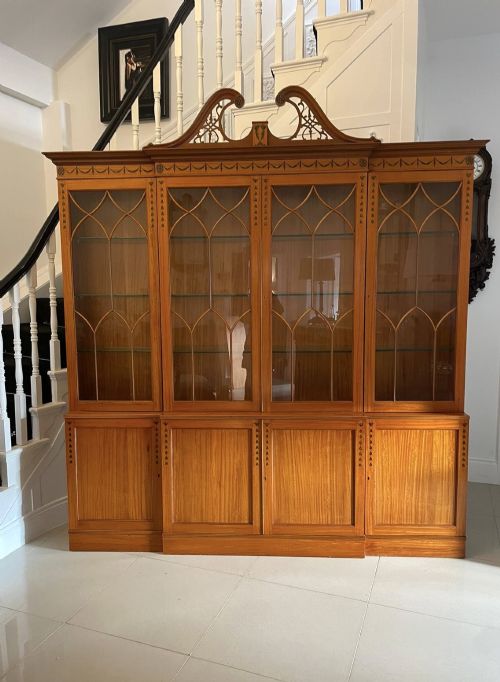
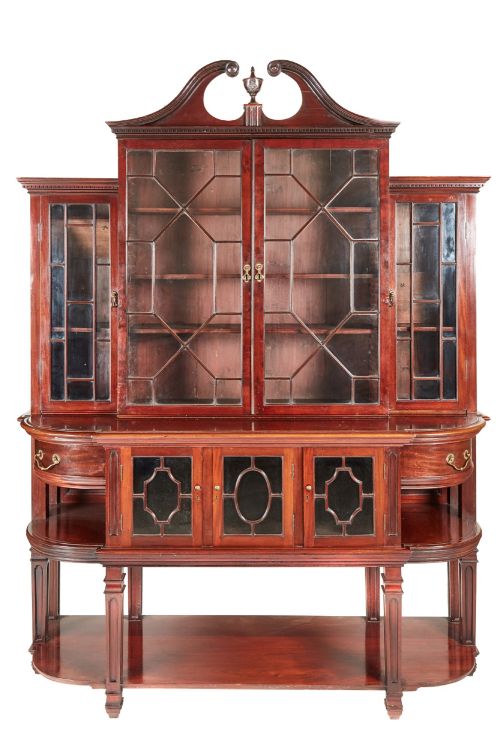
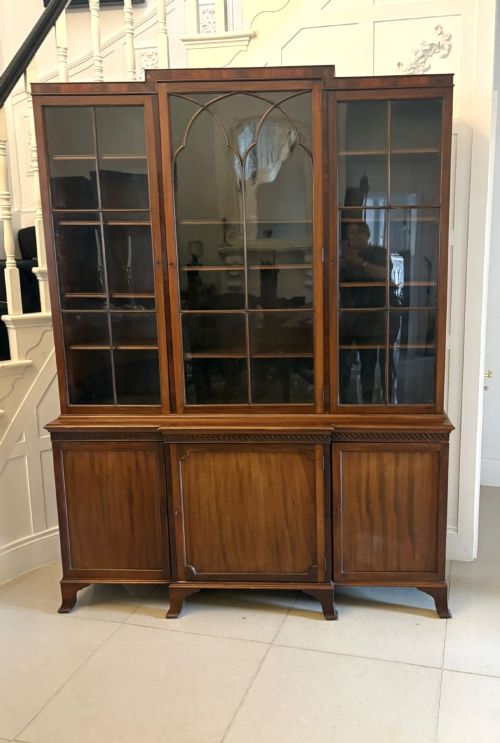

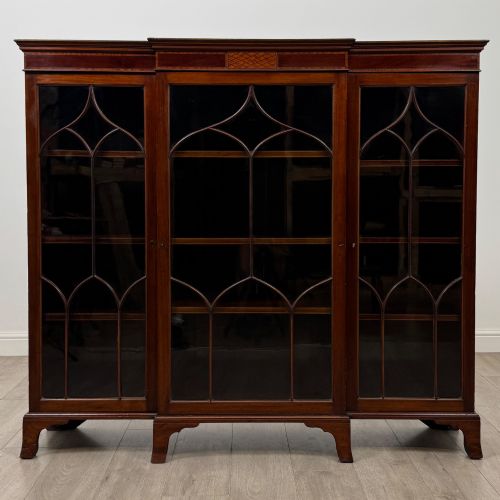
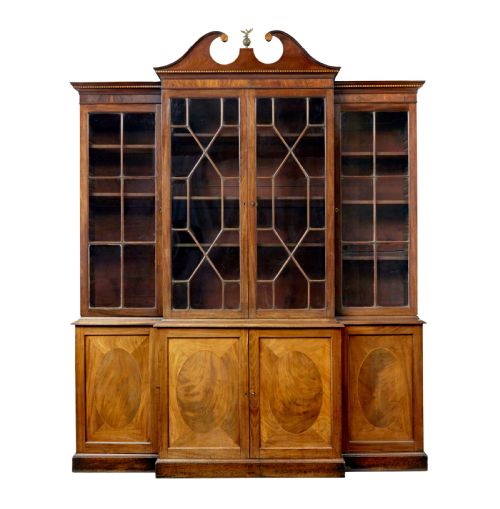
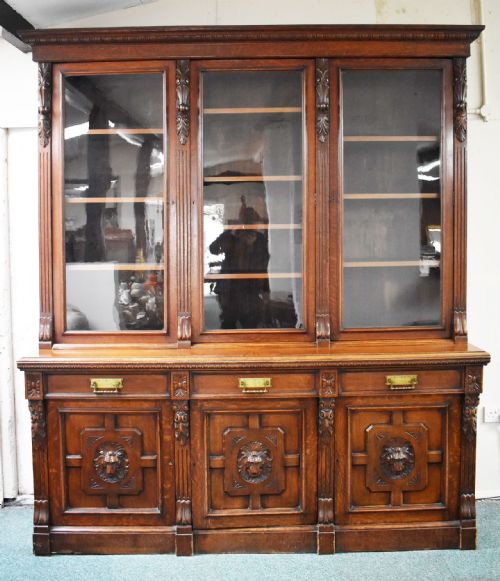

Breakfront Glass Bookcase
A breakfront glass bookcase organises a grand room with architectural presence, offering generous display space through distinguished glazed doors.
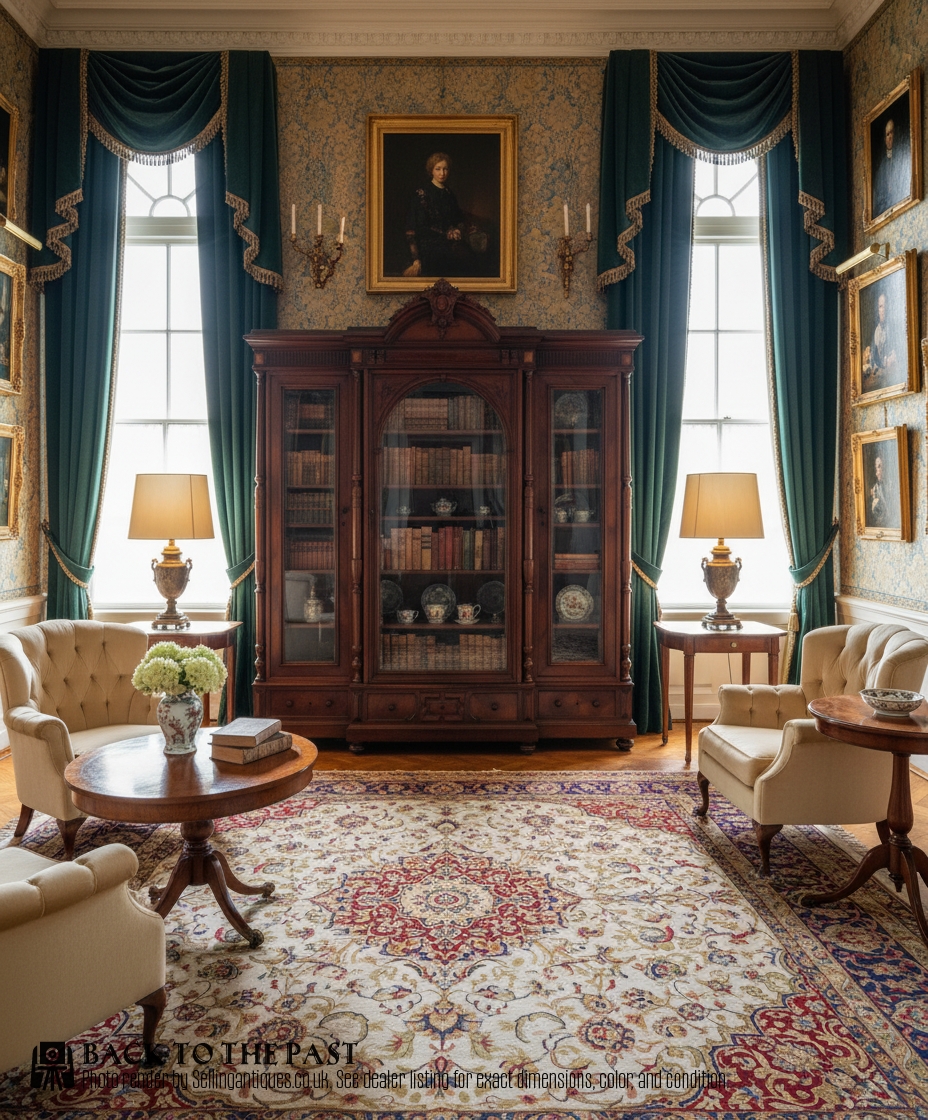
Breakfront Glass Bookcase
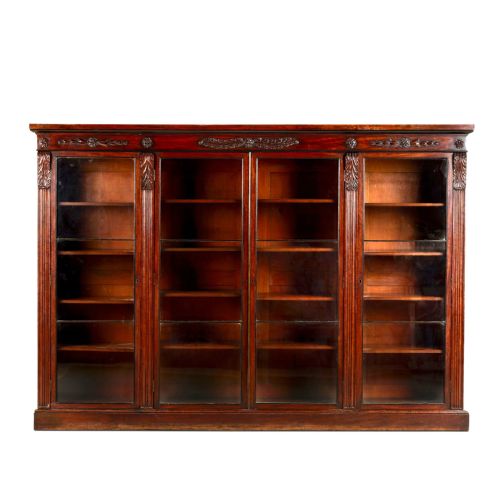
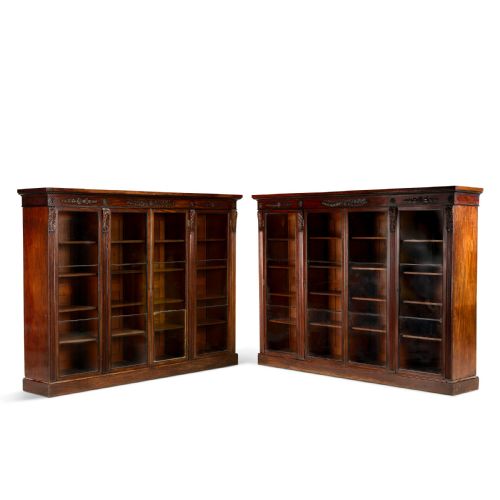
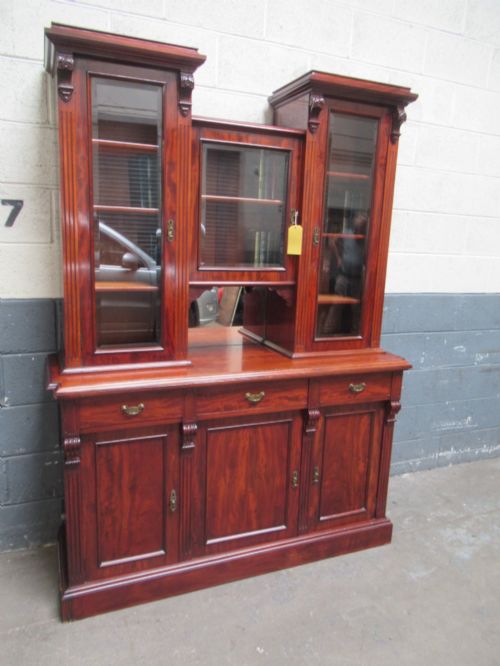
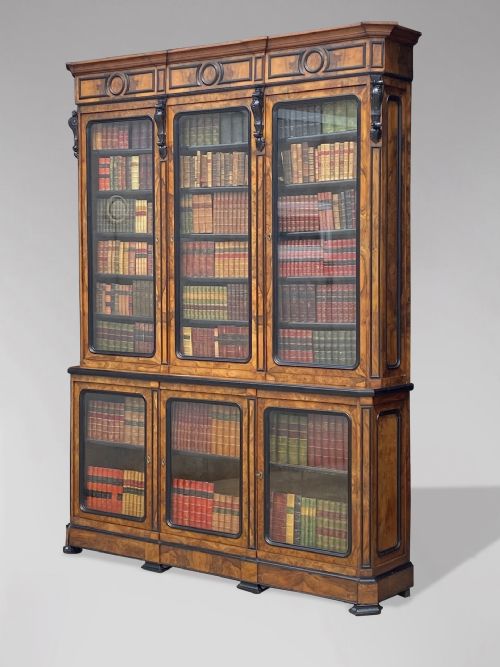
A breakfront glass bookcase projects forward centrally, creating a tiered facade that breaks the long flat line of a library wall. These architectural cabinets emerge primarily in mahogany, walnut, and satinwood across the Victorian and Edwardian eras, alongside Regency and Georgian examples.
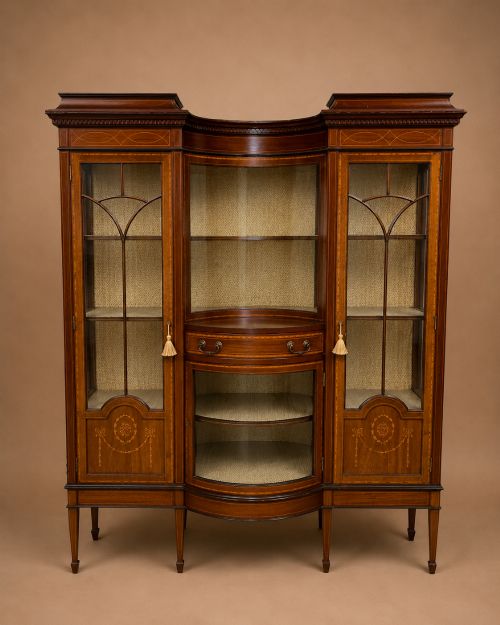
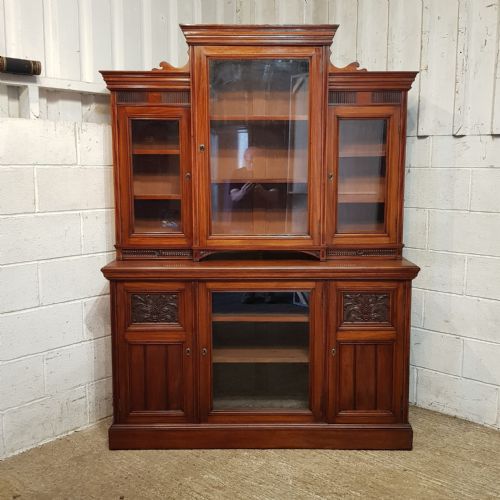
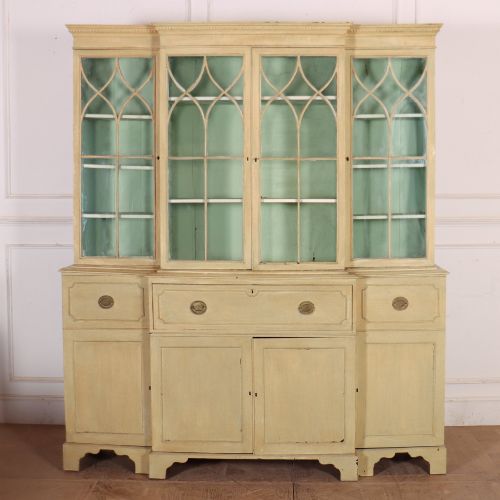
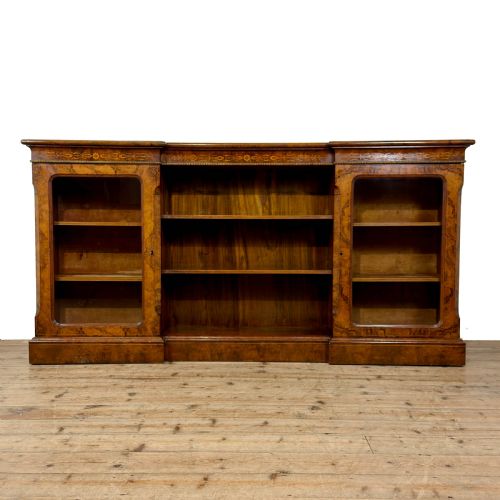
The pieces appearing on this page span display cabinets, credenzas, and library bookcases with glazed doors. Mahogany and satinwood versions dominate the selection, often incorporating inlaid decoration or painted details characteristic of Sheraton Revival styles.
Makers and workshops construct these large pieces to command substantial spaces, utilising multi-door configurations that combine open shelving for books with enclosed display compartments. The defining characteristic remains the protruding central section, which frames the glass doors and balances the proportions of the room.
Design and Execution
Quality rests upon the selection of timber figures and the precision of the cabinet work, particularly where veneers meet curved mouldings and astragal bars. Finely figured burr walnut and carefully matched satinwood distinguish superior examples from standard utility furniture.
The integration of original painted decoration, hand-cut brass mounts, and well-executed marquetry elevates certain pieces above standard production. Structural integrity in the large central breakfront section ensures the doors hang true and the projecting cornices maintain their architectural lines.
Listings span the nineteenth and early twentieth centuries, featuring walnut, mahogany, and satinwood across Victorian, Edwardian, and Regency periods.
Jas Shoolbred·Gillows·Maple & Co·Edwards & Roberts
The Breakfront Glass Bookcase Glossary
- Breakfront
- A cabinet facade featuring a central section that projects forward beyond the flanking wings. This architectural arrangement creates depth and shadow across the front of large library bookcases.
- Astragal
- A small, rounded moulding used to divide panes of glass within a glazed door. These delicate wooden bars form intricate grid patterns across the front of the bookcase.
- Ormolu
- Gilt bronze mounts applied as decorative ornaments to furniture. Makers used these cast metallic details to enrich the corners and friezes of cabinets.
- Marquetry
- Decorative patterns formed by fitting together thin veneers of various coloured woods. Craftsmen applied these pictorial or geometric designs onto satinwood and mahogany surfaces.
- Credenza
- A low cabinet designed for storage and display, frequently incorporating glass doors. These pieces share stylistic similarities with side cabinets found in formal reception rooms.
Breakfront Glass Bookcase: Frequently Asked Questions
How do I style a breakfront glass bookcase?
Position the cabinet against a substantial wall where its architectural proportions can anchor the room without obstruction.
Arrange books vertically and horizontally alongside decorative objects behind the glass doors to break up dense rows of spines.
Where were these bookcases originally placed?
These large cabinets stood in grand libraries, drawing rooms, and country house reception spaces designed for entertaining.
They served to store valuable leather-bound volumes while displaying prized ceramics and glassware behind protective glass.
How can I tell Victorian from Edwardian pieces?
Victorian examples tend to utilise heavier timbers like dark mahogany and burr walnut with deep, rich patination and carved details.
Edwardian pieces frequently embrace lighter satinwood and Sheraton Revival influences, featuring delicate painted decoration and inlaid stringing.
What is an astragal glazed door?
An astragal glazed door uses narrow wooden bars to hold multiple individual panes of glass within a single frame.
This technique creates geometric or Gothic lattice patterns that distinguish fine library bookcases from plain panelled cupboards.