

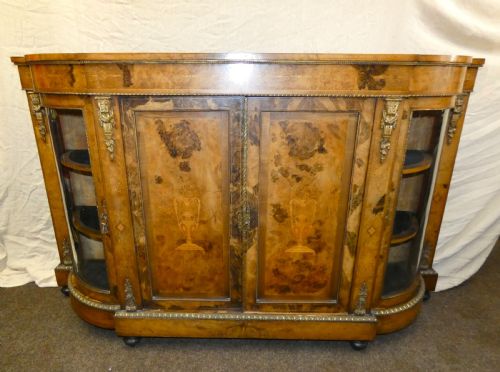


Breakfront Display Shelves
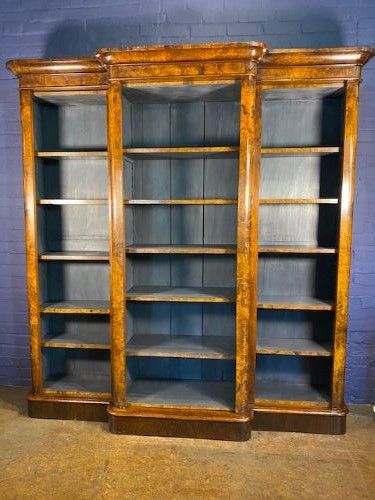
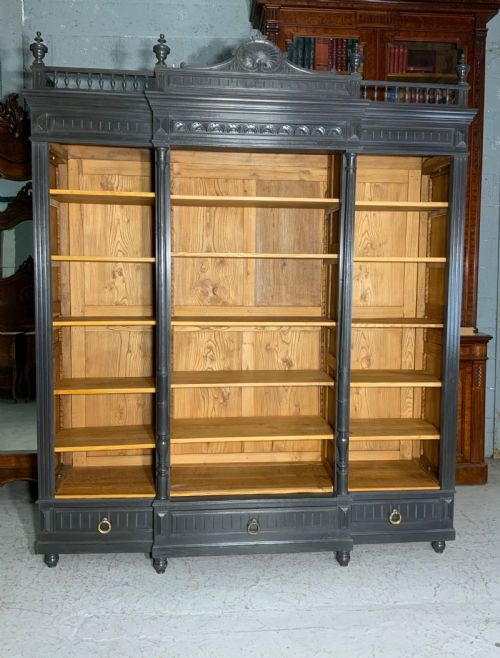
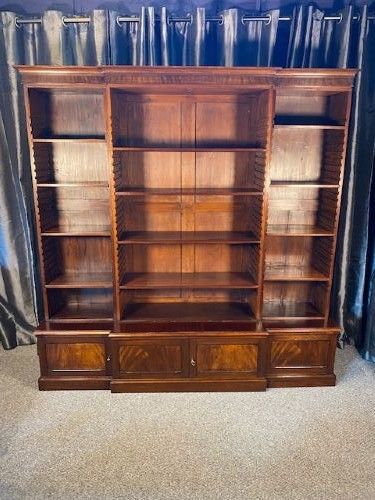
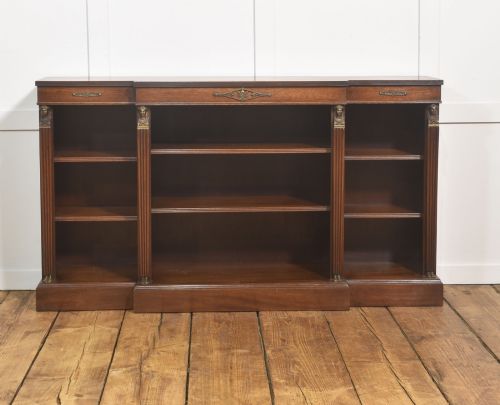
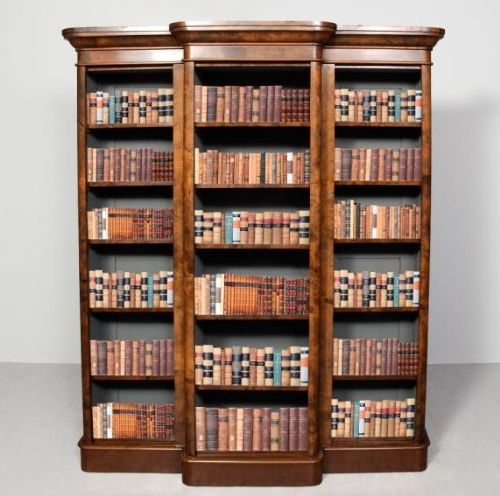
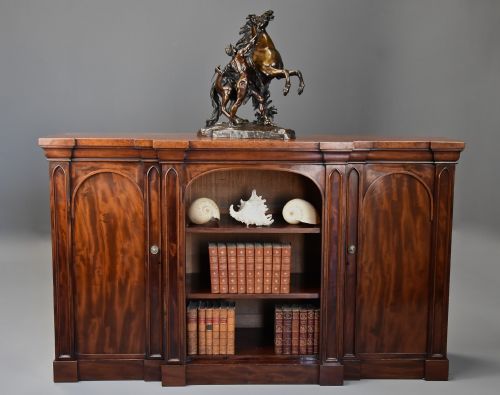
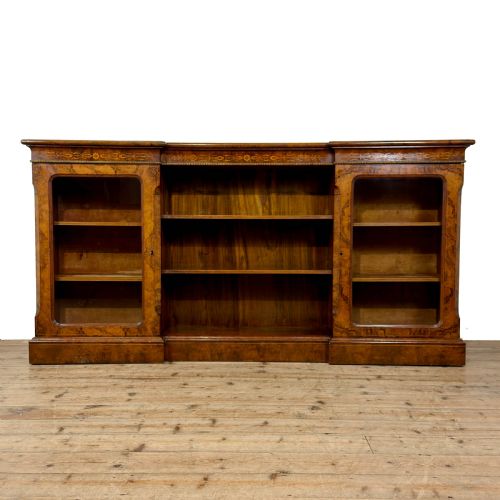
Breakfront display shelves are prominent timber cabinets with a projecting central section, designed to hold books and decorative objects.
Breakfront Display Shelves
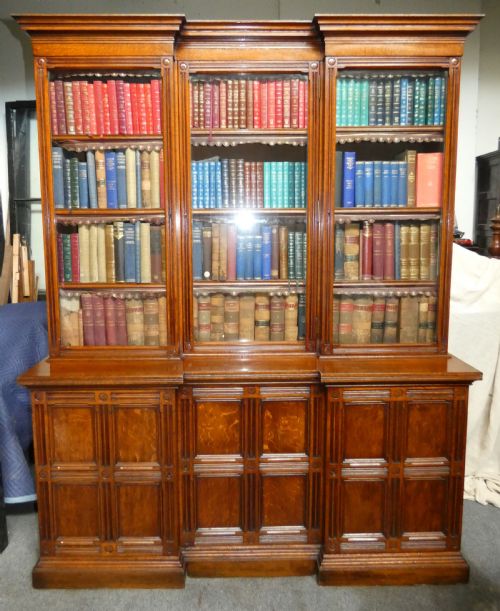
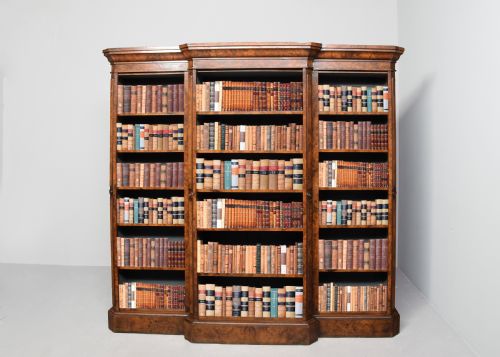
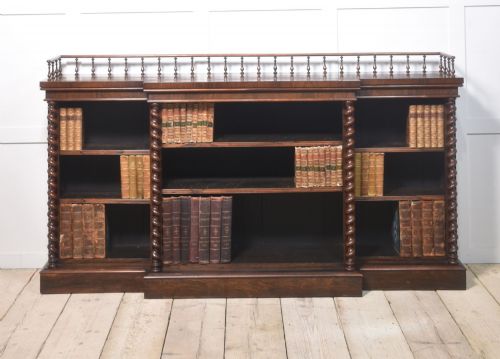
Breakfront display shelves present a tripartite façade where the central cabinet or bookcase section advances forward from the flanking wings. You will encounter this architectural form most frequently in nineteenth-century pieces, spanning the Regency and Victorian eras, alongside Edwardian examples.
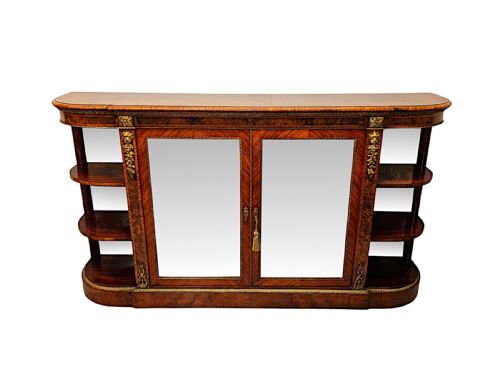
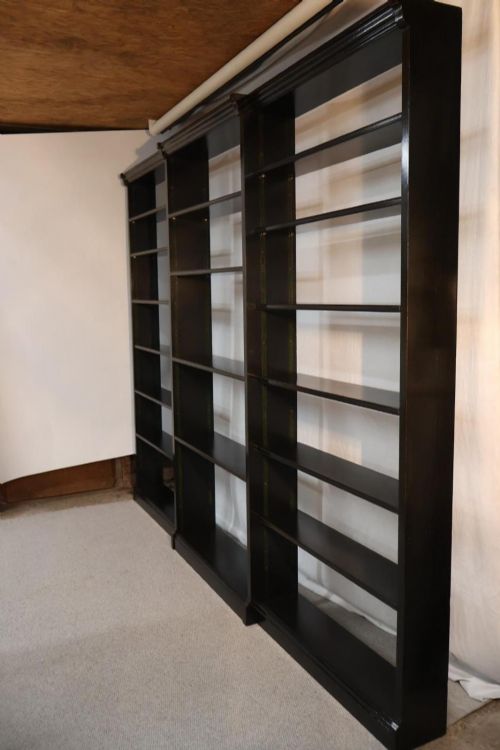
The objects take the form of open bookcases, glazed library bookcases, credenzas, and side cabinets. Walnut, mahogany, and rosewood form the primary carcasses, often built in distinct sections to allow for positioning within large rooms.
Materials and Technique
Cabinetmakers utilised solid timbers alongside rich veneers, applying flame mahogany and burr walnut across the prominent surfaces to highlight natural grain patterns. Structural carcases frequently rely on oak or secondary softwoods.
Metal mounts in ormolu, brass, and gilt metal adorn the borders, friezes, and pillar supports of mid-nineteenth-century examples, while glass panels protect the contents of enclosed library sections.
The listings span from eighteenth-century library pieces through Regency, Victorian, and Edwardian eras, constructed in mahogany, walnut, rosewood, and oak.
Assessing Quality
The distinction between standard examples and the finest pieces rests upon timber selection and decorative restraint. Master workshops employed deeply figured burr walnut and carefully matched flame mahogany veneers that flow continuously across the breakfront doors and panels.
Hardware and secondary detailing reveal construction standards. High-quality pieces integrate finely cast ormolu mounts, adjustable shelving systems, and robust brass locking mechanisms rather than basic iron fixtures.
Gillows·Robert Strahan
The Breakfront Display Shelves Glossary
- Breakfront
- An architectural furniture design where the middle section projects forward from the flanking wings. This configuration creates depth and visual rhythm across large library bookcases and credenzas.
- Ormolu
- Gilt bronze mounted onto furniture surfaces as decorative enrichment. This technique was favoured by nineteenth-century cabinetmakers working in French Empire and grand revival styles.
- Credenza
- A low cabinet, frequently fitted with glass doors or open shelving. These pieces often incorporate brass or gilt metal mounts and fine walnut veneers.
- Flame Mahogany
- A wood veneer cut from the fork of the mahogany tree to produce a flickering, flame-like grain pattern. Makers utilised this timber on primary display surfaces.
Breakfront Display Shelves: Frequently Asked Questions
Where should I place a breakfront bookcase?
These substantial cabinets require a generous wall space, typically in a study, library, or drawing room, where their projecting central section can be viewed without obstruction.
Ensure the room humidity remains stable to protect nineteenth-century veneers and solid timber carcasses from movement.
Are the shelves adjustable?
Many nineteenth-century and Edwardian examples include adjustable wooden shelves supported by wooden racks or brass pegs. This allows the internal layout to accommodate varying book sizes and display objects.
Older Regency pieces sometimes feature fixed shelving integrated permanently into the structural bays.
How do I identify a Victorian piece?
Victorian breakfront furniture often displays darker woods like walnut and mahogany, frequently enhanced with burr veneers and carved architectural details. Stylistic influences range from Gothic Revival to heavy classical proportions.
Maker stamps or retailer labels occasionally appear inside drawers or along the backboards of these cabinets.
What is the difference between an open bookcase and a glazed bookcase?
Open bookcases provide immediate access to shelves without doors, suiting everyday book collections and decorative items. Glazed versions feature glass-fronted doors that protect fine bindings from dust and light exposure.
Both variants utilise the same projecting breakfront configuration to break up long runs of shelving.