

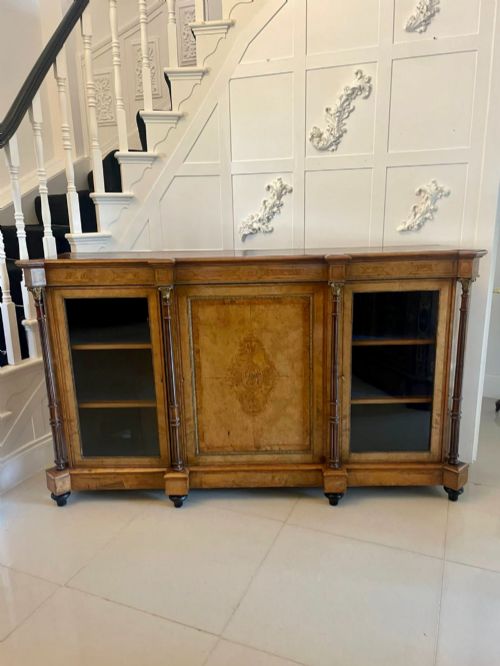
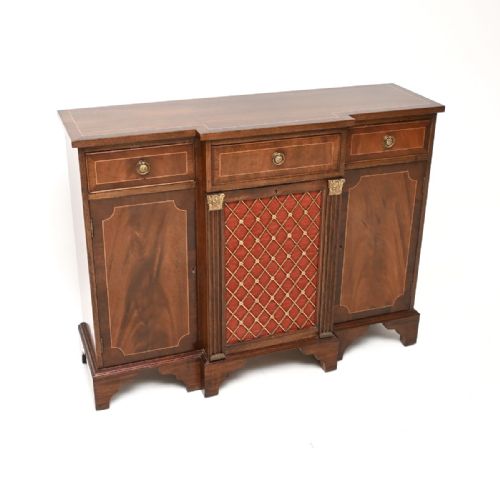
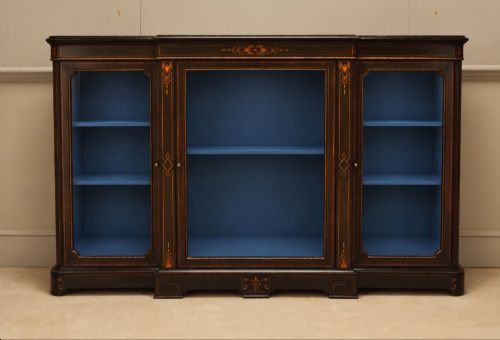
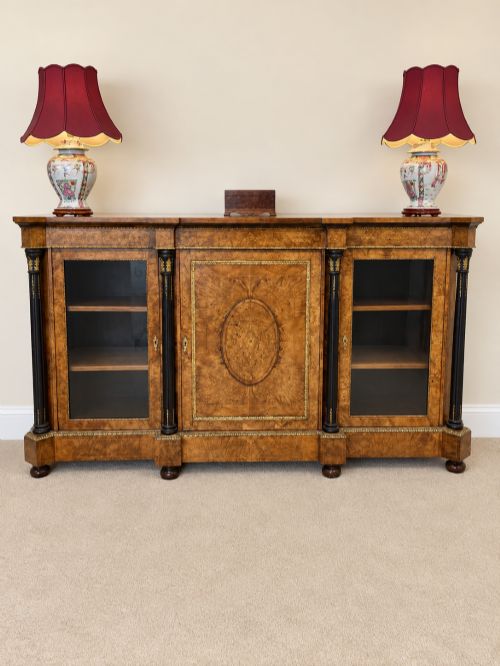
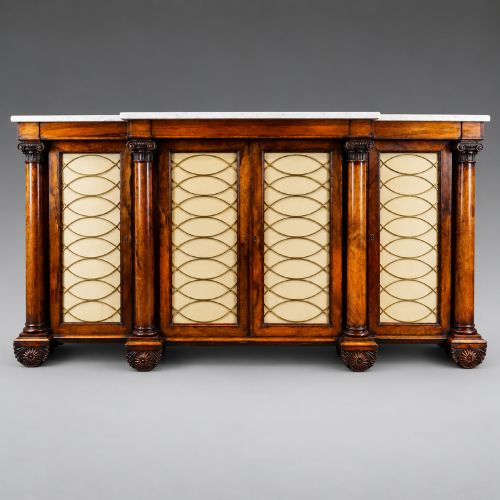
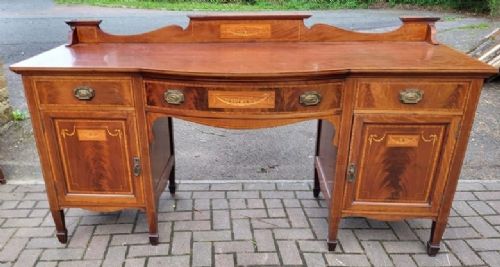

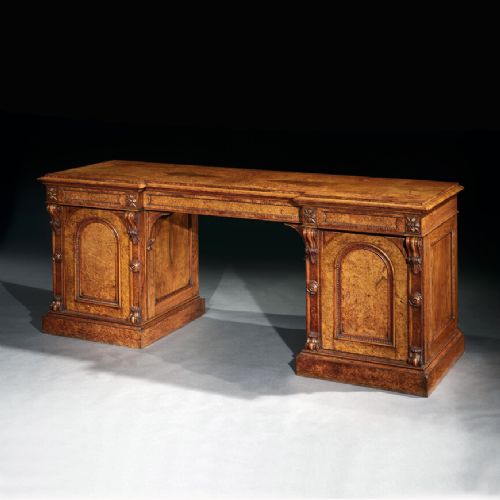
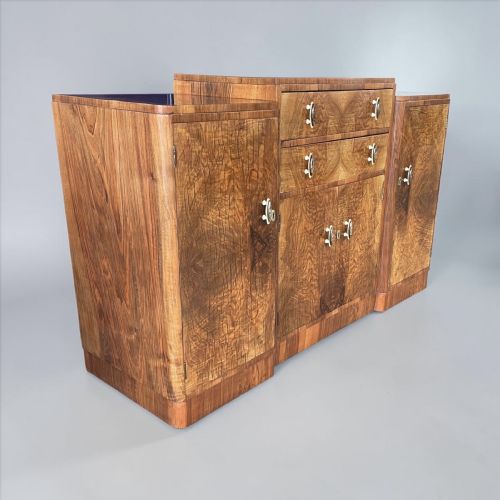
Breakfront Credenza Cabinet
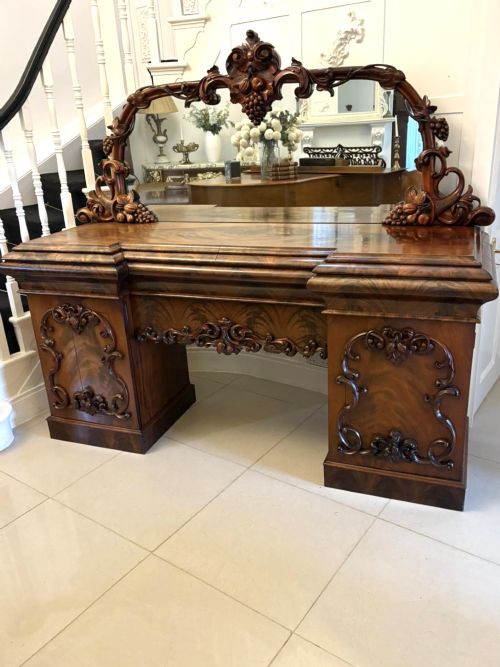
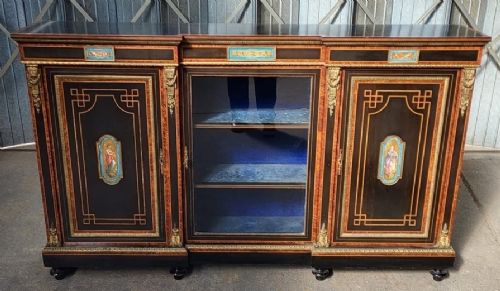
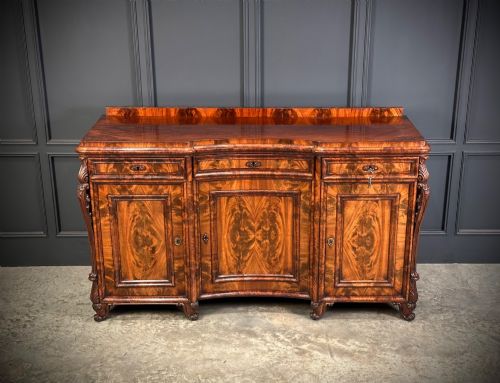
A breakfront credenza cabinet brings substantial presence and display space to a room, drawing the eye with its protruding central section.
Breakfront Credenza Cabinet
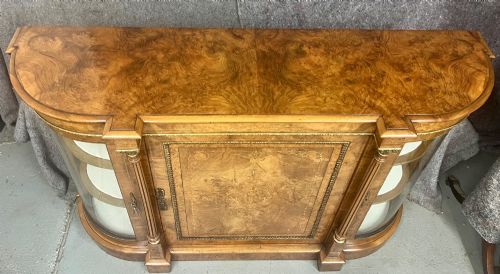
A breakfront credenza cabinet combines the architectural footprint of a breakfront with the low-profile display purpose of a credenza or side cabinet. Buyers searching this phrase look for substantial pieces that provide surface display and concealed storage in formal rooms. The pieces available here cross several decades, though the Victorian era dominates through walnut, marquetry and glazed doors.
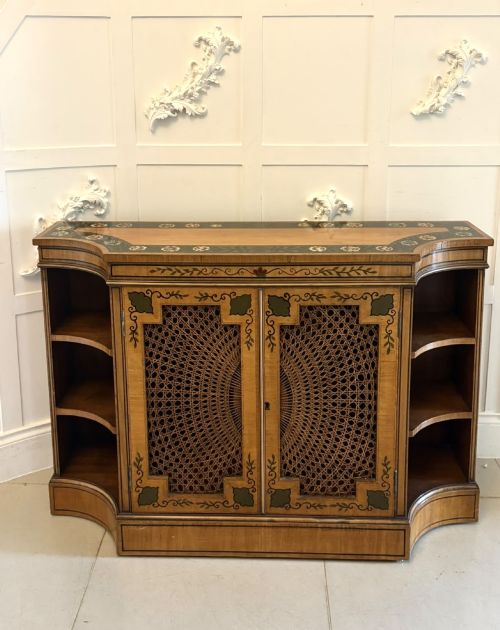
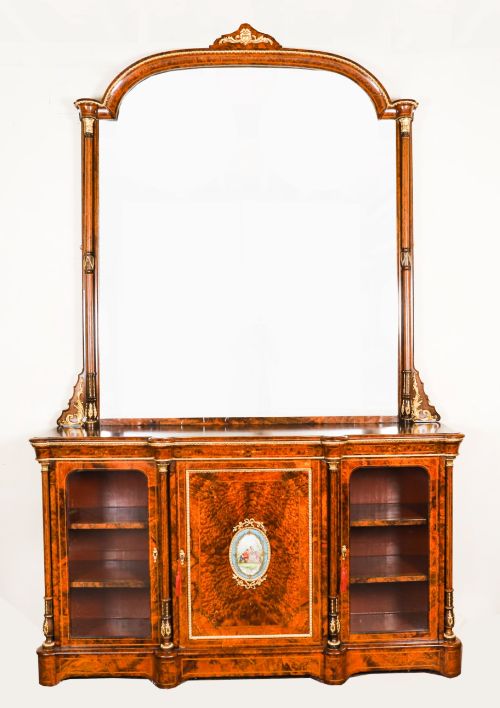
Forms range from three-door side cabinets and mirror-back credenzas to breakfront bookcases and marble-topped display cabinets. Alongside 19th-century and Victorian examples, the selection includes Regency, Edwardian, and Art Deco interpretations in mahogany, satinwood and ebonised wood. These items serve equally well for housing books, porcelain or silver in a dining room or drawing room.
Materials and construction
Makers built these cabinets using structural timbers such as mahogany, rosewood and oak, overlaid with decorative veneers like burr walnut and flame mahogany. Timber selection determined the visual warmth of the piece, often enhanced by satinwood crossbanding or marquetry detailing. Carved wooden mouldings and applied brass or ormolu mounts added architectural definition to the central breakfront section.
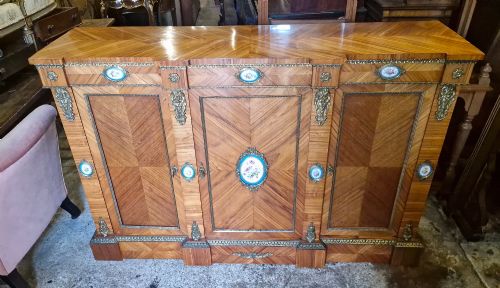
Glazing, marble tops and ceramic elements formed integral parts of the construction on finer examples. Workshops fitted glass panels into wooden or brass frames for display sections, whilst porcelain plaques and marble slabs provided contrasting colour and texture. Ebonised finishes and gilt highlights completed pieces intended for formal reception rooms.
Breakfront Credenza Cabinet Retail Price Guide 2026
Typical asking prices for breakfront credenza cabinet among the pieces listed under this phrase on Sellingantiques today, from the lower quarter to the upper quarter. They describe what is for sale here now, not the wider market.
Listings feature credenzas and side cabinets from the 19th century and Victorian period, alongside 20th-century Art Deco and Edwardian designs.
Craftsmanship and materials
The distinction between standard production and exceptional work lies in the selection of veneers and the precision of the marquetry. Superior pieces employ highly figured burr walnut or satinwood with book-matched grain running symmetrically across the doors and drawers. Finer execution shows in crisp brass ormolu mounts, well-fitted porcelain plaques, and original bevelled glass.
Structural integrity and maker attribution further separate examples. Workshops known for high-tier cabinet making utilised robust secondary timbers and precise dovetailing in drawer construction, ensuring doors hung true over decades of use. Maker stamps or paper labels from established firms confirm the standard of workshop output.
H. Goodall·Hewetsons London·Maurice Adams·Gillows·Lamb of Manchester
The Breakfront Credenza Cabinet Glossary
- Breakfront
- A piece of furniture where the central section projects forward from the flanking wings. This configuration creates architectural depth and breaks the linear monotony of a long wall cabinet.
- Credenza
- A low cabinet designed for storage and display, historically originating in Italy. In 19th-century British furniture, the term frequently overlaps with side cabinets and low bookcase forms.
- Ormolu
- Gilded bronze mounts applied to furniture as decorative enrichment. The technique involves coating cast bronze with a mercury and gold amalgam before heating.
- Marquetry
- Inlaid patterns formed by fitting contrasting veneers into a prepared wooden ground. Artisans use woods of various natural tones, and sometimes metals or ivory, to create pictorial or geometric designs.
- Crossbanding
- A border veneer applied around the perimeter of a panel where the grain runs perpendicular to the central wood. This framing technique highlights the principal timber of a door or drawer front.
Breakfront Credenza Cabinet: Frequently Asked Questions
What is a breakfront credenza cabinet?
A breakfront credenza cabinet is a low storage and display unit featuring a central section that steps forward from the side sections. It combines the architectural profile of a breakfront with the low elevation of a traditional credenza.
These pieces typically incorporate glazed doors, wood panelling, or open shelving, serving as focal points in dining rooms and drawing rooms for displaying porcelain and silverware.
How do I date a Victorian credenza?
Dating a Victorian credenza involves examining the choice of timber, construction methods, and decorative styles used by the cabinet maker. Burr walnut and ebonised finishes paired with ormolu mounts typically point towards the middle decades of the nineteenth century.
Secondary woods, drawer dovetailing, and the presence of maker stamps or exhibition labels also help narrow down the period of manufacture within the broader Victorian era.
Where should I place a large credenza?
A large credenza requires a substantial wall space, often in a dining room, hallway, or spacious living room, where its proportions can be appreciated without overcrowding the floor plan. Placing it against a main wall allows it to function as a serving surface or a display area.
Ensure the room has sufficient clearance for doors to open fully, particularly on models with curved glass or projecting central sections.
How do I care for burr walnut veneer?
Burr walnut veneer requires protection from direct sunlight and excessive temperature fluctuations to prevent the wood from drying out or splitting. Dust the surface regularly with a soft, dry cloth rather than using silicone-based polishes.
Applying a light coat of quality beeswax periodically helps nourish the timber and maintain the natural lustre of the nineteenth-century finish.