

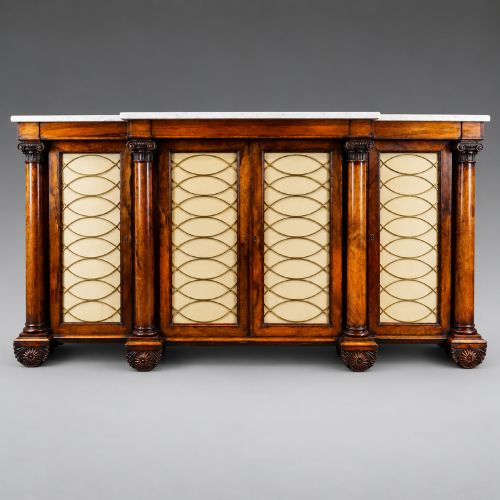
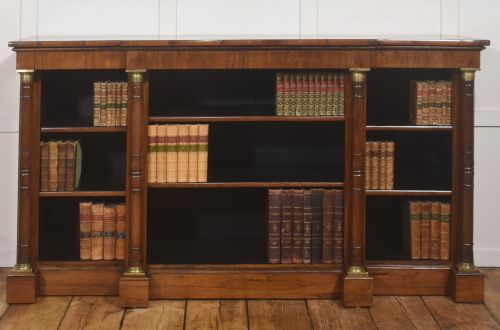
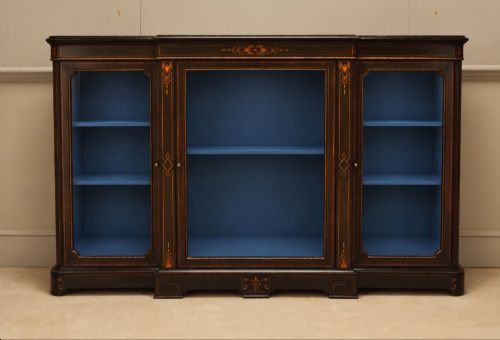
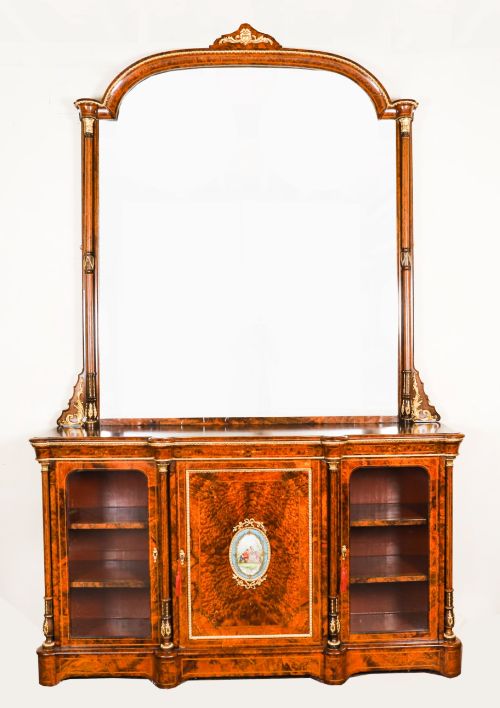
Breakfront Cabinet Furniture
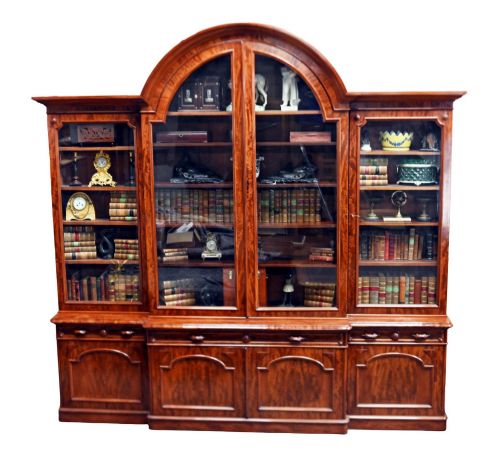
These breakfront cabinet furniture pieces anchor a room with their stepped facades and disciplined proportions, offering serious storage disguised as grand architecture.
Breakfront Cabinet Furniture
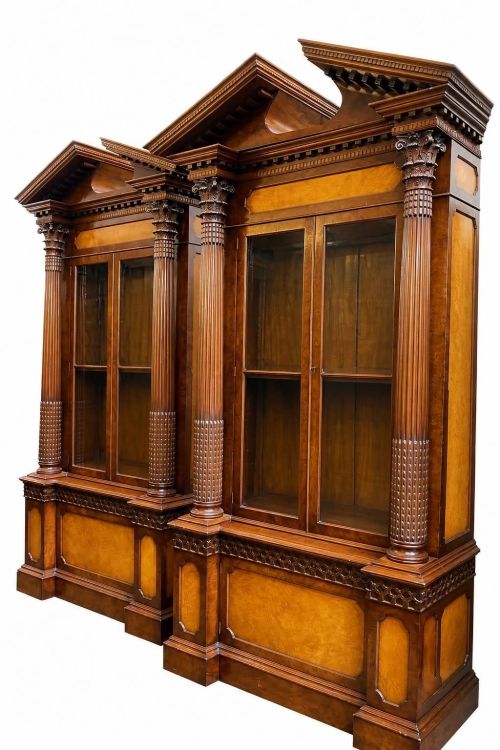
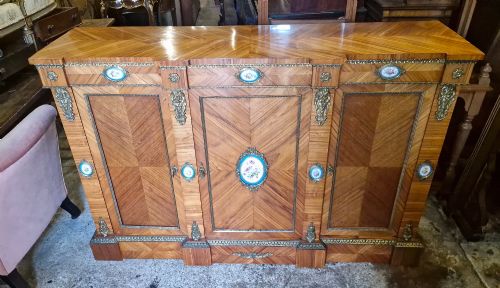
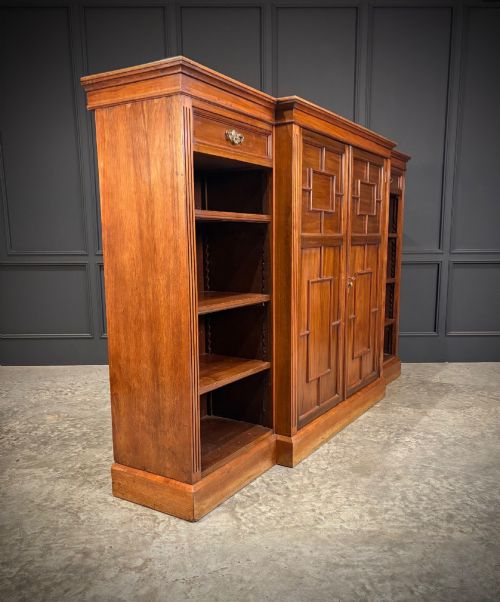
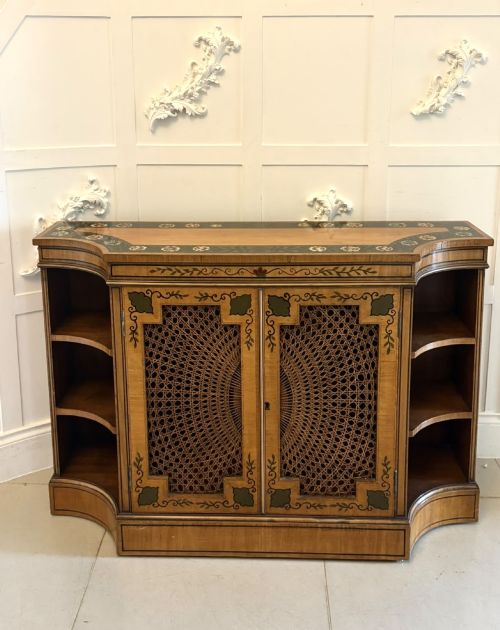
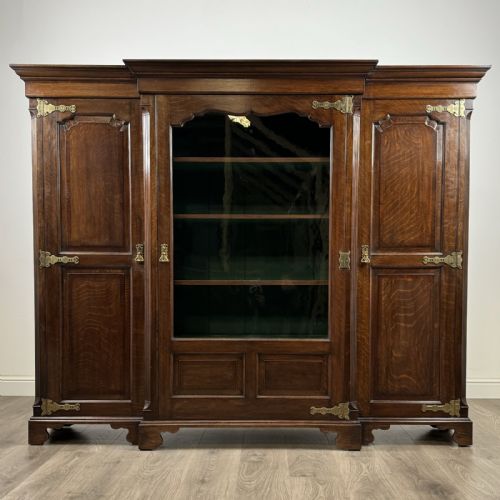
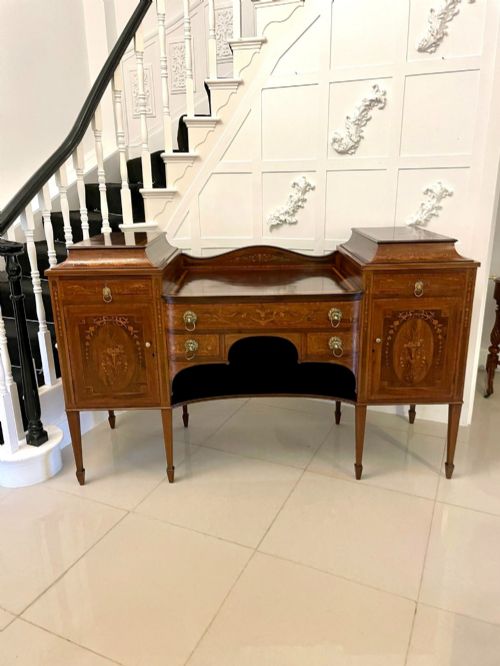
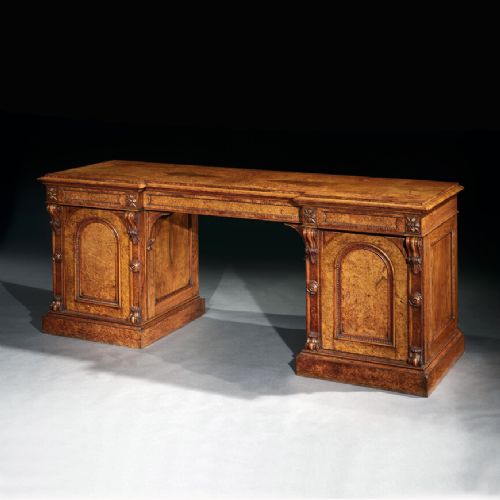
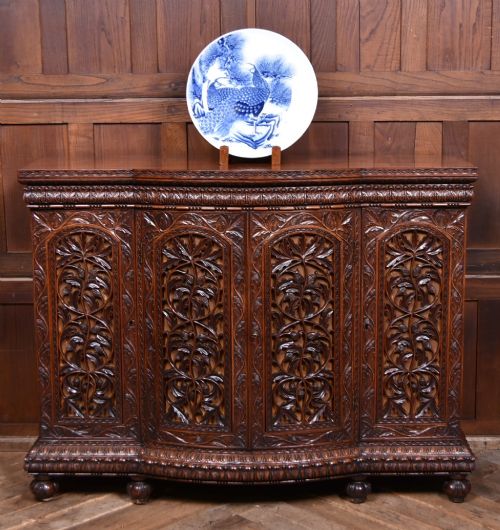
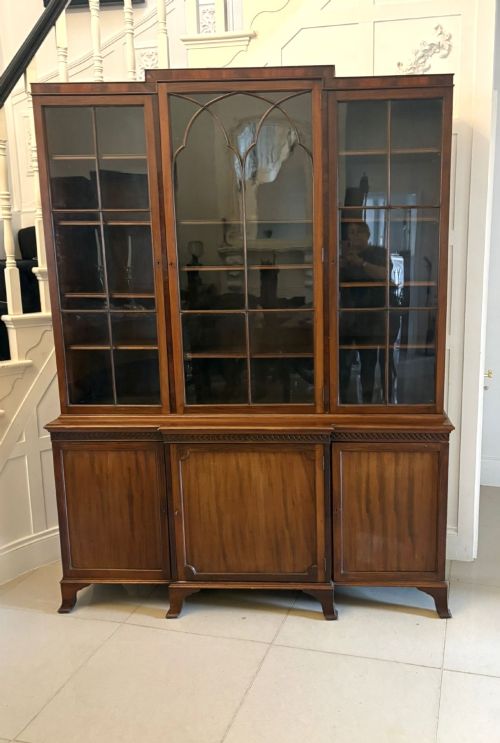
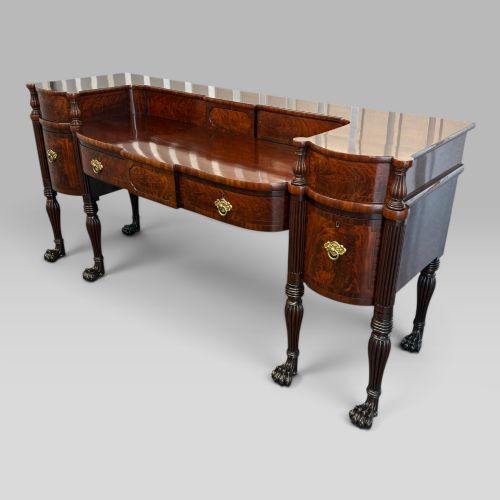
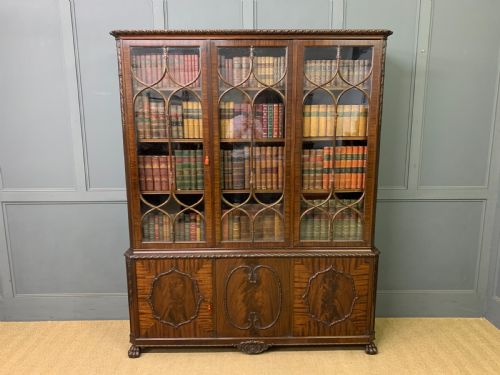
Breakfront cabinet furniture spans grand bookcases, low credenzas, display cabinets, sideboards, and side cabinets originating across the nineteenth and early twentieth centuries. These forms follow historic stylistic revivals including Regency, Victorian, Edwardian, William IV, Gothic Revival, Sheraton Revival, and Queen Anne Revival. Bookcases and display cabinets dominate the selection, often featuring generous proportions intended for substantial libraries.
Makers and workshops from London, Manchester, Liverpool, and further afield constructed these pieces to anchor formal reception rooms and libraries. Examples range from open bookcases and glass-fronted library cabinets to enclosed sideboards with intricate marquetry and gilt mounts. Pieces frequently display specific period characteristics such as astral glazing, brass inlay, and projecting central sections.
Markers of execution
Quality rests in the selection of timber veneers and the precision of the cabinet work within the projecting central breakfront section. Superior examples exhibit continuous grain matching across doors and drawers, alongside finely cast ormolu mounts and crisp brass inlay. Maker attribution through stamps, labels, or documented provenance elevates an item significantly above standard commercial production.
The integrity of the structural carcass and secondary woods determines the long-term durability of these heavy items. Finer pieces demonstrate meticulous hand-cut joinery and uncompromised internal fitting, such as adjustable shelving in bookcases or original fabric linings in display sections. Subtle details like hand-painted decoration or specialised glazing bars separate workshop masterworks from ordinary utility furniture.
Breakfront Cabinet Furniture Retail Price Guide 2026
Typical asking prices for breakfront cabinet furniture among the pieces listed under this phrase on Sellingantiques today, from the lower quarter to the upper quarter. They describe what is for sale here now, not the wider market.
Listings feature mahogany, walnut, rosewood, and oak alongside specialised styles such as Gothic Revival and Sheraton Revival.
Gillows·Hille·Hewetsons London·Johnstone and Jeanes·Lamb of Manchester·Robert Strahan·Holland and Sons
The Breakfront Cabinet Furniture Glossary
- Breakfront
- A cabinet design where the central section projects forward from the flanking wings. This architectural arrangement creates shadow lines and visual depth across the facade.
- Astral glazing
- Cabinet doors divided into small glass panes held by slender wooden bars. This technique creates an open lattice effect often seen on bookcases.
- Ormolu
- Gilded bronze mounts applied to furniture for decorative effect. Makers utilised these metallic accents to highlight corners and friezes on high-status cabinets.
- Marquetry
- Inlaid wood veneers arranged to form pictorial or geometric patterns. Artisans used contrasting timbers to create detailed surface ornamentation.
- Credenza
- A low cabinet piece often featuring glazed doors and ormolu mounts. These items originated as side tables before evolving into enclosed display furniture.
Breakfront Cabinet Furniture: Frequently Asked Questions
How do I date a breakfront bookcase?
Dating relies on identifying stylistic markers, timber choices, and construction methods associated with periods like Regency, Victorian, or Edwardian. Heavy pollard oak and Gothic Revival details point towards the mid-nineteenth century.
Maker stamps or paper labels found inside drawers provide precise attribution. Hardware styles and glazing bar thickness also assist in determining age.
Where should I place a breakfront cabinet?
These large pieces require substantial wall space and benefit from placement in high-ceilinged reception rooms, libraries, or dining spaces. Their architectural presence anchors the room layout.
Positioning them away from direct sunlight protects sensitive timbers like mahogany and rosewood from fading. Adequate clearance is necessary for opening wide doors and accessing shelving.
How do I care for antique hardwood furniture?
Maintain stable indoor humidity levels to prevent timber splitting or veneer lifting across large surfaces. Dust regularly with a dry, soft cloth and avoid chemical polishes.
Periodic application of appropriate wax feeds the grain and preserves the traditional sheen. Protect surfaces from excessive moisture and heat.