


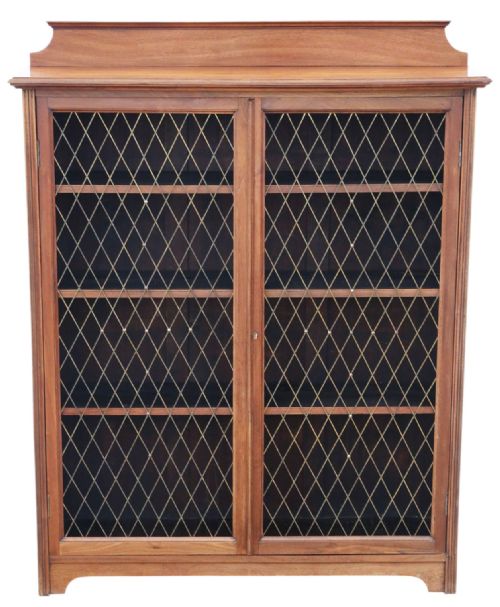

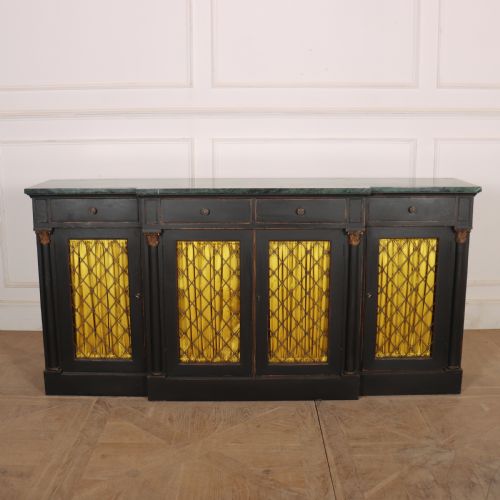

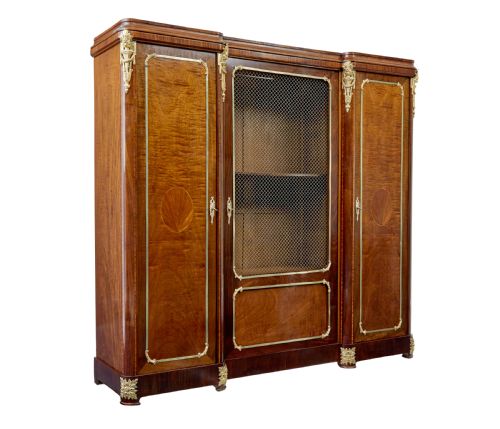

Brass Wire Bookcase
A brass wire bookcase brings architectural precision and refined display space to a room, offering fine mesh doors that protect books while keeping titles visible.
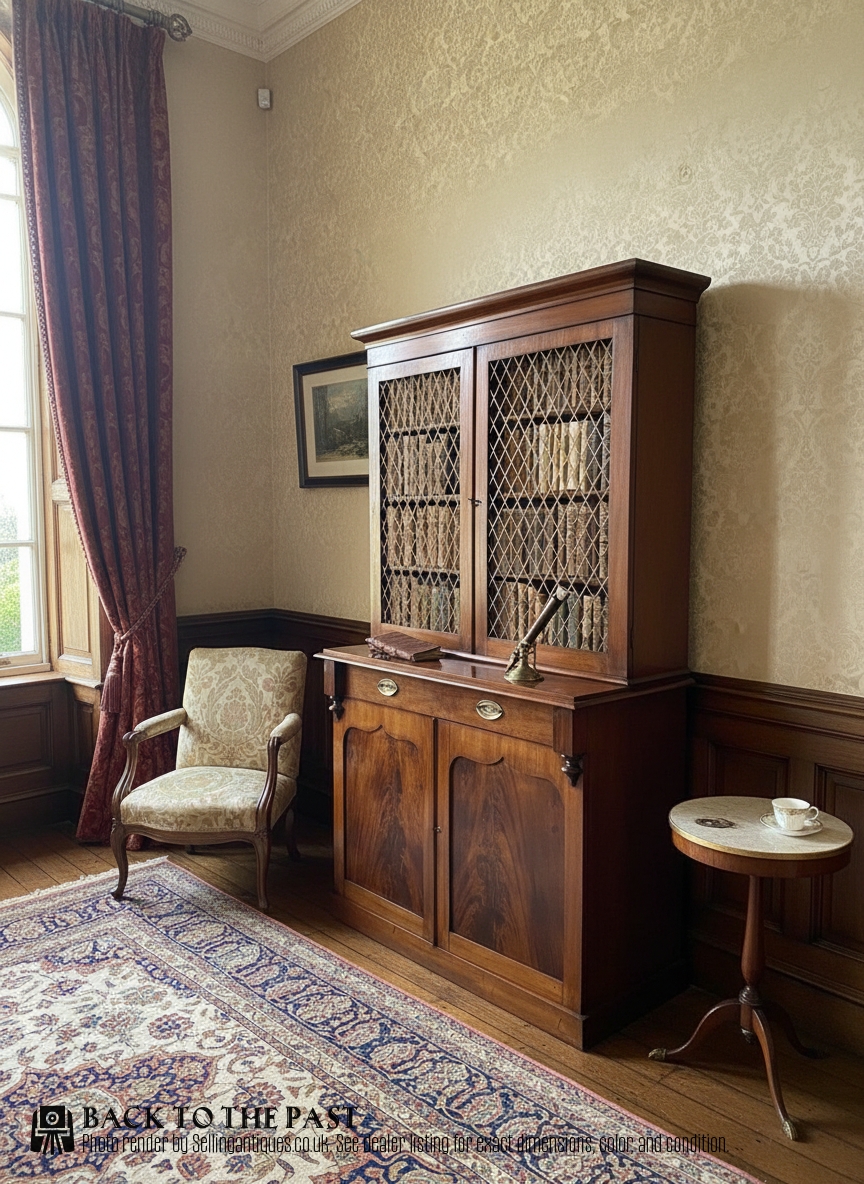
Brass Wire Bookcase
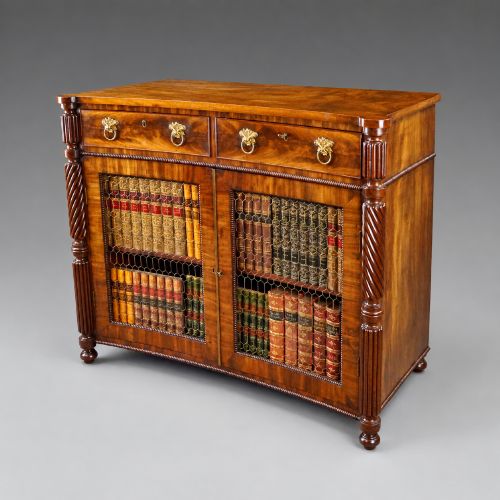
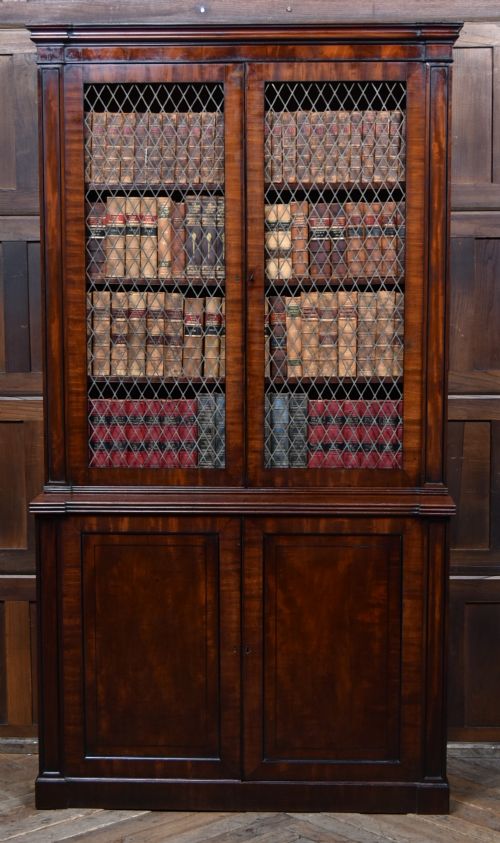
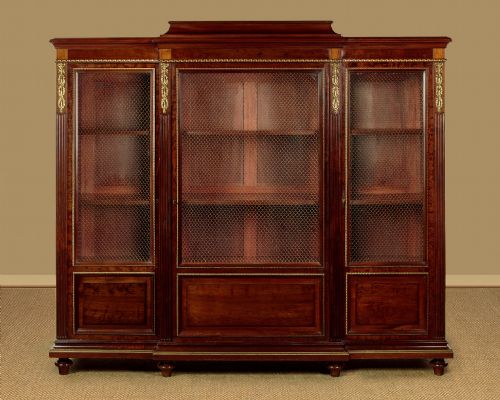
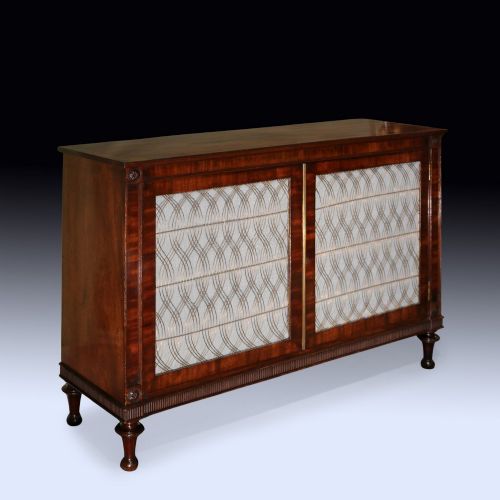
When you search for a brass wire bookcase, you encounter refined timber furniture designed to house and display library collections with elegance. These pieces range from substantial breakfront library bookcases to compact side cabinets and chiffoniers.
You are most likely to meet Regency and nineteenth-century examples on this page, predominantly fashioned from rich timbers like mahogany, rosewood, and walnut. Many feature brass grilles or wire mesh panels set into glazed or timber-framed doors, combining secure storage with visual lightness.
The selection encompasses diverse regional and period interpretations, including Georgian craftsmanship, William IV designs, and later Edwardian or French-influenced pieces. Each variant serves the fundamental purpose of organising volumes while displaying bindings behind protective metalwork.
How they were made
Cabinet makers utilised dense, durable hardwoods like mahogany, walnut, and satinwood for the primary carcases, often selecting figured veneers to create striking grain patterns on door panels and drawer fronts. These timbers provided the structural integrity required to support heavy rows of books over centuries.
Fine brass wire or woven grilles were meticulously fitted into timber door frames, sometimes complemented by intricate brass stringing, inlays, or ormolu mounts. Glass panes and fabric linings frequently accompanied the metalwork to protect volumes from dust while softening the interior display.
Listings feature nineteen-century and Georgian pieces executed in mahogany, walnut, rosewood, and satinwood with brass wire and glass.
What varies in quality
The caliber of a piece rests heavily on the selection of timber veneers and the precision of the cabinet work, particularly in the joinery of adjustable shelving and internal carcases. Superior examples demonstrate seamless integration of brass wire grilles and crisp wood carving that endures through decades of use.
Makers of high-status furniture incorporated refined hardware, such as finely chased brass mounts and robust locks, alongside exceptional attention to secondary timbers used in drawer linings and backboards. Proportion and architectural balance further separate standard utility pieces from grand exhibition-grade library furniture.
Paul Sormani
The Brass Wire Bookcase Glossary
- Breakfront
- A cabinet design where the central section projects forward from the flanking wings. This architectural arrangement creates depth and visual rhythm in large bookcases.
- Chiffonier
- A low cabinet featuring shelves or enclosed storage, evolving during the Regency period into a popular piece for drawing rooms and libraries.
- Ormolu
- Gilded bronze applied as decorative mounts on fine furniture. It adds metallic lustre and neoclassical ornamentation to timber surfaces.
- Satinwood
- A lustrous, durable timber native to India and Sri Lanka with a golden sheen. Cabinet makers prized it for contrasting stringing and light-toned veneering.
- Stringing
- Thin inlay lines of contrasting wood or metal set into the surface of furniture. This technique defines panels and outlines structural borders.
Brass Wire Bookcase: Frequently Asked Questions
What is a brass wire bookcase?
A brass wire bookcase is a cabinet fitted with woven metal mesh or grilles across the door panels to protect books while maintaining visibility.
These pieces span Georgian, Regency, and Victorian periods, constructed primarily in mahogany, walnut, and rosewood.
How were these bookcases used historically?
Historically, they served in libraries and drawing rooms to store valuable volumes while protecting them from dust and handling.
The inclusion of wire or grille panels allowed owners to view titles without opening heavy doors.
How do I identify a Regency bookcase?
Regency bookcases typically display neoclassical restraint, symmetrical proportions, and contrasting brass inlays or grilles.
They frequently employ premium mahogany or rosewood with architectural cornices and refined column details.
Are the shelves adjustable?
Many antique bookcases feature adjustable shelving supported by wooden ratchets or metal pins.
This adaptability accommodates varying book heights within the cabinet interior.
Where should I place one at home?
These cabinets suit studies, drawing rooms, or living spaces where they can anchor a room's decorative scheme.
Position them away from direct heat sources to protect the antique timber and delicate brass elements.