



Brass Water Vessel
These brass water vessel examples span centuries of utility and design, offering robust metalwork for practical daily use or refined domestic display.
Brass Water Vessel
A brass water vessel encompasses a diverse group of functional objects designed for holding, heating, or transporting liquids across various periods and regions. Buyers exploring this category encounter a broad mix of utilitarian and decorative forms, from domestic heating appliances to garden tools.
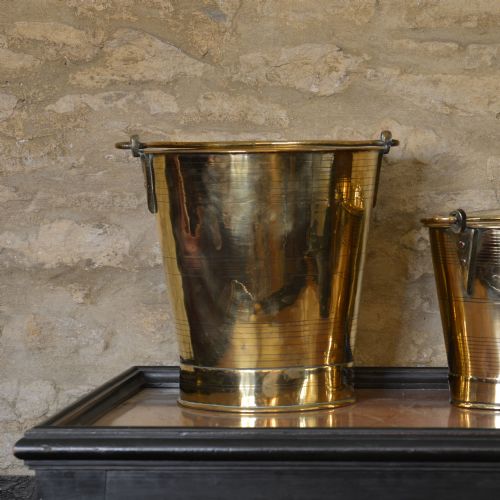
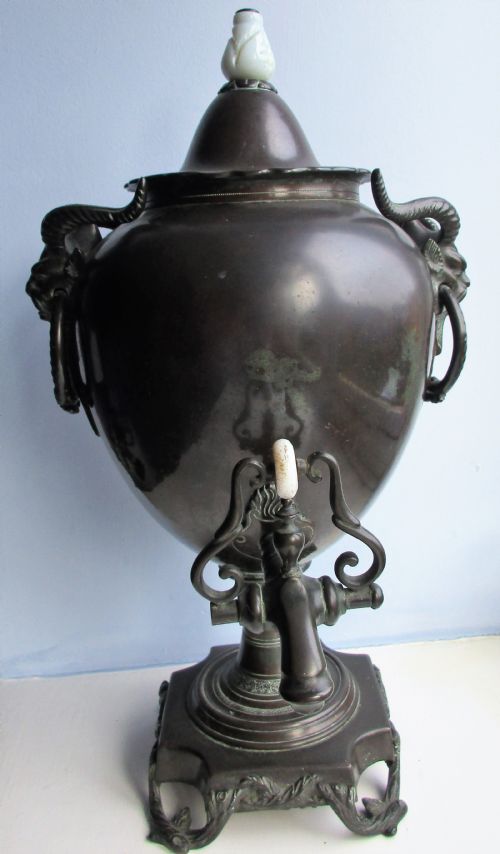
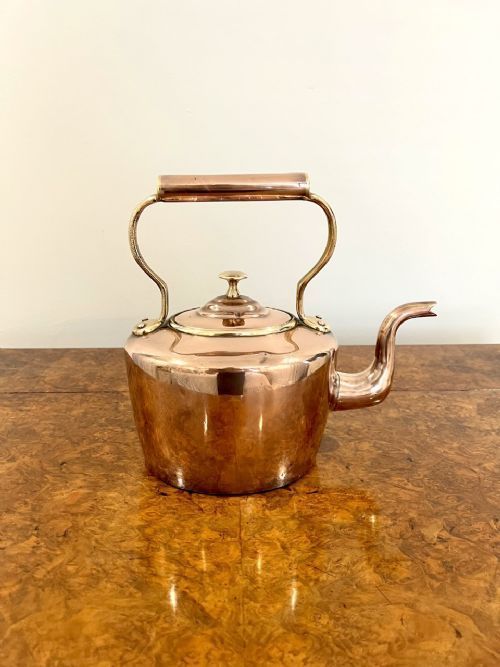
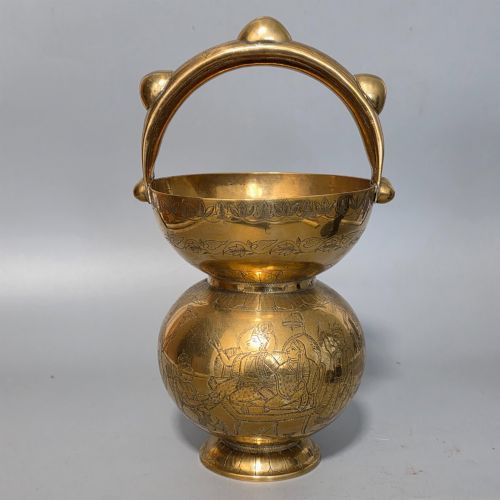
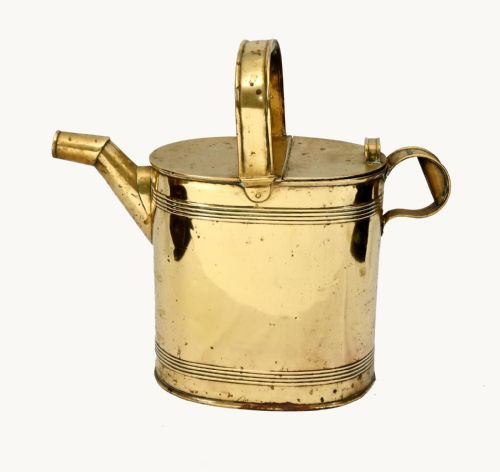
The selection frequently includes nineteenth-century tea urns, samovars, and kettles alongside campaign buckets, jugs, and watering cans. Pieces range from British Georgian and Victorian examples to continental water barrels and Anglo-Indian or Tibetan ceremonial pieces.
Domestic tea and water service items dominate the available range, often combining copper bodies with brass mounts, taps, and handles. Garden water cans and heavy jugs provide the primary alternative for collectors seeking utilitarian metalwork.
Materials and construction
Makers utilised heavy-gauge copper and brass sheet metal, often joining seams with dovetail joints or rivets before hammering and polishing the exterior. Handles frequently incorporate insulating materials such as ebonised wood or bone to prevent heat transfer during use.
Many items combine mixed metals, pairing warm red copper bodies with bright yellow brass spouts, handles, and feet. Certain items add structural wooden elements, including coopered oak staves bound with brass bands for liquid containment.
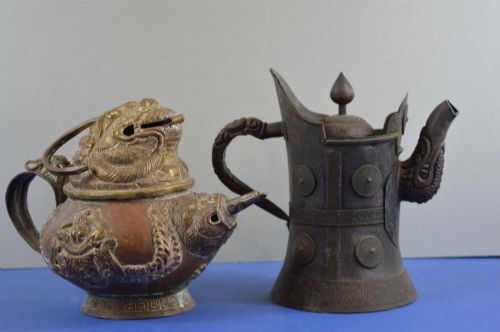
Monks used the Tibetan brass ewers alongside yak butter tea pots, proving that hot metal vessels have fuelled monastic contemplation for centuries.
Assessing quality and finish
Quality rests on the heaviness of the metal gauge, the crispness of applied cast brass mounts, and the integrity of original joints and taps. Superior examples retain their original surface patination and proportion without heavy thinning from over-polishing.
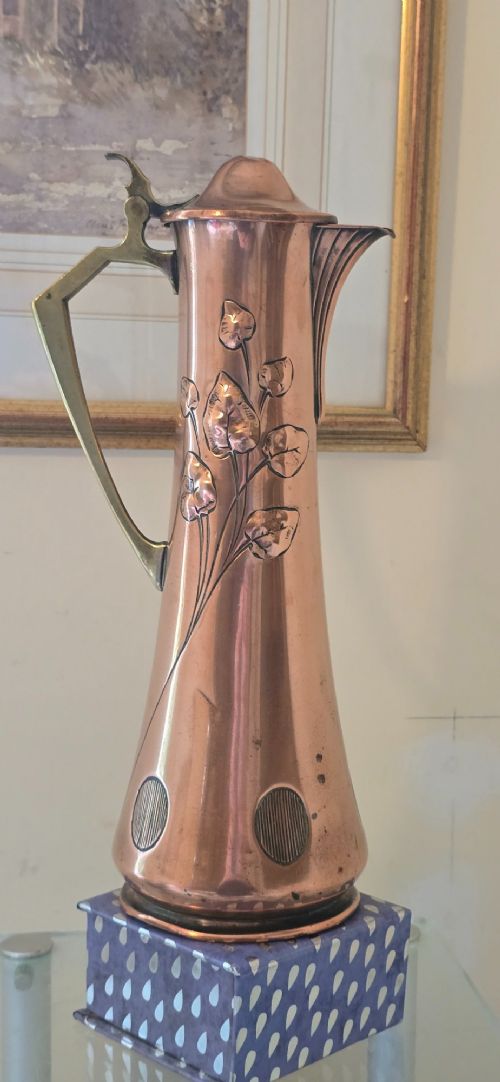
Artisanal touches separate standard production pieces from workshop highlights, such as hand-chased floral relief decoration or documented maker stamps. Internal tinning, where present, shows the original functional intent for potable water.
William Soutter And Sons·Benetfink And Co·Orme Evans And Co·H F Fearncombe And Co
The Brass Water Vessel Glossary
- Samovar
- A heated metal urn traditionally used to boil water for tea, featuring an internal vertical metal tube for solid fuel.
- Spirit Kettle
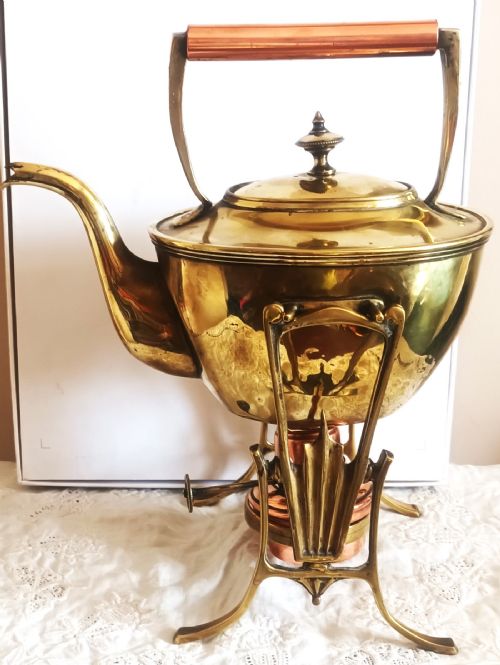
- A small water kettle mounted on a metal stand above a burner fueled by methylated spirits or alcohol.
- Kamandal
- A spherical water vessel with a handle, traditionally utilised by Hindu monks and ascetics for carrying holy water.
- Pontypool Ware
- Tinned metalware produced in Wales known for its lacquered and japanned decorative finishes.
- Coopered
- Constructed from curved wooden staves fitted together edge-to-edge and bound with metal hoops, typical of water barrels and large jugs.
Brass Water Vessel: Frequently Asked Questions
How do I clean an antique brass water vessel?
Wash the surface gently with warm soapy water and a soft cloth to remove surface dust without stripping the historic metal patination. Avoid harsh chemical polishes that remove the character acquired over centuries of handling.
Dry the metal thoroughly immediately after cleaning to prevent water spotting. Unlacquered brass and copper respond best to occasional light buffing with a dry microfiber cloth.
Can I still use these kettles for boiling water?
Most antique kettles and samovars serve primarily as decorative objects or historic display pieces rather than functional kitchen appliances. Older vessels may feature internal tin linings that have worn away or contain soldered joints unsuitable for modern heating.
If you intend to heat water, inspect the interior for corrosion and ensure any original stopcocks or taps remain secure. Modern safety standards rarely apply to nineteenth-century heating apparatus.
What is the difference between a samovar and a spirit kettle?
A samovar is a large urn designed to keep a substantial volume of water hot, often via an internal charcoal or electrical heating core. They sat on sideboards for continuous tea service during large gatherings.
A spirit kettle is a smaller vessel suspended in a metal frame above a small spirit burner. These were typically brought directly to a tea table for immediate use.
How do I date a copper and brass water container?
Dating relies on manufacturing techniques, such as observing whether components are hand-hammered or machine-rolled, alongside style markers. Georgian pieces often display heavy cast brass feet and hand-beaten seams, while Victorian examples introduce more complex stamped mounts.
Maker stamps and registry marks found on the base or near handles provide the most direct chronological evidence. Comparing the construction methods with documented factory production periods narrows the era further.