




Brass Two Tier Table
These pieces combine metal frameworks with dual levels for display and daily use, spanning centuries of craftsmanship.
Brass Two Tier Table
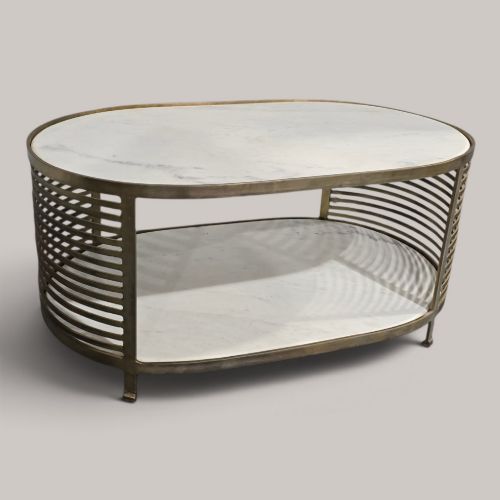
A brass two tier table provides dual surfaces held together by a metal frame, frequently serving as an occasional table, etagere, or plant stand. The form bridges practical utility and ornamental display across the domestic interior.
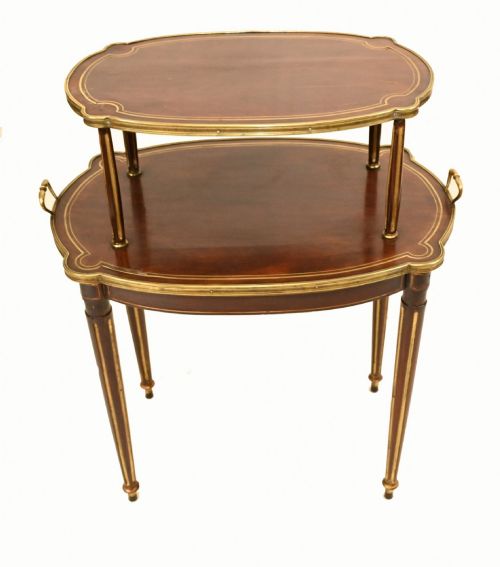
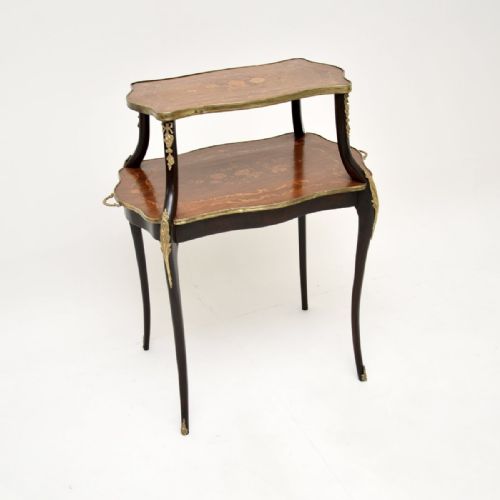
The selections here range from nineteenth century Regency mahogany designs and Victorian marquetry pieces to twentieth century Edwardian and later interpretations. Makers utilised brass alongside rich timbers like rosewood, satinwood, and walnut to build these multi-level surfaces.
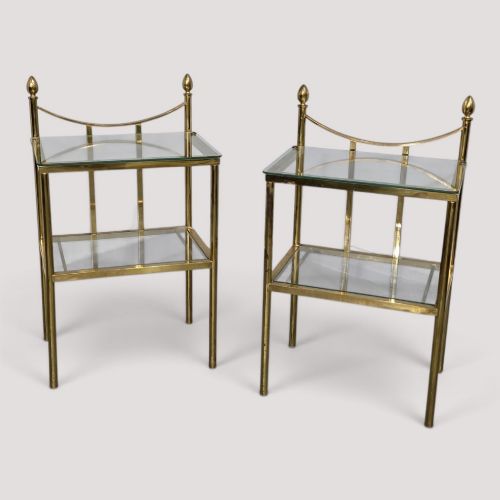
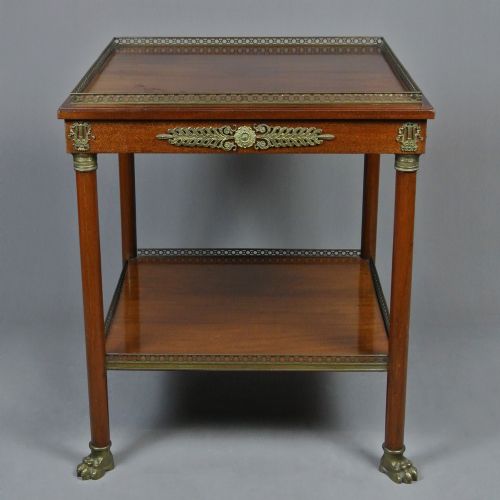
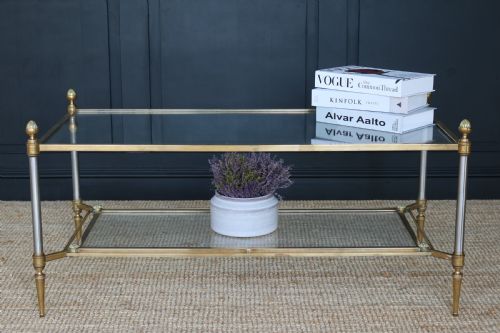
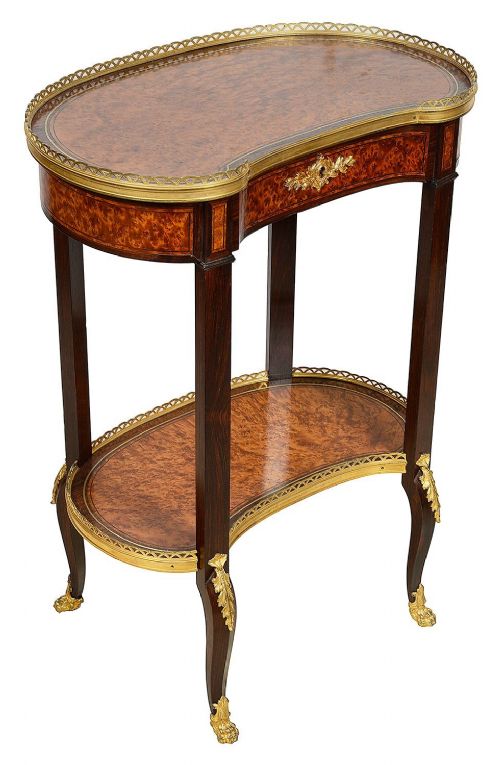
Buyers encounter French influences strongly, particularly through Louis XV and Louis XVI style gueridons and tea tables featuring ormolu mounts and galleries. Mid-century examples introduce chrome and glass alongside traditional brass frames.
Materials and construction
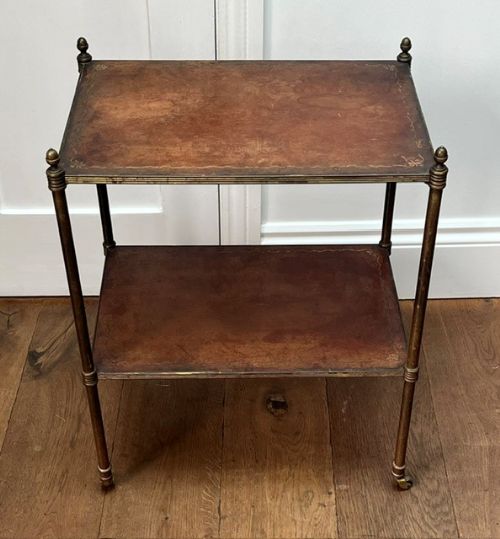
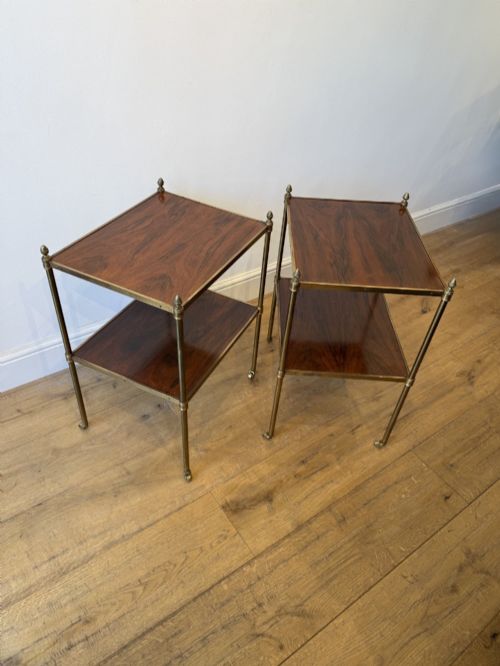
Workshops built the primary structural frames using brass, gilt brass, lacquered brass, or bronze, often pairing the metal with dense hardwoods such as mahogany, rosewood, and kingwood. Secondary surfaces incorporate glass, tooled leather, or marble tops secured within raised metal galleries.
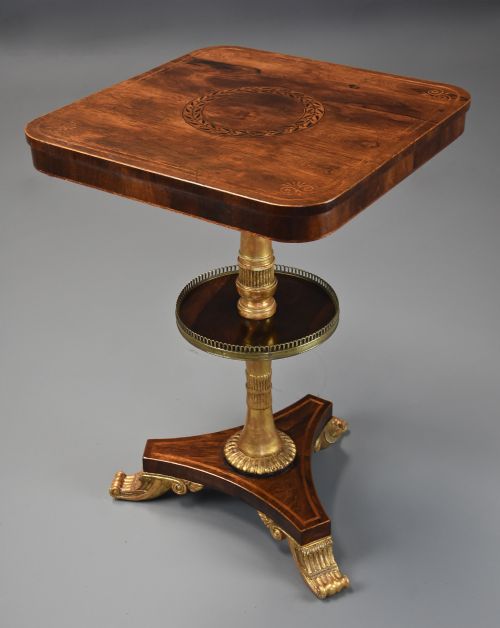
Cabinetmakers applied elaborate marquetry and parquetry inlay using satinwood, walnut, and amboyna to decorate the timber tiers. Metal components were cast, chased, and mounted to timber structures supported by turned legs, casters, or architectural brass framing.
Brass Two Tier Table Retail Price Guide 2026
Typical asking prices for brass two tier table among the pieces listed under this phrase on Sellingantiques today, from the lower quarter to the upper quarter. They describe what is for sale here now, not the wider market.
Some nineteenth century tables were designed specifically to hold tea pots quietly, sparing Victorian hosts from awkward pauses during afternoon conversation.
Quality variations
The refinement of the brass casting and the precision of the metal chasing separate standard pieces from exceptional examples. Finer items exhibit crisp detail in mounts, galleries, and framework joints.
Quality also rests in the selection of timber veneers and the intricacy of marquetry work on the tiers. Heavy gauge brass and solid timber substructures indicate higher workshop standards than lighter, mass-produced alternatives.
Mallett of London·Romeo Rega·Maison Jansen·George Bullock·W. Turner Lord Co·Donald Ross·Linke
The Brass Two Tier Table Glossary
- Etagere
- A set of open shelves or tiers designed for displaying small objects. These pieces often feature brass frames and timber or glass shelves.
- Gueridon
- A small round table supported by one or more columns or figures. French examples frequently incorporate brass galleries and marble tops.
- Dumb waiter
- A multi-tiered piece designed to hold food or tableware without servants present. These functional items typically feature two or three graduating round tiers.
- Ormolu
- Gilded bronze used for decorative mounts on furniture. This material appeared extensively on nineteenth century French style tables.
- Marquetry
- The art of applying pieces of veneer to a structure to form decorative patterns. Craftsmen utilised various exotic woods to create floral and geometric designs on tabletops.
Brass Two Tier Table: Frequently Asked Questions
Where were brass two tier tables placed?
These tables stood in drawing rooms, salons, and libraries as flexible surfaces for lamps, tea service, and decorative objects. Their dual tiers allowed owners to display items on top while keeping lower levels available for books or small ornaments.
In dining rooms and parlours, variations like dumb waiters held serving dishes close at hand. Smaller plant stands and lamp tables fitted easily beside seating furniture.
How do I distinguish French styles from English ones?
French pieces, such as Louis XV or Louis XVI style gueridons, typically feature more pronounced ormolu mounts, intricate marquetry inlay, and curved cabriole legs. Marble tops and pierced brass galleries are common markers of continental manufacture.
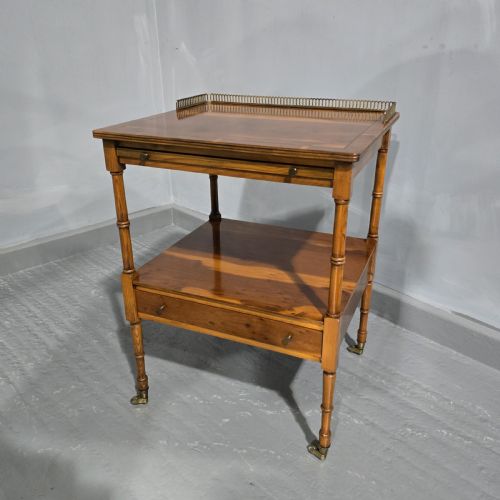
English examples, including Regency and Edwardian pieces, tend to lean towards linear mahogany construction, satinwood crossbanding, and simpler turned supports. The emphasis often lies on the figuring of the timber rather than applied bronze ornamentation.
Are glass top tables original or later additions?
Many twentieth century tables and etageres were built specifically with glass top surfaces supported directly by brass or chrome frames. Earlier nineteenth century pieces more commonly featured timber, leather, or marble inserts.
When examining a piece, check the rebate and seating of the glass against the metal frame to ensure it matches the period construction techniques of the workshop.
How should I care for brass and timber tiers?
Maintain the brass framework by dusting gently with a dry cloth and avoiding harsh chemical metal cleaners that strip original lacquering or patina. Timber tiers respond best to periodic application of appropriate furniture wax to nourish the veneer.
Keep these tables away from direct sunlight and excessive heat sources to prevent the timber from warping and the marquetry veneer from lifting.