

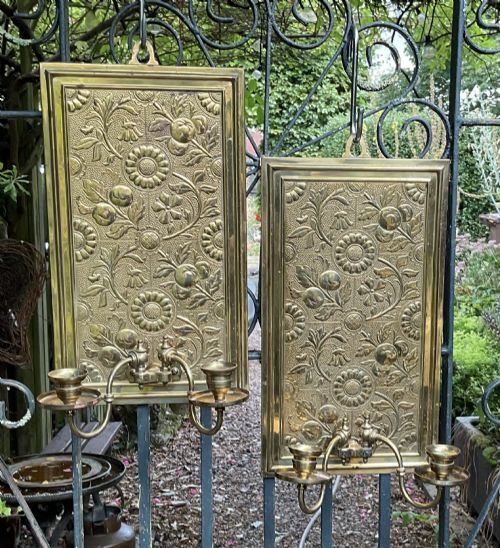
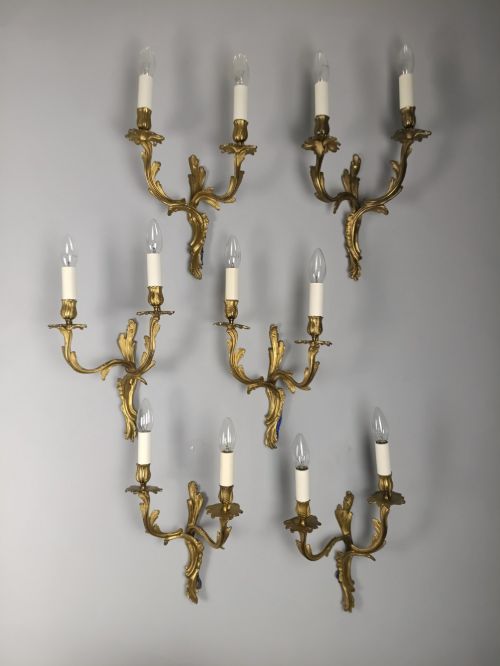
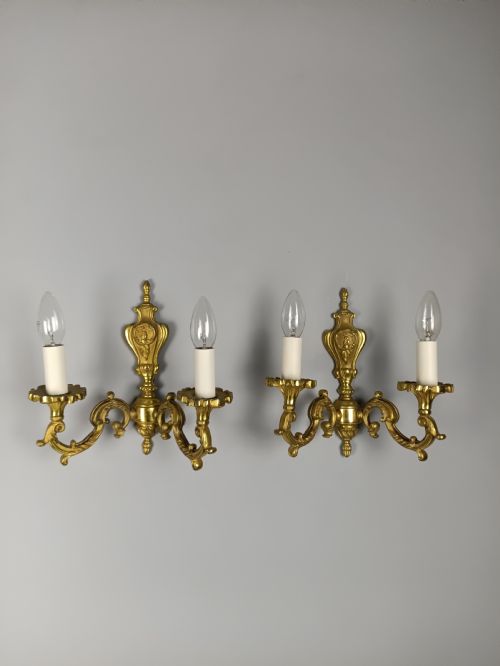
Brass Twin Wall Sconces
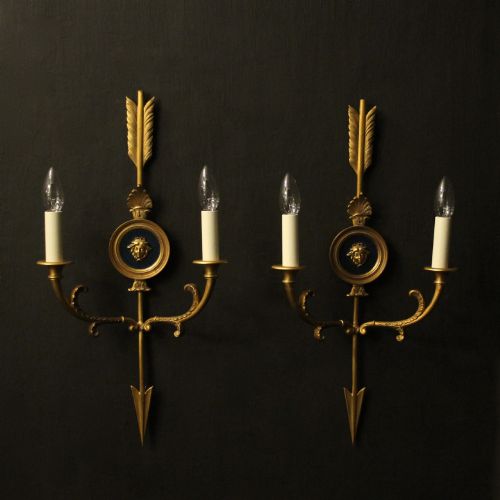
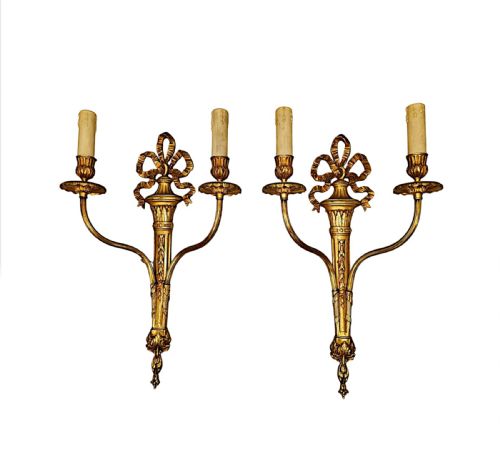
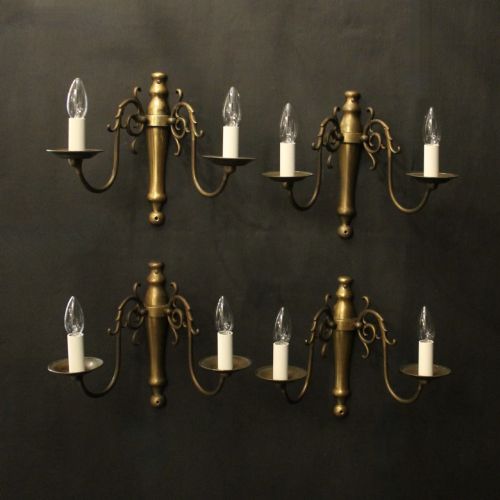
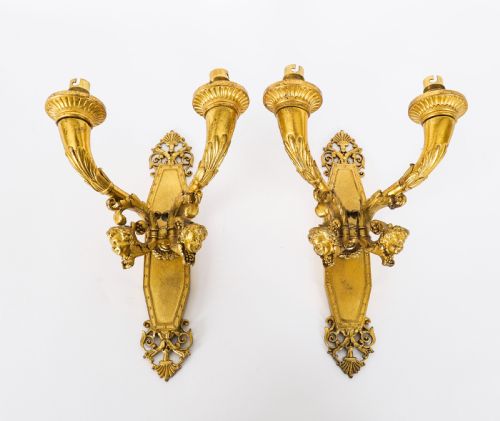
Brass twin wall sconces bring layered ambient illumination to a room, cast in heavy metal and styled across revival periods from the nineteenth century onward.
Brass Twin Wall Sconces
Brass twin wall sconces are dual-armed wall-mounted light fittings designed to hold candles or electric bulbs, taking the form of traditional sconces and half lanterns. When searching for brass twin wall sconces, buyers encounter many French pieces from the nineteen-twenties and nineteen-thirties, alongside Victorian and Edwardian English examples.
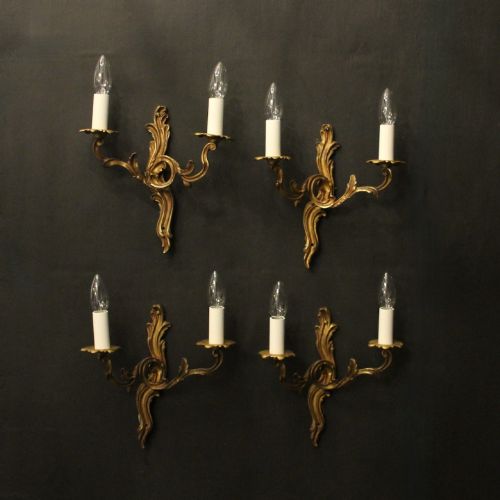
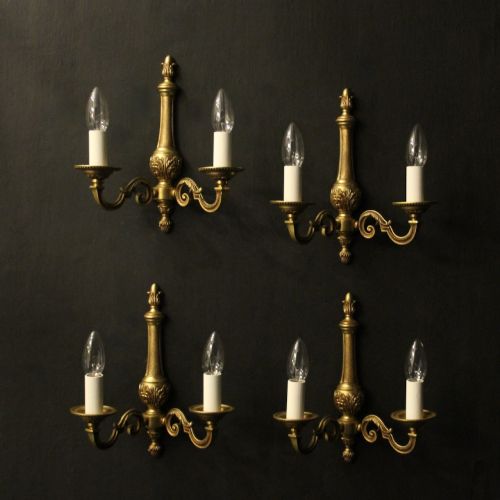
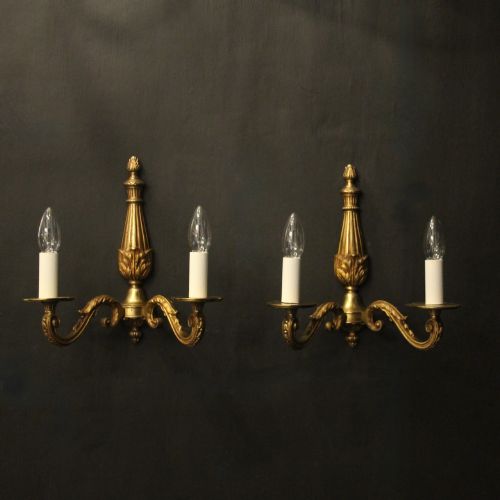
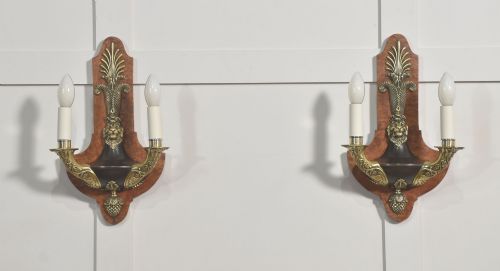
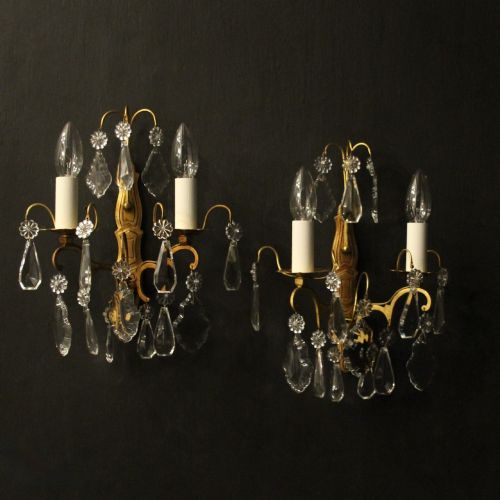
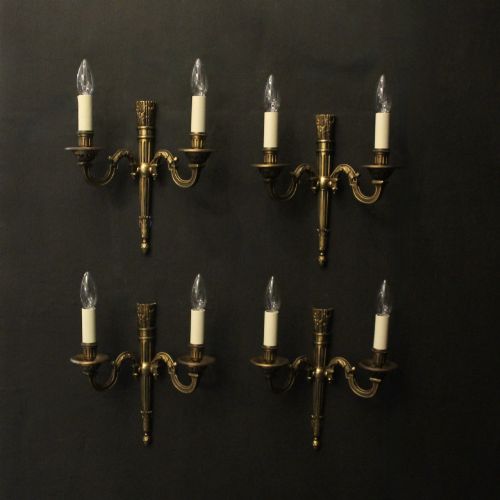
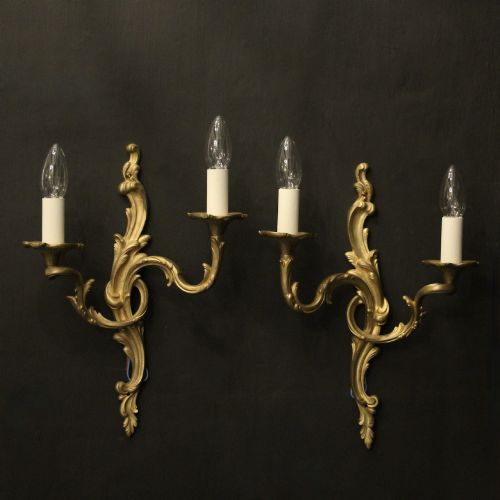
The selection ranges from restrained Adam revival candle sconces to ornate Rococo and Louis XV styles featuring elaborate scrolling arms. Pieces span periods from the eighteen-hundreds through to mid-century modern designs, incorporating materials such as burr walnut, crystal drops, and green enamel.
How they were made
Foundry work dominates the construction of these pieces, utilising cast brass, gilded bronze, and ormolu to achieve crisp architectural detail and fluid scrollwork. Artisans applied fire gilding or metal plating to base metals like brass and bronze, creating enduring golden surfaces.
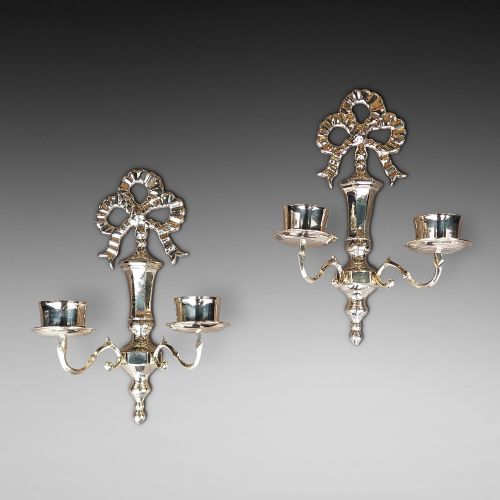
Decorative elements such as ribbons, cherubs, and grotesque masks were cast separately and integrated into the backplates and arms. Wiring and electrical components were frequently added or updated later to adapt candle-form fixtures for modern use.
Listings feature brass twin wall sconces spanning the Victorian, Edwardian, and mid-century periods, alongside nineteenth-century works.
What varies in quality
The weight and crispness of the casting set superior pieces apart, distinguishing deeply chased ormolu and gilded bronze from simpler stamped metal work. Finer examples display meticulous hand-finishing on sculptural details like acanthus leaves and ribbons.
Cohesion of design also marks the better tiers, where backplates, drip pans, and twin branches share a unified stylistic grammar from periods like the French Empire or Rococo revival.
Bruce Talbert·Casier
The Brass Twin Wall Sconces Glossary
- Ormolu
- Gilded bronze produced by applying a mercury and gold amalgam to a bronze base and firing it in a kiln. This historic French technique yields a distinctive warm metallic lustre.
- Sconce
- A wall-mounted lighting fixture designed to project illumination into a space using candles or electric lamps. Historically positioned in pairs or sets along a hallway or reception room.
- Rococo
- An ornate design style characterised by asymmetrical scrolls, C-curves, and naturalistic shell motifs. It heavily influenced French and English metalwork during the eighteenth century and subsequent nineteenth-century revivals.
- Backplate
- The flat or shaped metal section that fastens directly to the wall and supports the projecting arms. It often carries the primary decorative motifs of the fixture.
Brass Twin Wall Sconces: Frequently Asked Questions
Where should wall sconces be placed?
These fixtures work best mounted at eye level in pairs flanking a mirror, fireplace, or architectural doorway to create balanced illumination.
Spacing them evenly along hallway walls provides practical ambient light while highlighting the decorative backplates.
Can antique sconces be wired for electricity?
Many examples have already been adapted for modern electrical wiring while retaining their original candle tubes and drip pans.
A qualified electrician can safely integrate older brass and bronze fittings into contemporary domestic circuits.
How do I identify French revival styles?
French pieces often feature characteristic Louis style elements like scrolling acanthus foliage, ribbons, and cast cherubs associated with Rococo and Neoclassical revivals.
Heavier gilt bronze and ormolu casting work typically points to French workshops from the nineteenth and early twentieth centuries.
What is the difference between brass and ormolu?
Brass is an alloy of copper and zinc used widely for structural components and stamped components in English and continental lighting.
Ormolu specifically denotes gilded bronze, where mercury amalgamation creates a richer and more permanent golden finish on highly chased sculptures.