







Brass Tray Candlestick
A brass tray candlestick brings practical illumination and period charm together, offering a fitted base to catch wax and steady the light.
Brass Tray Candlestick
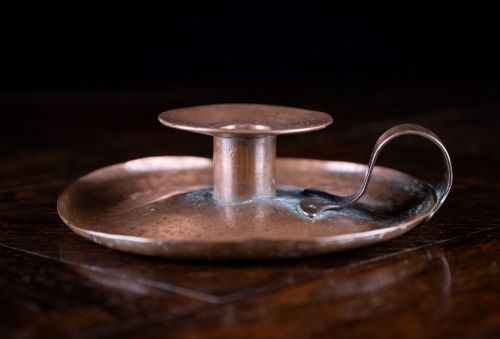
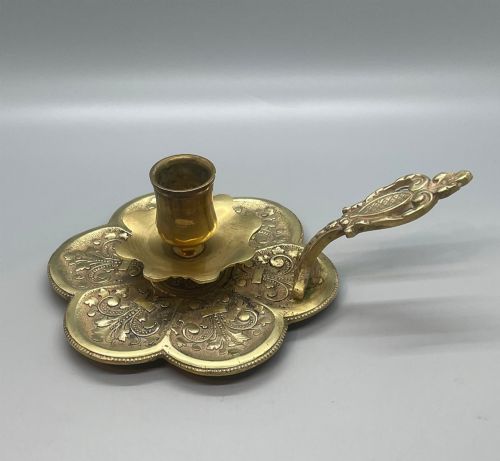
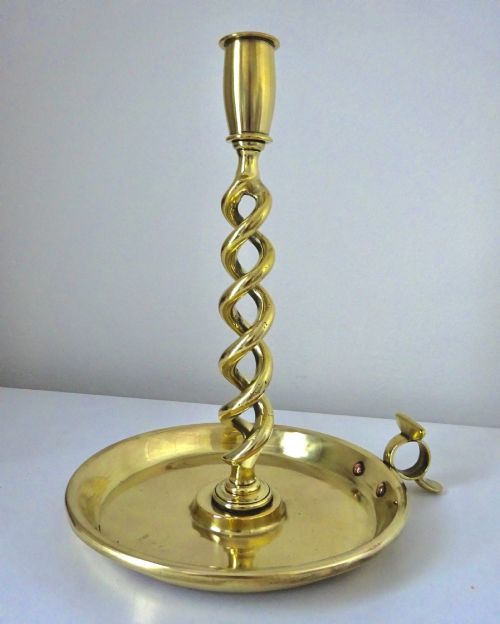
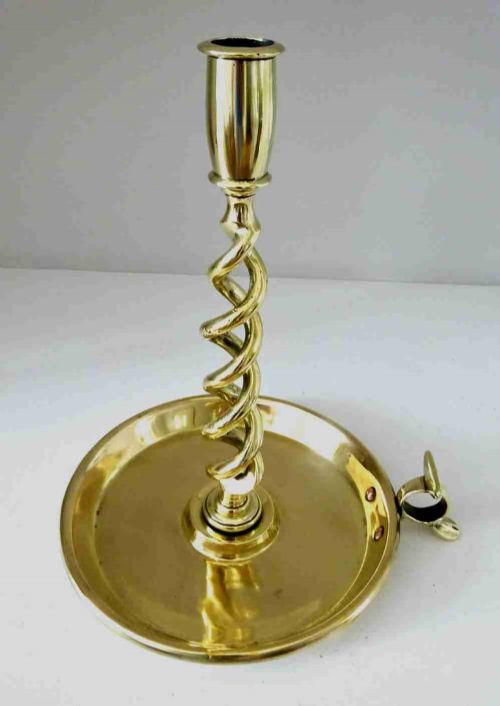
A brass tray candlestick combines a candle holder with an integrated saucer or fitted base designed to catch dripping wax during use. These pieces often feature handles for easy carrying around a room, aligning with chamberstick forms found across the nineteenth century.
The selection on this page ranges from seventeenth-century Heemskerk examples and eighteenth-century paktong pieces to Victorian and Edwardian variations. Buyers frequently encounter chambersticks and desk sets incorporating these fitted tray designs.
Origins span English, continental and Anglo-Indian workshops, showing stylistic influences from Dutch Baroque, French Rococo Revival, Arts and Crafts and the Aesthetic Movement. Forms vary from simple tavern candlesticks to decorative desk accessories with ceramic inserts.
Materials and construction
Construction relies primarily on brass and cast brass, alongside distinct metals such as paktong and gilded bronze. Metalworkers utilised casting and turning techniques to shape the fitted bases, stems and socket components.
Some pieces integrate ceramic elements or handle attachments soldered or riveted to the main tray body. Surface finishes reflect the period of manufacture, from polished yellow brass to patinated eighteenth-century alloys.
Brass Tray Candlestick Retail Price Guide 2026
Typical asking prices for brass tray candlestick among the pieces listed under this phrase on Sellingantiques today, from the lower quarter to the upper quarter. They describe what is for sale here now, not the wider market.
Cats and kittens occasionally bat at desk accessories, as demonstrated by nineteenth-century gilded bronze desk sets.
Assessing quality
Quality rests on the crispness of casting detail, particularly in decorative styles like French Rococo Revival or Arts and Crafts. Heavier gauge metal and secure joints between the tray and socket indicate superior craftsmanship.
The integrity of the original components, such as matching handles and undisturbed surface patination, separates standard production items from finer collector examples.
Benhan and Froud
The Brass Tray Candlestick Glossary
- Heemskerk candlestick
- A heavy brass candlestick design originating in the Netherlands during the seventeenth century, characterised by a central drip pan and a bell-like base. These early examples are prized by collectors for their robust proportions.
- Chamberstick
- A portable candlestick mounted in a shallow tray, typically fitted with a loop handle for carrying through a darkened house. The tray catches melting wax before it reaches furniture or floors.
- Paktong
- A copper-nickel-zinc alloy originating from China, used in the eighteenth century to create bright, silver-like candlesticks and chambersticks. It provides a distinct silvery appearance compared to standard yellow brass.
- Tavern candlestick
- A sturdy, utilitarian brass candlestick built for heavy commercial use in public houses and inns during the eighteenth and nineteenth centuries. They generally feature heavier metal distribution to withstand constant handling.
Brass Tray Candlestick: Frequently Asked Questions
What is a chamberstick?
A chamberstick is a portable candle holder featuring a low tray base and a loop handle, designed for carrying safely by hand. They were widely used before electric lighting to illuminate bedchambers and hallways.
In the marketplace, these pieces appear in various historical styles, ranging from plain utility designs to ornate Victorian and Arts and Crafts interpretations.
How old is my brass candlestick?
Dating relies on stylistic clues, manufacturing methods and material composition, such as the distinct pale alloy seen in eighteenth-century paktong pieces. Earlier seventeenth and eighteenth-century examples display heavier cast construction and simpler, robust turning.
Later nineteenth-century and Edwardian pieces often incorporate revival motifs, decorative handles, or integrated ceramic components typical of Victorian manufacturing.
Were these used on desks?
Many tray-based candlesticks and small chambersticks formed part of desk sets alongside inkwells and pen trays. Their fitted bases prevented wax from damaging paperwork and writing surfaces.
Continental and English makers produced these integrated desk accessories across the nineteenth century in styles varying from French Rococo Revival to Aesthetic Movement.
How do I clean antique brass?
Most collectors prefer to leave a natural, aged patina undisturbed, as heavy polishing removes historical surface character. Gentle dusting with a soft cloth is usually sufficient for daily maintenance.
Avoid abrasive commercial cleaners that strip away centuries of oxidation and diminish the visual depth of the metal.