





Spiral Brass Candle Stand
These spiral brass candle stands bring character and warmth to a room with their distinctive twisted metalwork and tactile presence.
Spiral Brass Candle Stand
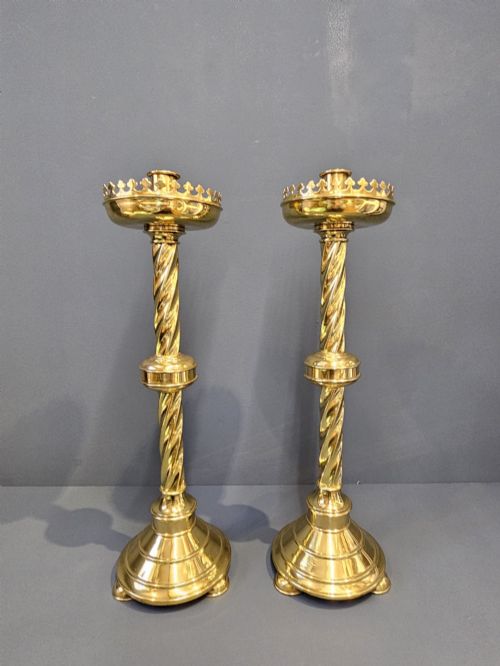
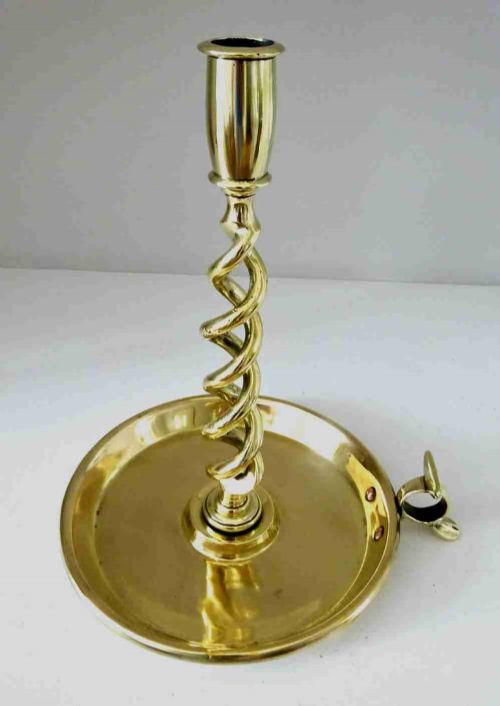
A spiral brass candle stand is a practical lighting piece designed to elevate a candle, often taking the form of a candlestick with a twisted stem. When searching for a spiral brass candle stand, buyers encounter variations shaped across the Victorian, Edwardian, and Georgian periods, alongside pieces from the late nineteenth and early twentieth centuries. These objects frequently appear as matched pairs, though single examples also emerge on the market.
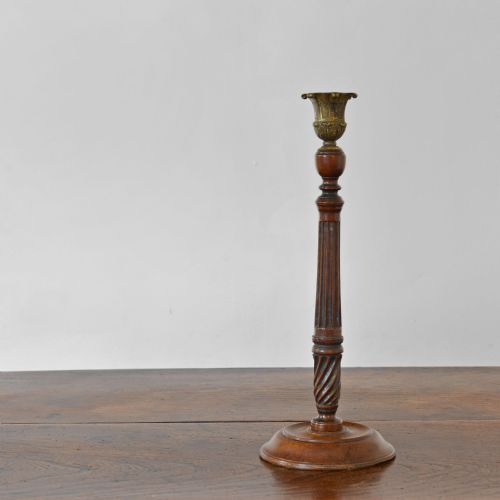
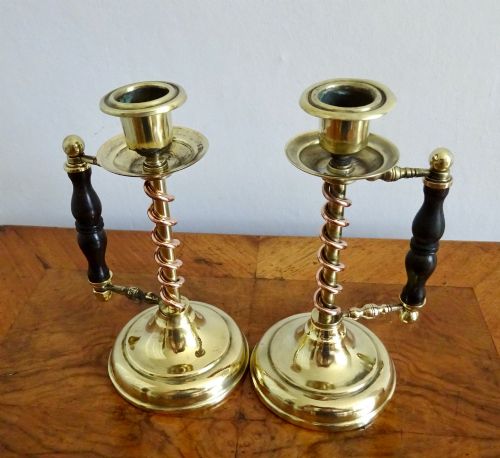
The forms span simple domestic holders to taller church candlesticks and variants incorporating materials like oak, mahogany, and copper. Styles range from plain Victorian designs to Arts and Crafts interpretations and Gothic influences, reflecting the varied tastes of their original makers. Most examples rely on a turned twist or barley twist shaft that catches the light differently as one moves around the room.
How They Were Made
Construction relies heavily on brass, often paired with dense timbers such as oak and mahogany for bases or stems, while occasional pieces integrate copper details. Metal components are cast, turned, or beaten to achieve the characteristic helical form, creating the illusion of a spiralling ribbon of metal.
Wooden elements utilise lathe-turning to produce the barley twist profiles seen in many Edwardian and late nineteenth-century examples. Metal sections are typically joined to weighted bases or wooden plinths to ensure stability when supporting taller candles.
Spiral Brass Candle Stand Retail Price Guide 2026
Typical asking prices for spiral brass candle stand among the pieces listed under this phrase on Sellingantiques today, from the lower quarter to the upper quarter. They describe what is for sale here now, not the wider market.
Listings feature items spanning the Victorian, Edwardian, and Georgian periods, alongside pieces dated around nineteen-ten and the nineteenth century.
What Varies in Quality
Quality rests upon the crispness of the twist and the proportional balance between the stem, the candle socket, and the base. Finer examples display deliberate weight in the metal and careful integration where brass meets wood.
The definition within the spiral fluting distinguishes standard production from superior work. Well-executed pieces maintain symmetry and clean lines along the entire length of the stem.
T Thomason And Co
The Spiral Brass Candle Stand Glossary
- Barley twist
- A carved or cast helical column resembling the grain of barley. This profile appears frequently on both wooden and brass stems.
- Candlestick
- A portable device designed to hold a wax candle upright. These objects range from modest domestic items to tall altar pieces.
- Brass
- A copper and zinc alloy valued for its bright golden appearance and durability. It takes a high polish or develops a mellow patina over time.
- Arts and Crafts
- A design movement prioritising traditional craftsmanship and honest materials. Pieces from this tradition often feature hand-beaten surfaces and simpler structural lines.
Spiral Brass Candle Stand: Frequently Asked Questions
How do I date a brass twist candlestick?
Dating relies on observing construction methods, base weights, and the style of the turning or casting. Period markers often align with the broader design movements recorded in the piece's provenance.
Examining the underside and any fixings helps distinguish late nineteenth-century production from Edwardian or later revival items.
Were these stands used in churches?
Larger examples, particularly taller pairs, often originated in ecclesiastical settings where substantial lighting was required for altars. These church candlesticks are heavier and built to stand on larger surfaces.
Domestic versions tend to be more slender and suited for tabletops, mantels, or sideboards.
How do I clean a brass candle stand?
Maintenance generally involves gentle dusting with a soft cloth to preserve the natural aged surface. Aggressive polishing removes the historical patina that collectors value.
If cleaning is necessary, use a mild, non-abrasive metal cleaner specifically formulated for brass to avoid damaging the surrounding wood or copper elements.
Are these candlesticks sold as pairs?
Many examples on the market survive as matched pairs, having been used symmetrically on sideboards, altars, or mantelpieces. Single pieces also appear where companions have been separated over time.
Checking dimensions and base construction helps confirm if a pair was manufactured together or assembled later.