

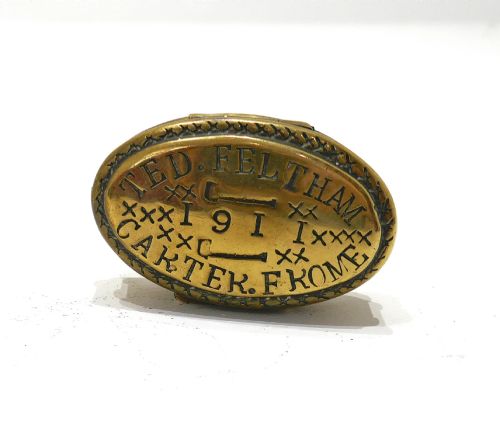
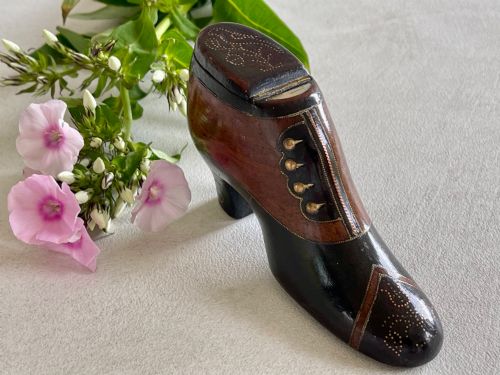
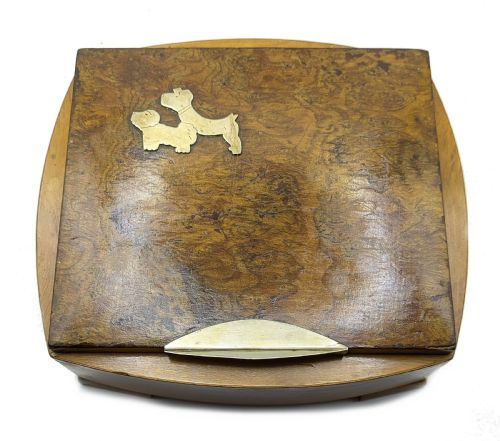
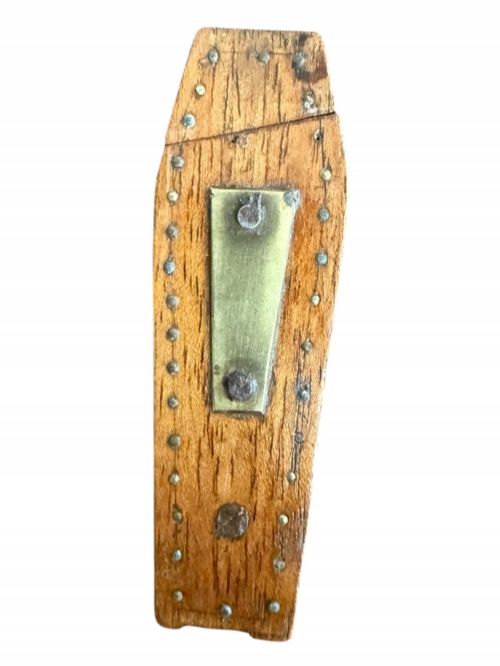
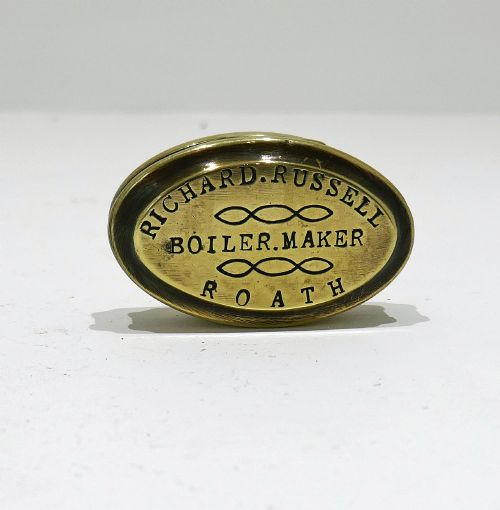
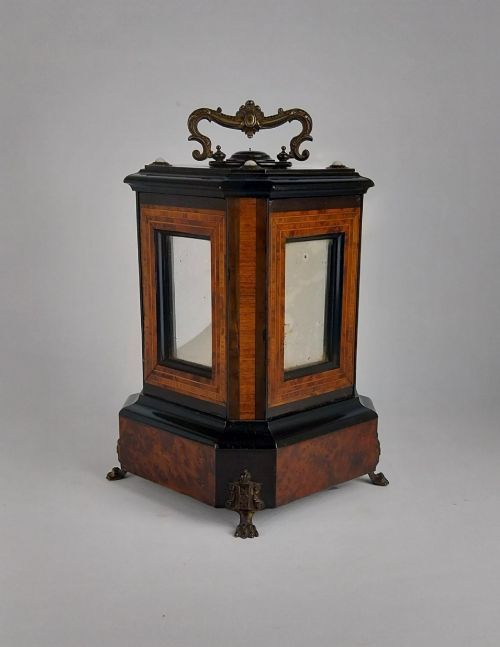
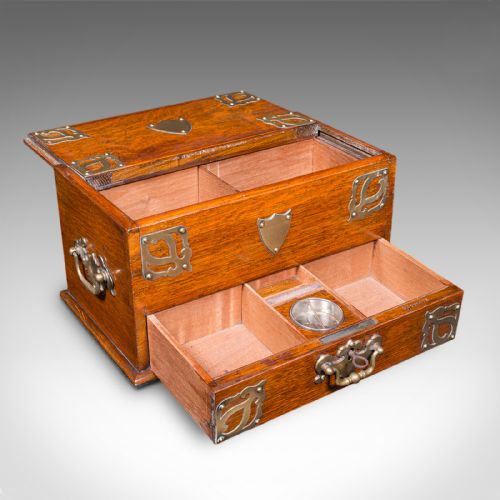


Brass Tobacco Box
A brass tobacco box brings solid eighteenth and nineteenth-century metalwork into the hand, offering a tangible link to old social habits.

Identifying a brass tobacco box
A brass tobacco box is a portable metal container designed for holding smoking or chewing tobacco, featuring strongly among eighteenth and nineteenth-century Dutch, German, and English examples. These pieces range from heavy gauge table snuff or tobacco boxes to pocket-sized miners chewing boxes and commemorative wartime tins.
Continental origins dominate the earlier items, particularly Dutch Baroque and eighteenth-century German styles often decorated with engraved battle scenes, marriage themes, or civic mottoes. Later nineteenth-century pieces shift toward simpler Georgian forms, tavern honesty boxes with mechanical keys, and regional British miners' tins.
Buyers encounter a variety of related small containers on this page, including snuff boxes, pipes, vestas, and decorative tins. The core focus remains firmly on brass vessels, occasionally paired with copper accents, paper, or wood.
Materials and construction
These items rely principally on brass, frequently combined with copper for contrast or worked in heavy gauge sheets that give a substantial weight in the hand. Artisans shaped the metal through hand-wrought techniques, creating oval, rectangular, or octagonal bodies with tight-fitting lids.
Decoration on the metal surface is achieved through crisp engraving, depicting figures, inscriptions, and historical events such as the Battle of Minden. Some nineteenth-century iterations incorporate functional mechanisms, original keys, and internal compartments alongside paper elements.
Retail Price Guide 2026
Typical UK retail prices for brass tobacco box, calculated from the Sellingantiques database of over a million retail prices indexed since 2003. This retail price guide relies exclusively on Sellingantiques data; no external sources or auction records are used, so the figures do not describe the wider market.
Several containers explicitly celebrate sailors drinking and giving spirit and life, proving that eighteenth-century smokers enjoyed a toast with their tobacco.
Assessing quality and character
The distinction between standard examples and superior pieces rests on the crispness of the hand-engraving and the weight of the metal gauge. Finer boxes display deep, deliberate cuts that render historical scenes and inscriptions with remarkable clarity, whereas lesser items show shallower, more routine surface work.
Originality of components elevates a piece considerably, particularly the survival of original keys, functional locking mechanisms, and intact associated elements like WWI cards. The depth of the brass patina and the structural integrity of the hinges also separate ordinary containers from exceptional collector pieces.
WILLIAM GERMAN·Charley Jones·J.Thomas·Rich
The Brass Tobacco Box Glossary
- Heavy gauge
- Describes metalwork utilising thicker brass sheets that provide a robust, substantial feel to the finished box. This weight was typical of finer table vessels.
- Tavern honesty box
- A specialised container fitted with a mechanical key system used in public houses to regulate access to tobacco. These pieces demonstrate clever nineteenth-century engineering.
- Miners chewing box
- A compact pocket container utilised by industrial workers for carrying chewing tobacco. They often bear personal names and dates associated with specific owners.
- Battle of Minden
- A frequently engraved historical subject depicting the 1759 engagement, often found on eighteenth-century German and Dutch containers. It adds a specific commemorative narrative to the brass surface.
- Hand wrought
- Formed and finished through manual hammering and shaping rather than industrial mass production. This method leaves subtle tool marks unique to each object.
Frequently Asked Questions
What were brass tobacco boxes used for?
These containers served to keep loose leaf tobacco dry and fresh while being carried in a pocket or set upon a table. Users relied on them daily for personal smoking or chewing tobacco supplies.
Larger table versions sat in public houses or parlours for communal access, sometimes secured with mechanical locking devices to control consumption.
How can I tell an eighteenth-century box from a nineteenth-century one?
Eighteenth-century examples often lean toward Dutch or German origins featuring elaborate hand-engraved allegorical scenes, marriage themes, or battles. They frequently utilise a heavier brass gauge with distinctive oval or rounded rectangular proportions.
Nineteenth-century pieces tend to show simpler Georgian lines, regional British inscriptions, or mechanical tavern designs with keys. The engraving styles become more direct and commercial as the period progresses.
Are these boxes English or continental?
A significant portion of the earlier stock originates from the Netherlands and Germany, recognizable by distinct Baroque decorative motifs and narrative engravings. English production expands notably into the nineteenth century with regional variations.
Many pieces reflect international trade and cross-channel influences, making precise national attribution a matter of studying the specific engraving style and construction.
How do I care for antique brass?
The primary rule is to preserve the natural aged patina rather than polishing the metal to a bright shine. Gentle dusting with a dry microfibre cloth keeps the surface clean without removing historical wear.
Keep the boxes away from damp environments to protect any internal paper components and to prevent active corrosion on the brass and copper surfaces.