


Brass Tier Stand
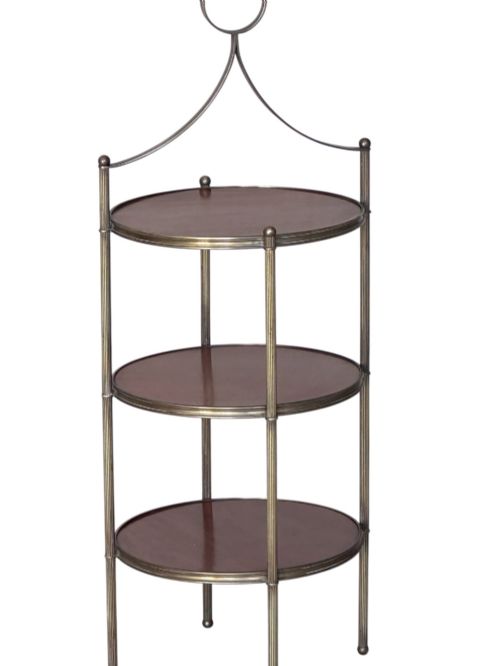
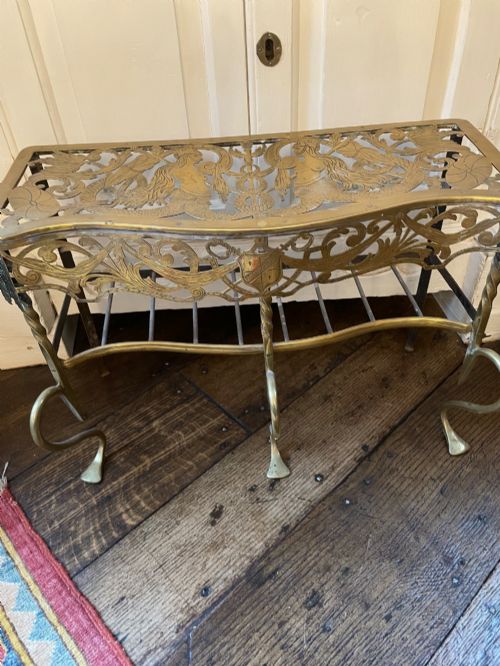
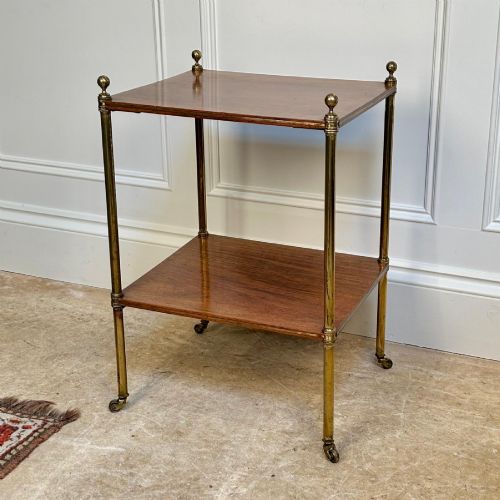
A brass tier stand brings open shelving and tiered display space to a room, uniting metal frames with timber surfaces.
Brass Tier Stand
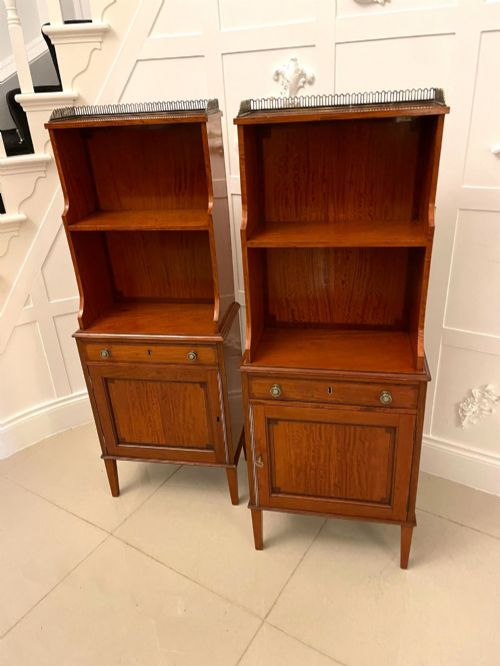
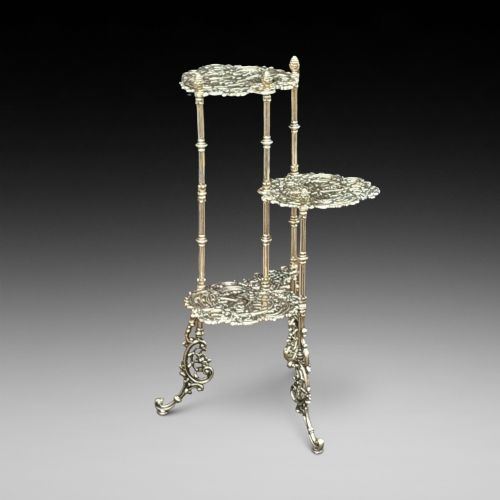
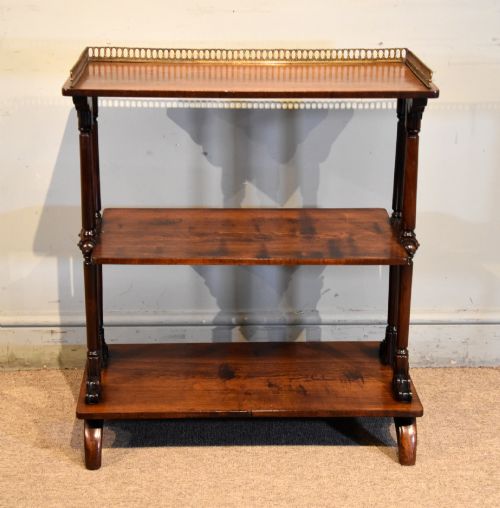
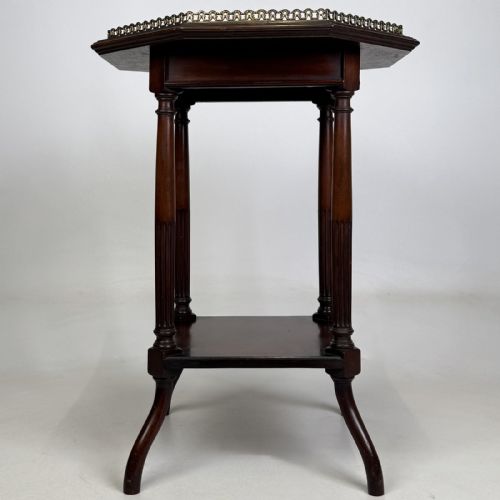
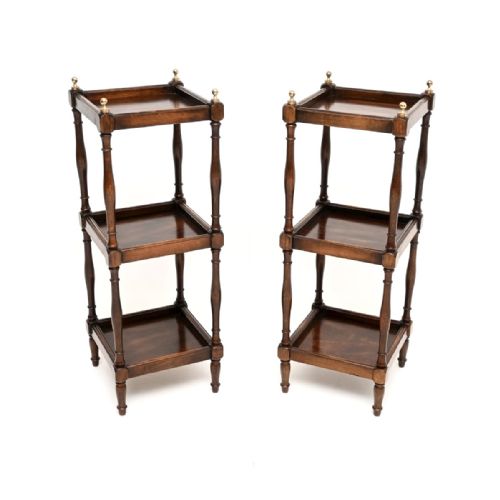
When you search for a brass tier stand, you encounter multifaceted display furniture designed to hold books, plants, and decorative objects across multiple levels. The pieces take the form of etageres, whatnots, plant stands, and occasional tables originating from the Regency, Victorian, and Edwardian periods.
The most common versions on this page combine brass supports with timber shelves in mahogany, rosewood, or walnut, alongside occasional glass and marble tops. These items function as versatile display units and side tables in both English and French styles.
How they were made
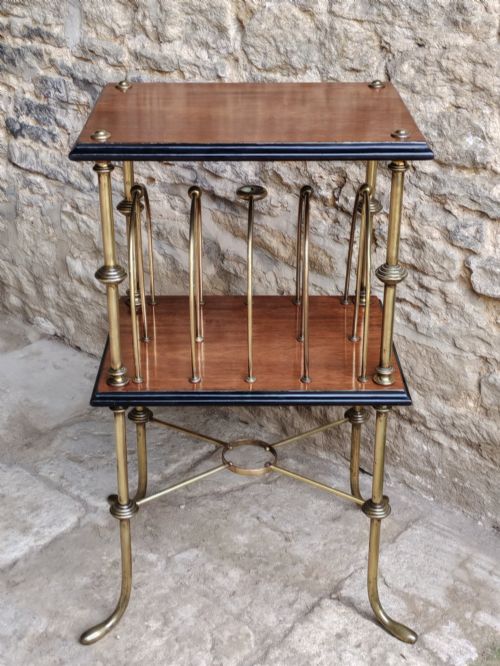
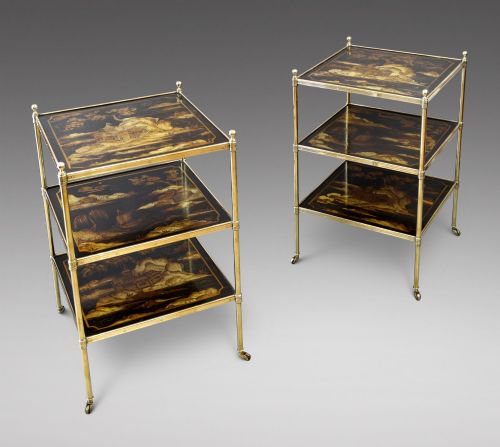
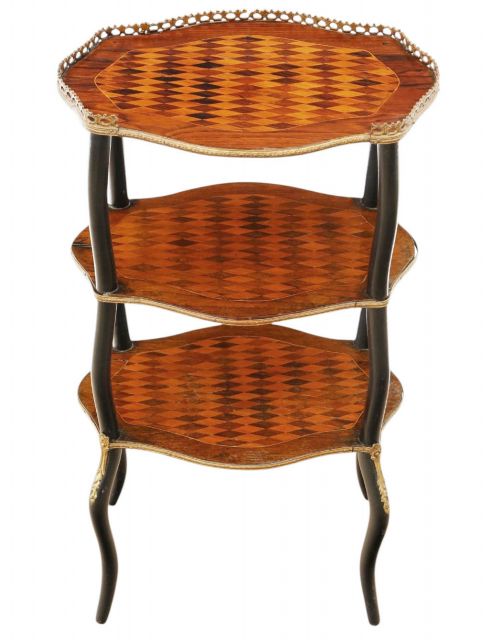
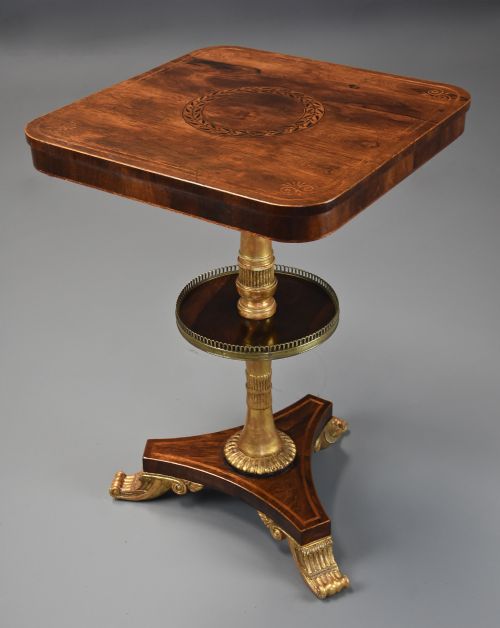
Maker construction combines cast or tubular brass for the structural frames, columns, and castors with solid and veneered timbers for the tiers. Woods such as mahogany, rosewood, and walnut form the primary shelf surfaces, frequently enhanced with parquetry, marquetry, and brass stringing.
French and English workshops utilised bronze ormolu mounts, galleries, and brass capitals to join the tiers securely to the upright supports. Surfaces received hand-polished finishes to highlight the grain of the timber alongside the polished sheen of the metal.
Brass Tier Stand Retail Price Guide 2026
Typical asking prices for brass tier stand among the pieces listed under this phrase on Sellingantiques today, from the lower quarter to the upper quarter. They describe what is for sale here now, not the wider market.
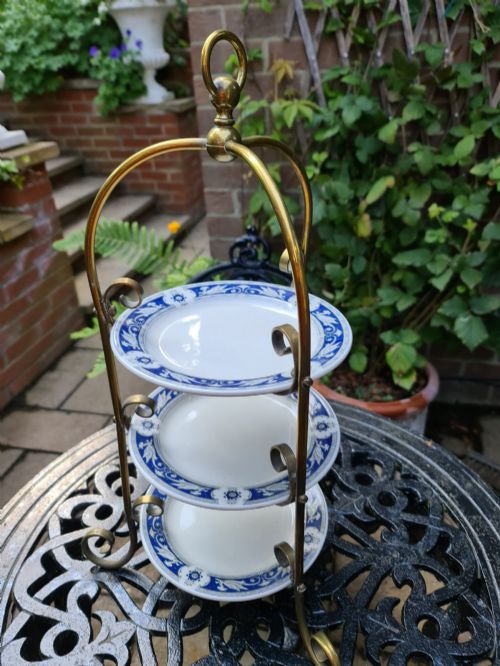
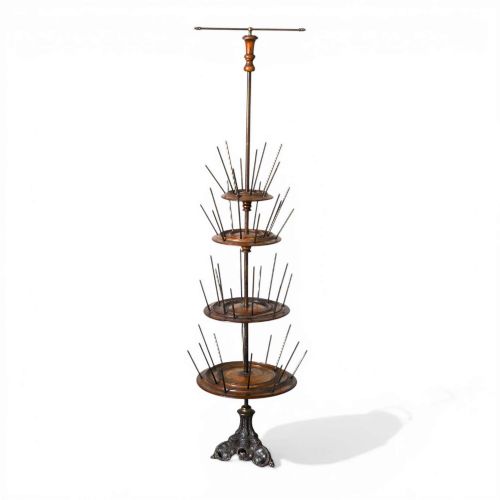
Victorian cotton reel display trees originally organised thread for bustling English shops before finding new life holding rings and trinkets at home.
What varies in quality
Quality rests in the precision of the metalwork, the weight of the brass components, and the choice of timber veneers. Superior examples display crisp casting in ormolu mounts and substantial gauge brass columns that provide rigid support to multi-tier structures.
Finer pieces show careful attention to detail in inlaid marquetry, tight joints between tiers, and original brass castors. Lesser examples rely on thinner gauge metal and simpler turned wood without decorative inlay or mounts.
George Bullock·W. Turner Lord & Co
The Brass Tier Stand Glossary
- Etagere
- A set of open shelves for displaying small objects, porcelain, or books. These pieces typically feature multiple tiers supported by slender columns.
- Whatnot
- A piece of freestanding furniture with three or more tiers used for storage and display. They date predominantly from the nineteenth century.
- Ormolu
- Gilded bronze used for decorative mounts and accents on furniture frames. The technique gained widespread popularity in French nineteenth-century pieces.
- Marquetry
- Decorative veneer work forming pictures or geometric patterns using various coloured woods. Craftsmen applied these patterns to the top tiers of fine tables and etageres.
Brass Tier Stand: Frequently Asked Questions
What rooms suit a brass tier stand?
These pieces fit comfortably in drawing rooms, studies, and bedrooms as compact display surfaces. Their open tiers hold books, small plants, and decorative ceramics without blocking light.
The vertical design makes efficient use of floor space in tighter corners or beside seating areas.
How do I clean brass and wood?
Dust timber shelves regularly with a dry cloth and apply occasional wax to maintain the polish. Clean brass components gently with a soft cloth to avoid damaging adjacent wood finishes.
Harsh chemical polishes should stay away from the surrounding veneers to prevent staining.
Are these stands sturdy enough for heavy books?
Most tiers handle moderate weights of books or decorative objects comfortably. Taller plant stands and lighter etageres work best for lighter decorative items.
Heavier volumes sit securely on the lower tiers where the frame provides maximum stability.
How do I identify a Victorian piece?
Victorian examples frequently utilise rich mahogany or burr walnut alongside heavier brass castors and turned supports. Inlaid stringing and ornate ormolu mounts often indicate mid to late nineteenth-century manufacture.
Construction methods reflect industrial advances of the era, combining cast brass elements with traditional joinery.