
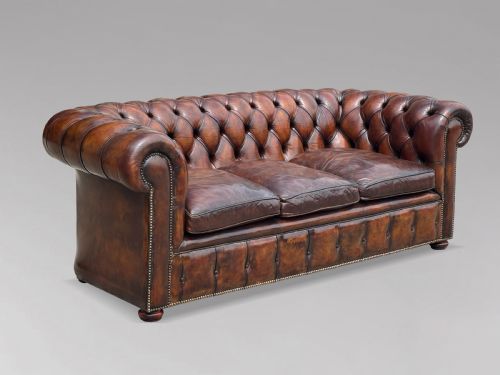


Brass Studded Settee
A brass studded settee brings immediate weight and presence to a room through traditional leather work and structural studding.

Brass Studded Settee
A brass studded settee encompasses substantial seating forms ranging from nineteenth-century Victorian Chesterfields to early twentieth-century club sofas and drop-arm designs. These seating pieces primarily arrive upholstered in leather, often featuring deep buttoning, tufting, and traditional framework structures.
The selection frequently highlights brown and red leather finishes alongside specialised pieces styled in George II or Regency aesthetics. Buyers searching this phrase most commonly encounter classic Chesterfield sofas and highback settees defined by heavy stud work along the edges.
Origins span traditional English workshops through to Moroccan suites, offering diverse proportions from two-seater configurations up to four-seater drop-arm variations. Each example relies on traditional upholstery methods, combining wood frames with leather skins secured by individual metal fasteners.
How they were made
Construction relies upon robust timber and hardwood frames that support complex internal stuffing, including horsehair and coiled springing systems. Artisans shape these internal elements by hand to ensure structural resilience over decades of daily use.
Upholstery involves fitting heavy hides - ranging from whiskey brown to amethyst leathers - secured meticulously to the framework with individual brass studs. This manual fastening method anchors the leather tightly across deep buttoned and tufted surfaces while providing decorative definition along the seams.
Current listings feature nineteenth-century and early twentieth-century examples utilising leather, mahogany, hardwood, and damask materials.
What varies in quality
Quality separates along the integrity of the internal padding and the depth of the frame construction, where traditional horsehair and coil springing dictate the supportive longevity of the seat. Superior examples maintain firm, responsive cushioning that resists sagging under prolonged weight.
The finish of the leather and the precision of the brass studding reveal the level of craftsmanship invested in the piece. Hand-dyed hides with rich tonal variation and uniform, securely driven metalwork denote higher-grade workshop production compared to simpler commercial alternatives.
Howard And Sons
The Brass Studded Settee Glossary
- Chesterfield
- A traditional sofa style characterised by arms and back of the same height, typically featuring deep button tufting and leather upholstery. This form remains a defining staple of British seating history.
- Tufting
- The process of pulling thread or twine deeply through upholstery layers and securing it with buttons to create a padded, diamond-patterned surface. This technique ensures internal fillings stay evenly distributed.
- Knoll drop arm
- A sofa design incorporating adjustable or folding armrests that can be lowered on one or both sides. This mechanism offers versatile lounging positions within a formal wooden framework.
- Horsehair
- A traditional organic filling material harvested from horse manes and tails, valued for its springiness and breathability. Upholsterers rely on it to maintain shape and structure inside antique seating.
- Moustache back
- A decorative wooden or upholstered upper sofa rail shaped with sweeping curves resembling a nineteenth-century moustache. This profile adds distinct visual flair to gentleman's club seating.
Brass Studded Settee: Frequently Asked Questions
What is a brass studded settee?
A brass studded settee is a traditional upholstered seating piece, typically formed as a leather Chesterfield or club sofa, featuring decorative metal studs along the framework edges.
These pieces combine sturdy timber frames with deep buttoning and hand-dyed hides to create substantial, supportive furniture suited for studies and living spaces.
How do I identify a Victorian Chesterfield?
Victorian Chesterfields are identified through their nineteenth-century manufacturing traits, such as heavy hardwood frames, horsehair stuffing, and hand-dyed leather upholstery.
They frequently display deep tufting and individual brass stud work that secures the hide directly to the internal wooden structure.
What maintenance do leather settees need?
Leather settees require regular conditioning to keep the hide supple and prevent the natural material from drying out or cracking over time.
Avoiding direct sunlight and excessive heat sources preserves both the integrity of the leather and the colour depth of hand-dyed finishes.
Where were these settees used historically?
Historically, these settees populated gentleman's clubs, libraries, and formal drawing rooms where durable yet impressive seating was paramount.
Their robust construction and comfortable deep-seated proportions made them ideal for long periods of reading or conversation.