
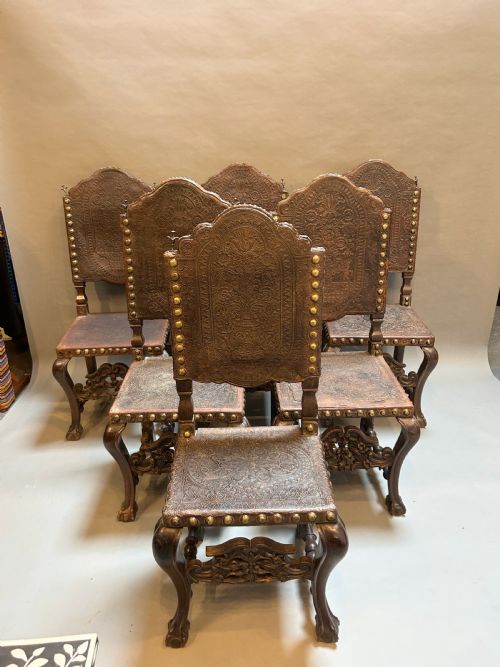
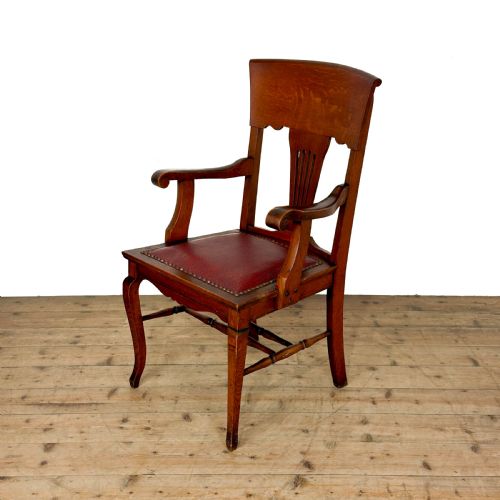


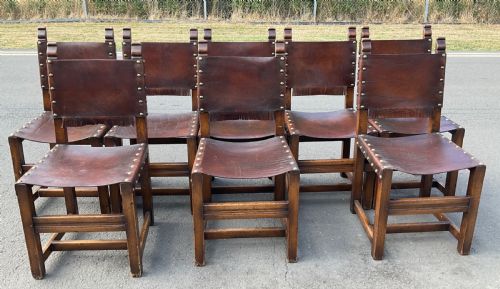
Brass Studded Dining Chairs
These brass studded dining chairs bring centuries of leather, oak and mahogany craftsmanship straight to the table.
Brass Studded Dining Chairs
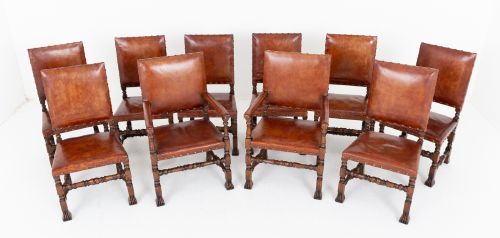
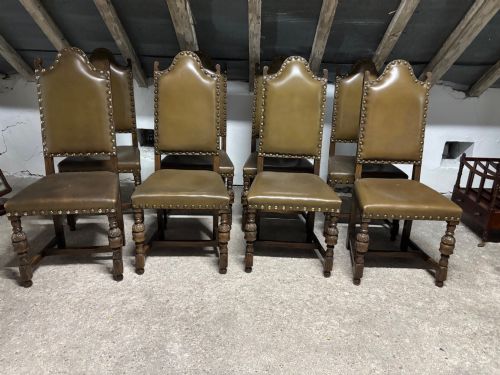
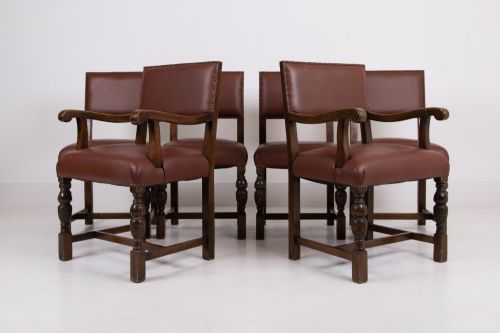
When you search for brass studded dining chairs, you encounter seating built across centuries from the Georgian and Victorian eras through to the Edwardian period and the early twentieth century. The selection spans single side chairs, carvers, armchairs and substantial sets designed to anchor a formal dining room.
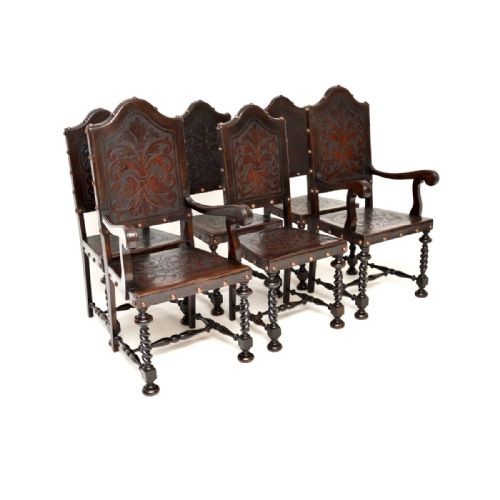
The styles range widely across the evidence, touching upon Gothic Revival, Spanish Revival, Jacobean Revival, French Provincial and Portuguese Baroque. Oak and mahogany form the structural backbone of these pieces, frequently paired with leather or upholstery fabric.
Sets vary from smaller groupings of four to larger suites of six or eight pieces. Whether originating from Edwardian workshops or interpreting seventeenth-century designs during the nineteen-twenties, each chair relies on exposed metal tacks to secure the upholstery.
Materials and construction
Makers built the frames of these chairs using solid timbers such as oak, mahogany and walnut, shaping them into high backs, scroll arms and carved legs. These woods provide the structural strength necessary for daily dining use.
Upholstery fabric and leather form the seats and backrests, fixed firmly to the wooden frames using individual brass studs or tacks. These metal fixings function both as structural fasteners and decorative borders.
Carpenters employed traditional joinery techniques, sometimes incorporating hand-dyed leathers, embossed details and elaborate carvings reflecting Spanish, Portuguese or Gothic influences.
Every single brass stud was hammered in by hand long before electric screwdrivers existed.
Evaluating quality
Quality rests in the integrity of the timber frame and the precision of the joinery rather than surface decoration alone. Solid oak and mahogany constructions with tight, stable joints outlast lighter alternatives.
The treatment of the leather and the regularity of the brass studding reveal the maker's hand. Hand-dyed leather, embossed patterns and neatly aligned tacks indicate careful execution by skilled artisans.
Howard and Co London·George Henry Walton
The Brass Studded Dining Chairs Glossary
- Carver chair
- A dining chair fitted with arms, traditionally placed at the head of the table. These often match a larger set of armless side chairs.
- Side chair
- An upholstered or wooden chair built without arms for dining arrangements. These pieces slide easily beneath standard table heights.
- Gothic Revival
- An architectural and decorative style drawing on medieval motifs such as pointed arches and heavy carving. Pieces from this movement often feature dramatic silhouettes.
- Embossed leather
- Animal hide pressed with raised patterns using metal dies or rollers. This technique appears on decorative panels across Spanish and Portuguese seating.
Brass Studded Dining Chairs: Frequently Asked Questions
How do I care for antique leather seats?
Keep leather clean using a dry cloth and apply suitable nourishing balms periodically to prevent drying.
Avoid placing these chairs in direct sunlight or near direct heat sources to protect the hide and the brass tacks.
Are these chairs comfortable for daily dining?
Most examples provide firm support through traditional padding and high wooden backs suited to long meals.
Carver chairs offer additional arm support, while side chairs tuck neatly beneath most standard dining tables.
How do I match different table styles?
Oak and mahogany timber frames pair naturally with wooden dining tables from corresponding historical periods.
Look at the stain of the wood and the tone of the leather to coordinate mixed suites with existing furniture.
What defines seventeenth century style chairs?
These pieces replicate earlier proportions, high rectangular backs and turned wooden supports popular in seventeenth century Britain and Europe.
Many examples recorded here date from later revival periods such as the nineteen-twenties while utilising traditional construction methods.